I Promised…

and there they are!

IMG_5010

 Snowdrops!

In part sun, part shade, and not even open yet. We’re still waiting for crocus and all of the other bulbs and most anything that’s green, but this is a start! The ducks made a brief appearance on the pond yesterday but their gone today. I’m sure their hiding because it’s too cold to swim through the skim of ice on top of the water.We’ll see them again in a few days. It’s supposed to snow tomorrow night into Wednesday, then warm up again at the end of the week.

This is spring in New England. We wait and wait and wait!

More chickens coming!

Love, Michele

The Lovely, Motherly Cochin

If your deciding on breeds of chicken to raise, another fun possibility is the cochin. Cochins originated in China in the 1800s and are now commonly found here in the United States. Their most unique features are their furry feet and legs and their round, fluffy shape. They are just beautiful girls!

IMG_0349

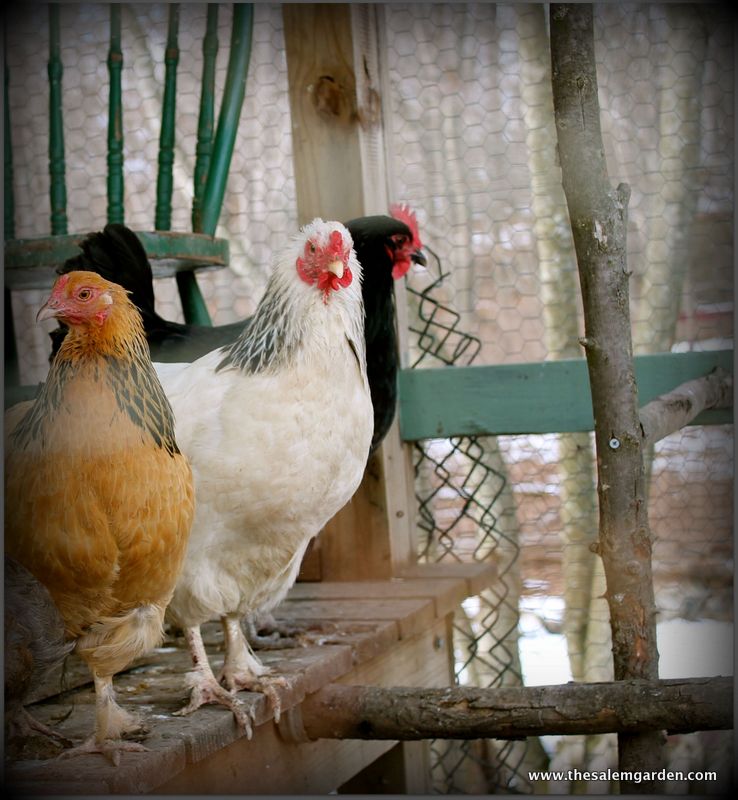
The hen on the left is a buff cochin and the one in the middle is a white cochin.  While their not widely considered to be good layers we find that ours lay medium sized eggs regularly.

IMG_4861

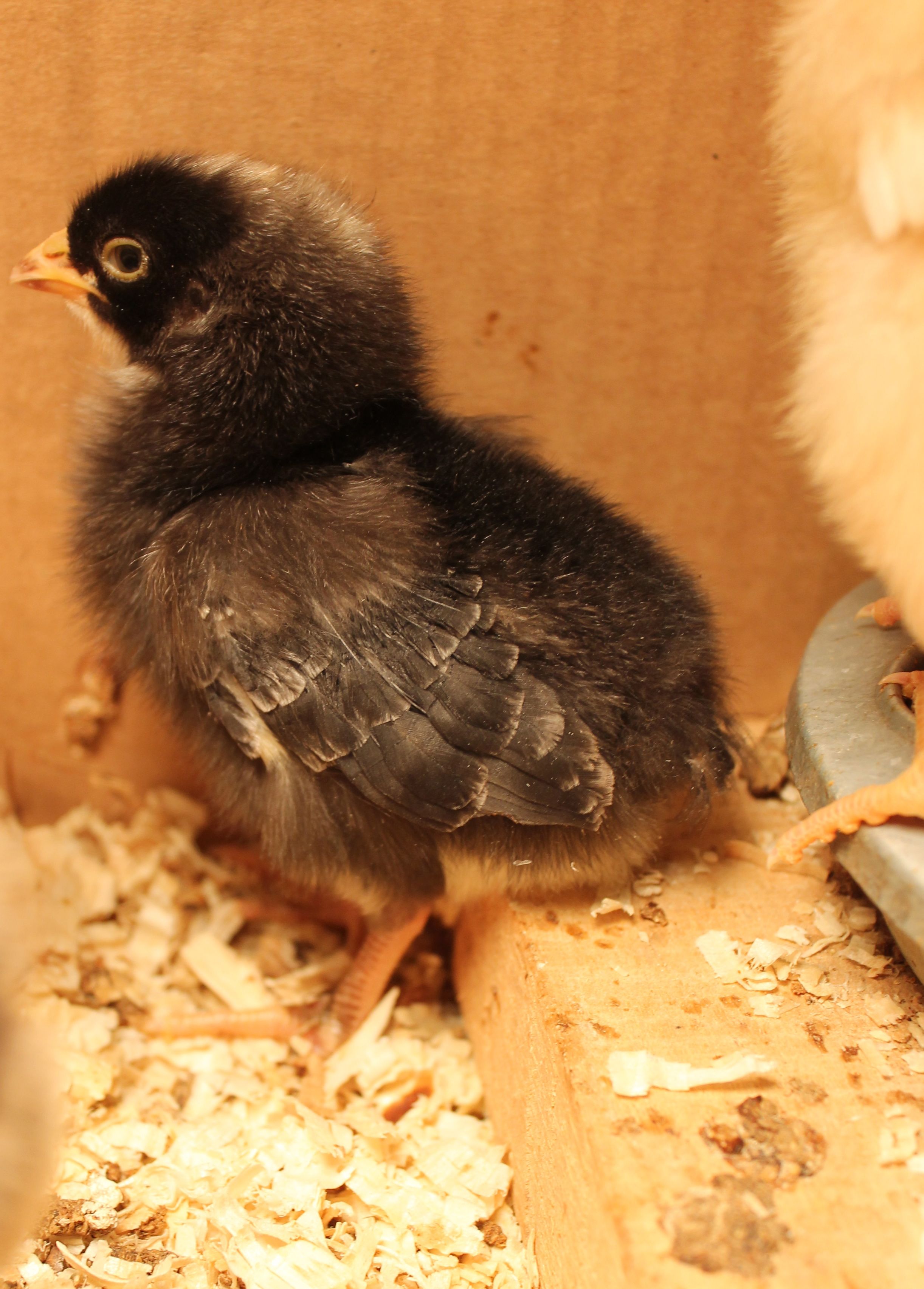
Here’s one of our current babies who will grow up to be a dark cochin. We like lots of varied colors in our flock so we’re looking forward to adding her in with the buffs, whites and banty cochin!IMG_4589

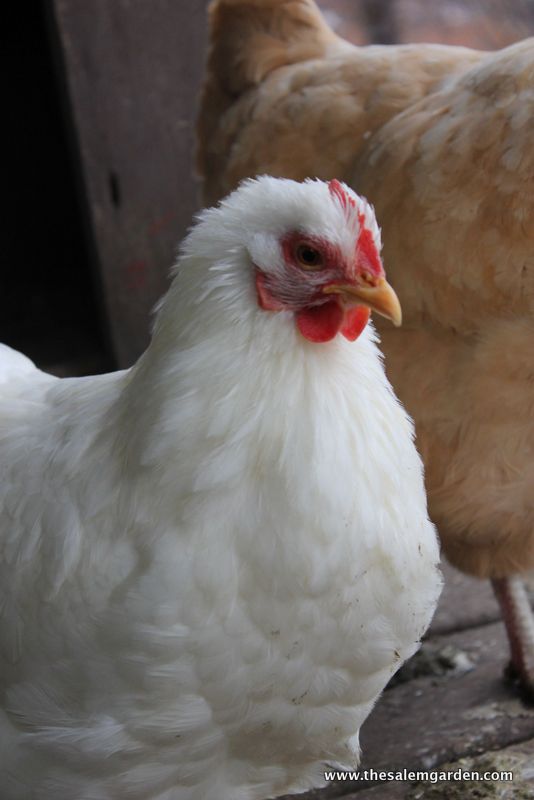
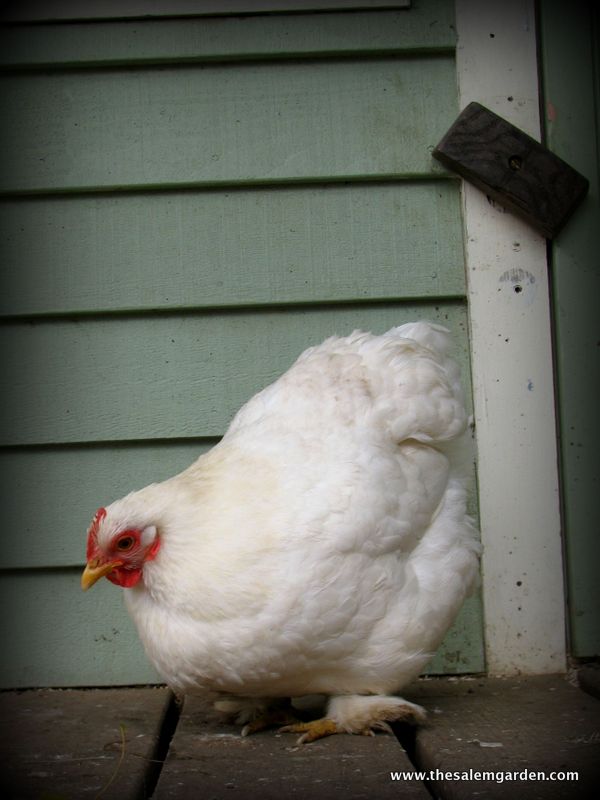
Our little white hen is a banty cochin. Banties are small chickens who usually look just like their standard (regular) sized counterparts but in a mini version. She probably weighs about two pounds, compared to the six to eight pound weights of the standards.

IMG_7657

She may be smaller than her sisters but she is mighty! She’s also quite a mother-to-be wannabe. She gets broody to the point that we have to take her off the nest at times. Last summer we went through a period when she pulled all of the feathers off of her belly so that she could keep the eggs warmer. They grew back over time but we had to regularly move her out to the run to break the pattern. Broodiness (a huge desire to sit on eggs to hatch them) is a common cochin characteristic and while it’s a little messy and inconvenient, it isn’t a problem as long as the chicken eats and drinks regularly.

IMG_4701

You just can’t go wrong with a few beautiful cochin in your flock!

We love them and you will too!

Happy Saturday!

Love, Michele

Poop-poop-e-doop

That’s what Michael always said when we were dealing with a really poopy diaper back in the diaper days and it’s my first thought when I step into the chicken coop in the morning.

I love to talk about all of the lovely reasons to raise chickens… the eggs, the colors, the educational benefits, the pest control, the fluffy beautiful fun. There is another side to this business though and to be fair and transparent the time has come for me to hit that too.

There is a LOT of poop.

DSC03868Here we go… this is from one night in the coop and it’s just one side of the room. This is a lot of poop to clean up.

DSC03873

We use this handy dandy scraper. It’s located in a tricky spot, over to the right where I can’t quite reach without leaning into the perch but I manage when I have to. Truth be told, Michael does most of the scraping. I fill in when he’s not able to which was the case yesterday morning because he wasn’t feeling well. So, I finally got these chicken poop photos I’ve been meaning to take.

I’m a pretty spoiled chicken mama and Michael is a very dedicated chicken dad so it all works out.

DSC03877This is what one morning’s poop removal looks like.

We scrape it up every day first thing. I know that not everyone does it this way, you can wait and add hay on top then clean it out less often but we’re kind of daily chicken coop cleaners. About once every four to six weeks we (I use the word “we” very loosely here) do a more thorough cleaning and remove the old hay and put fresh down.

The daily poop goes out to the compost piles down in the woods to break down. We add it to the garden as compost after a year or so.

It’s one of the best composts ever!

Guess I’m right back to the good reasons to keep chickens!

poop-poop-e-doop!

Have a great day!

Michele

Garden Blogger’s Bloom Day-March 2014

Well I can’t say that I’m the bloom day game just yet, we don’t have any blooms outside. We still have quite a bit of snow and I’ve heard a rumor of more snow possible on Monday. So for now I have to look at the patches of garden where the snowdrops and crocus usually are and just know that their under there and in a few days or weeks we’ll see them again. I’m very confident that by APRIL I’ll have some really authentic Salem Garden blooms to share. In the meantime I’ll share the indoor flowers that I’ve been enjoying while I wait.

I had a birthday recently and my friends and family were very generous in their gifts of flowers. It was a few weeks ago so most have gone by but I’ve managed to hold on to a few.

IMG_4925

The last few flowers of alstroemeria from the bouquet that my family gave me.

IMG_4923

A lovely white azalea, which will be planted outside soon.

IMG_4921

This is a mystery… anyone care to identify for me? It came from a company called proplants.com but I don’t see it on their website. It’s pretty on my kitchen countertop.

IMG_4920

And another that arrived in a lovely arrangement without a tag. It looks like it might be a member of the clerodendrum family…anyone?

Next month there will be bulbs and flowering trees, I just know it! In the meantime be sure to visit May Dreams Gardens to see lots of spring gardens in bloom!

Tomorrow I’m back to the chicken series until that crocus blooms!

Enjoy everything!

Michele

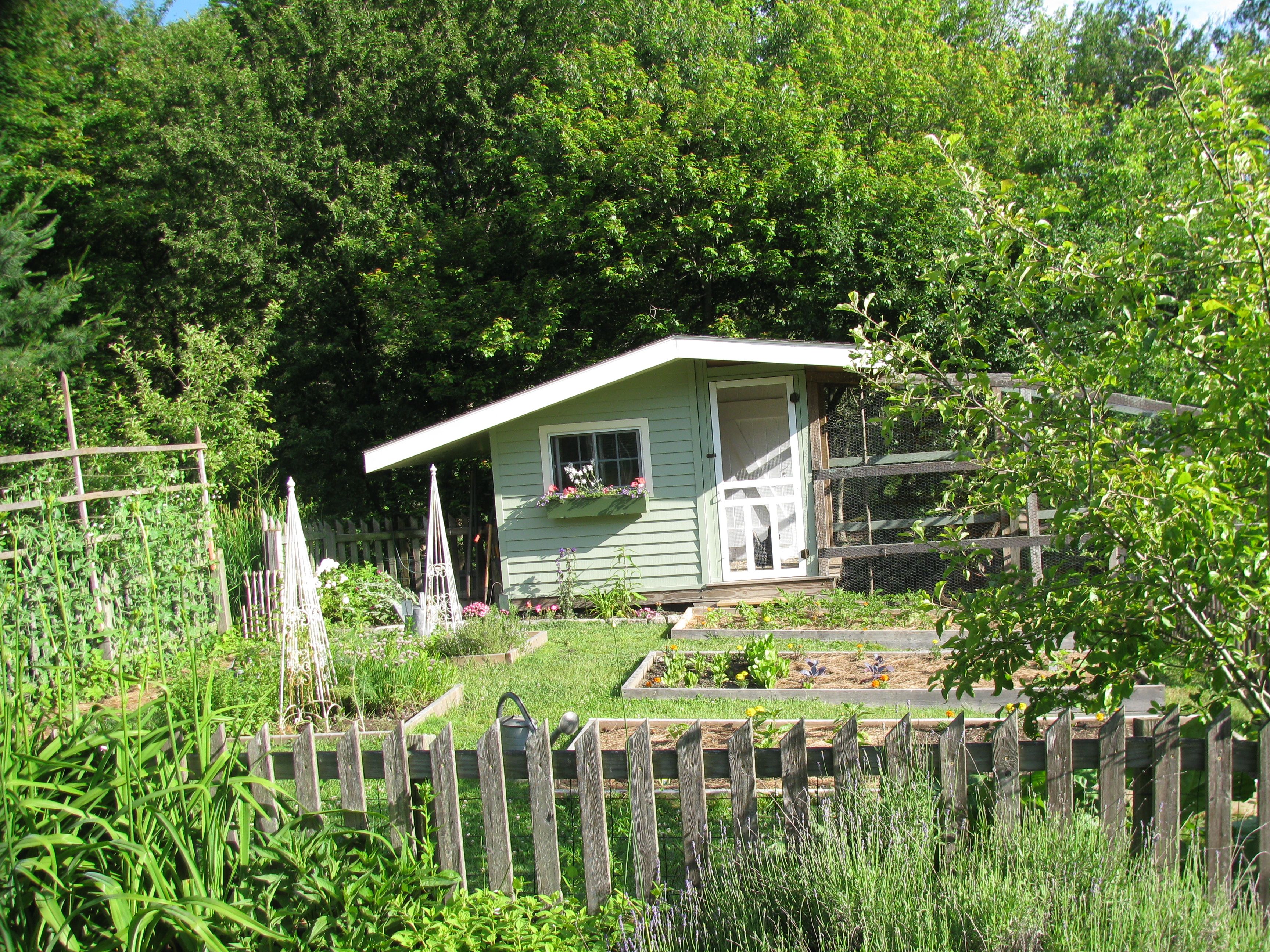
Our Coop Construction, 2007-Present

Good almost spring morning!

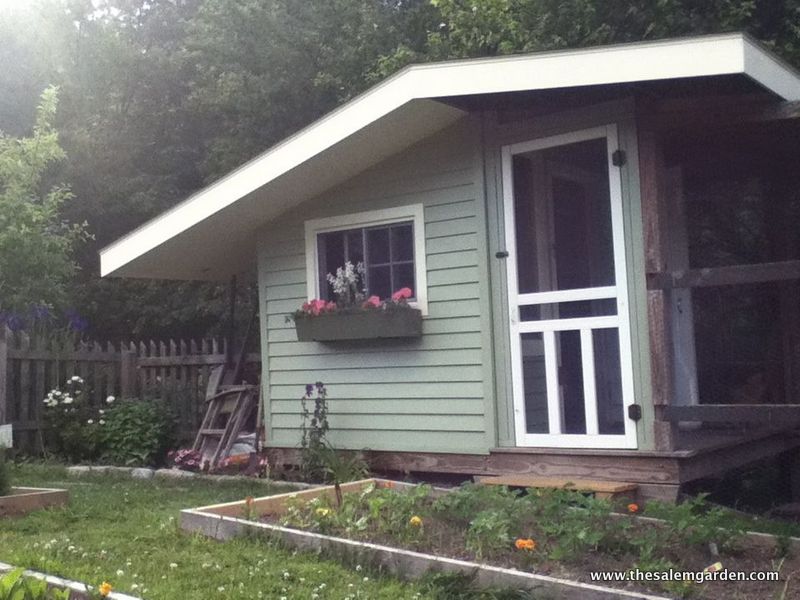
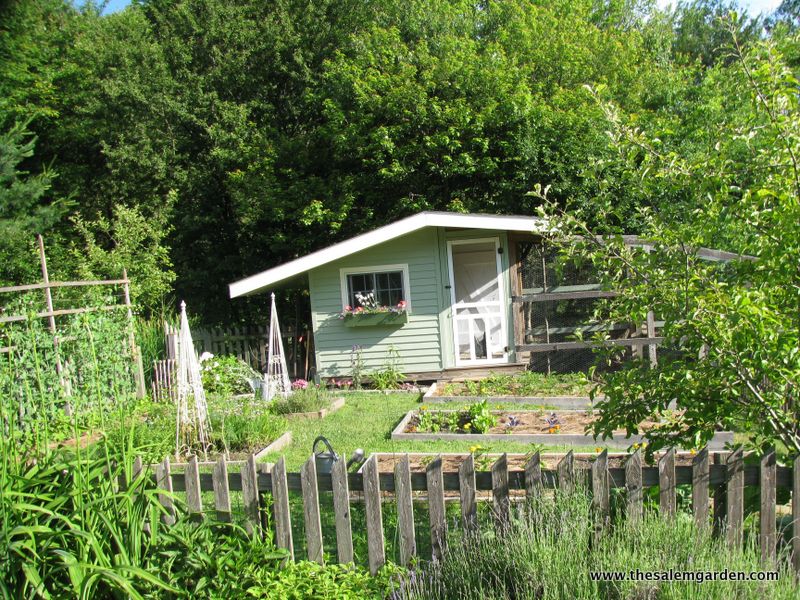
I seem to be encountering lots of people who are planning to build or buy a chicken coop these days so I thought I’d share an overview of ours as it was constructed.

We didn’t exactly plan the coop before our first batch of chicks arrived in 2007 so our pullets (young chickens) lived in our basement for several months during construction. I don’t recommend that at all. You will save yourself a huge amount of anxiety by building or buying a coop before your chicks arrive. We kind of go with the flow around here but those few months were quite difficult. Fortunately we were totally in love with our brand new chickens so we all got through it together.

Okay, here goes:
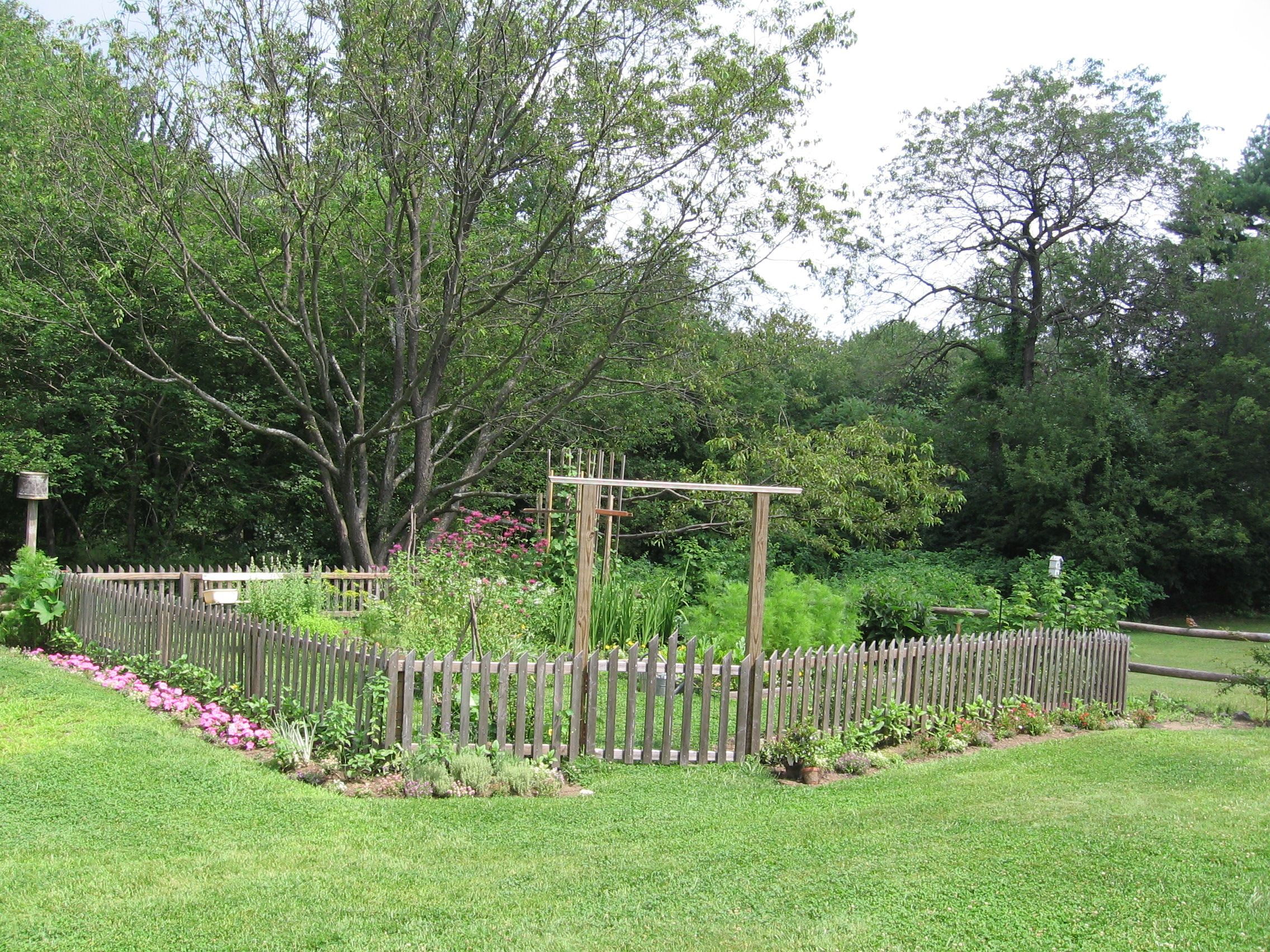
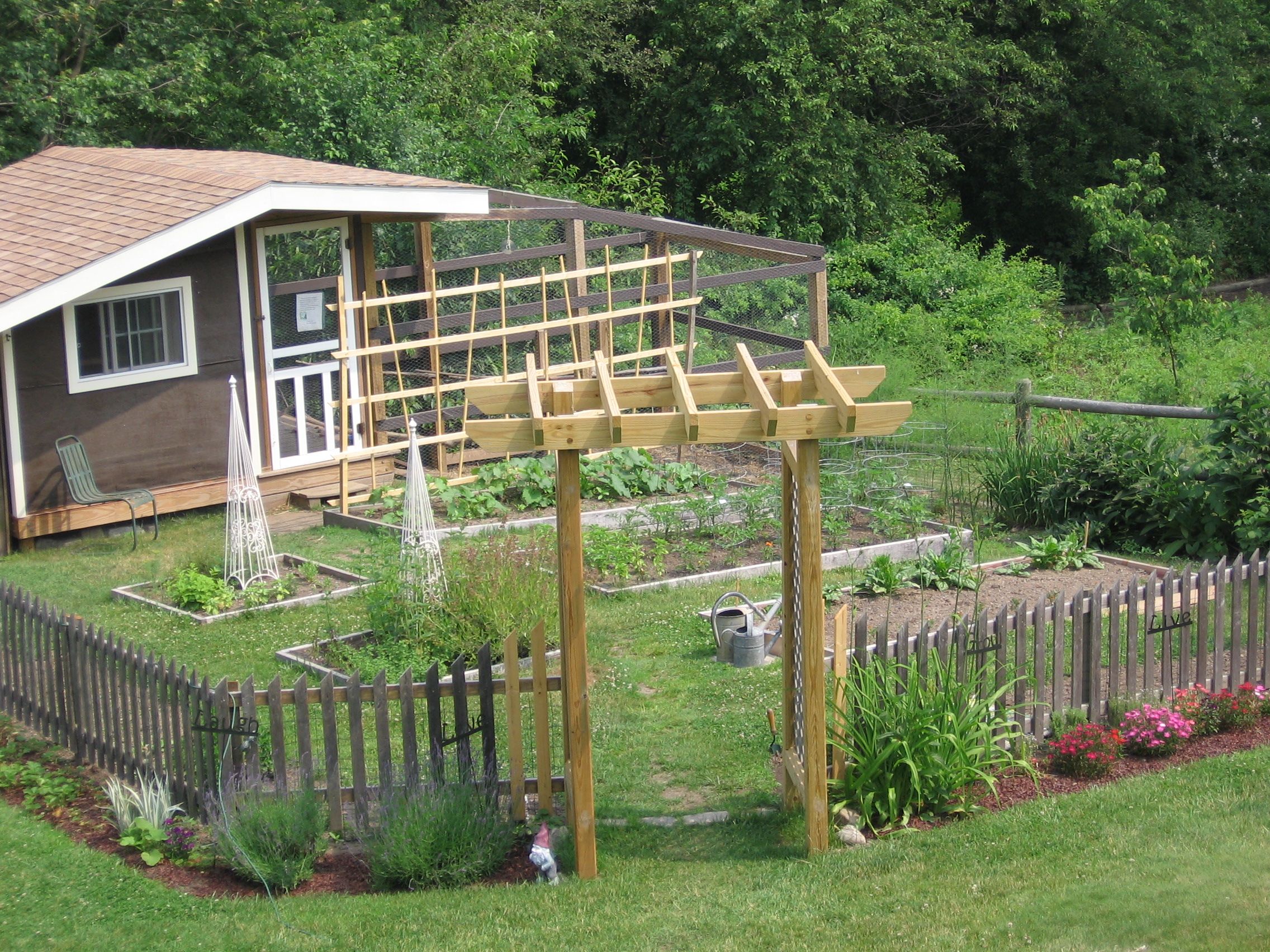
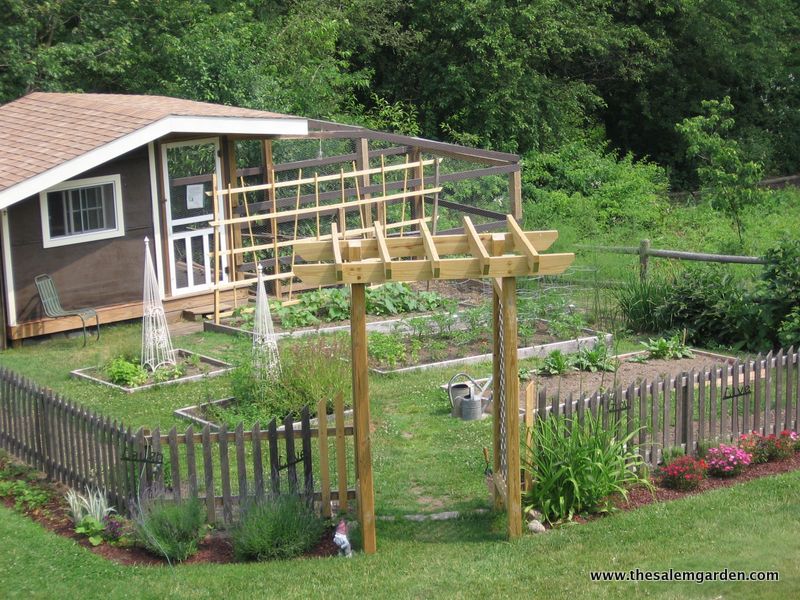
IMG_0440The garden, pre chicken, around 2006.

IMG_1507

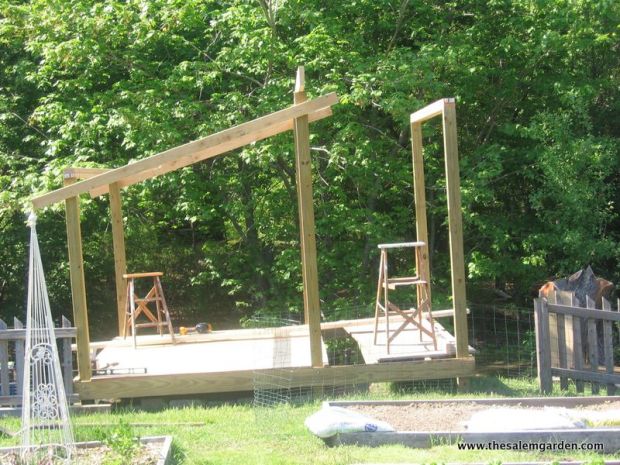
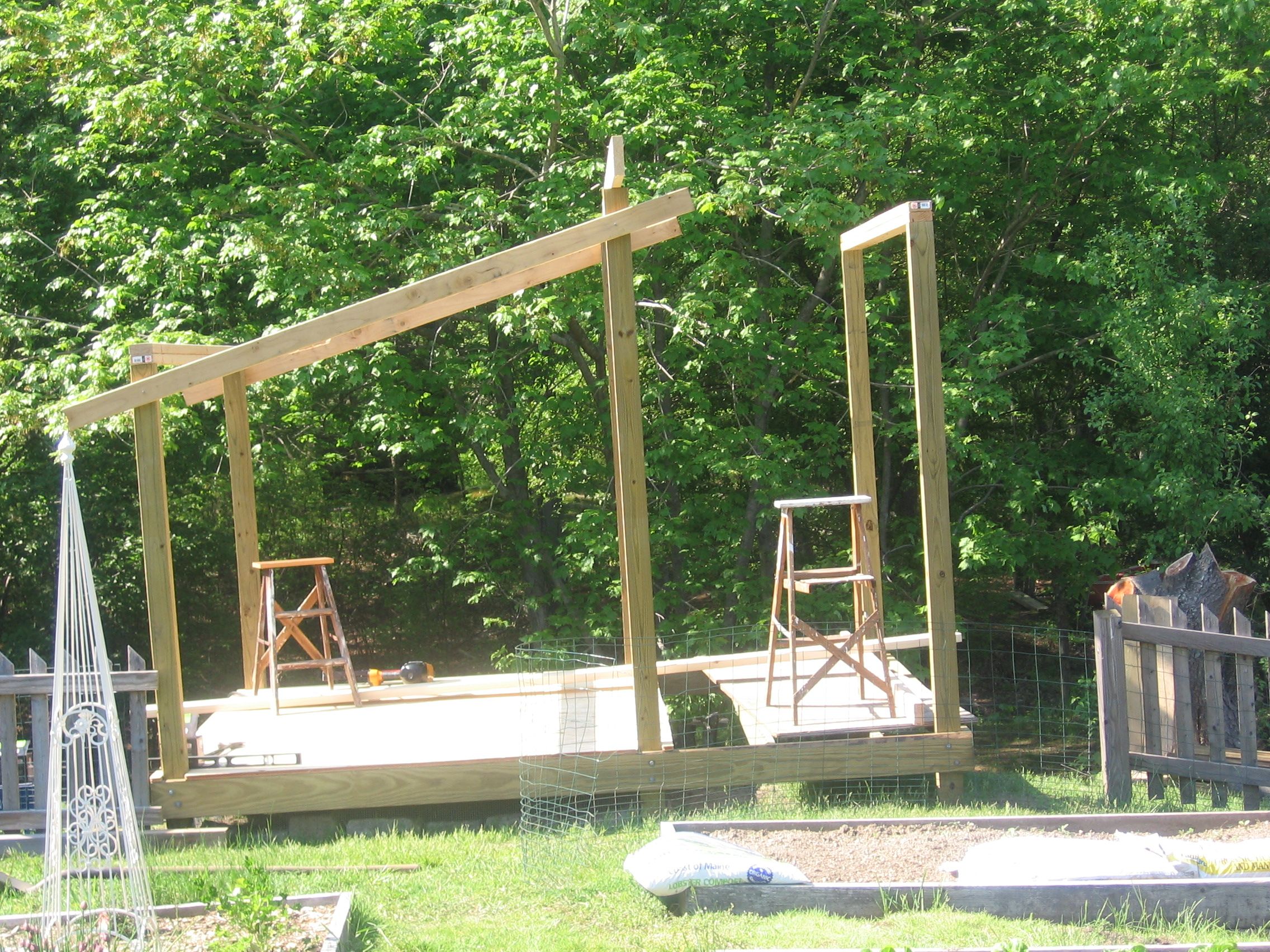
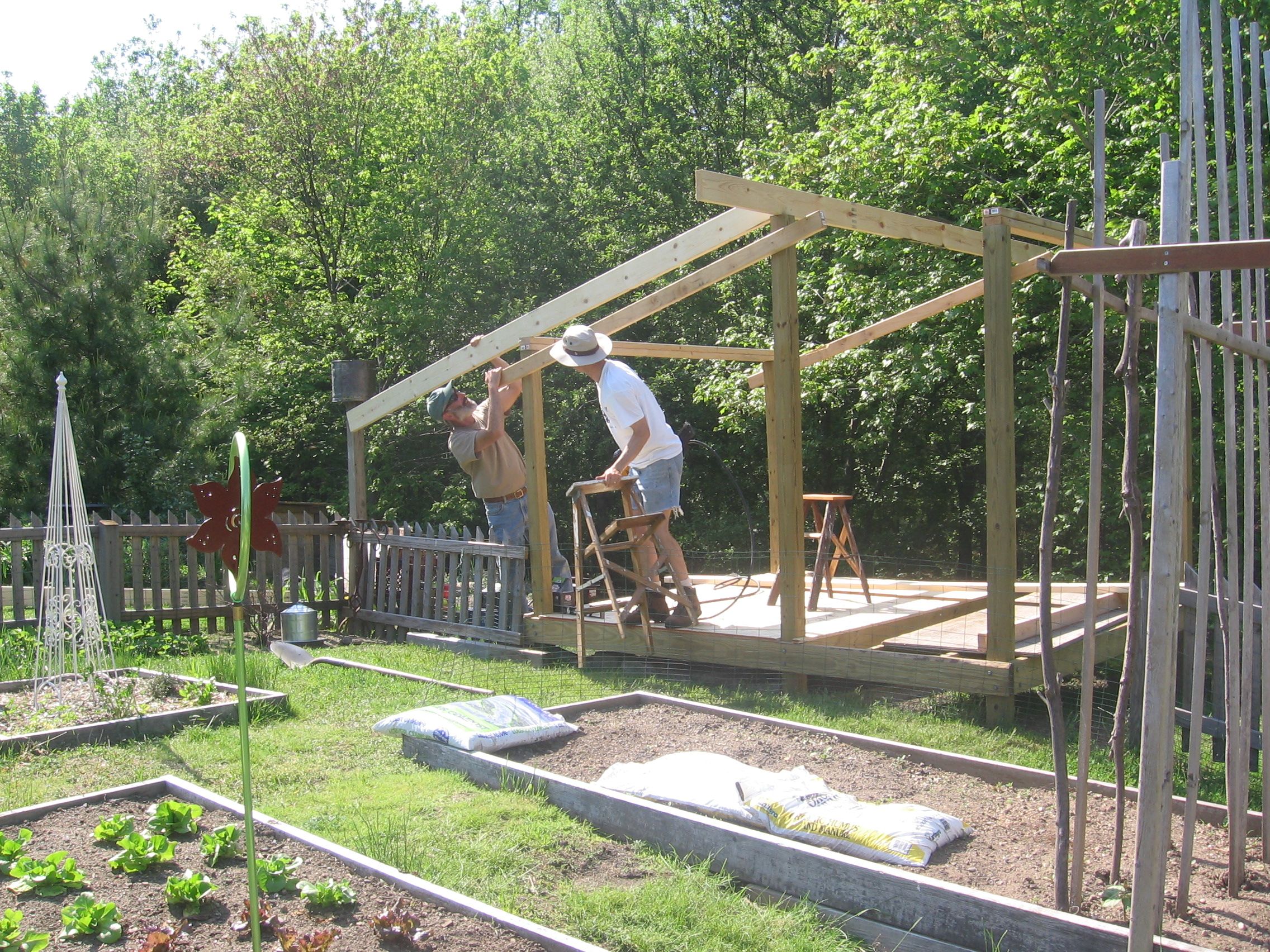
The very beginning… The corner posts were placed into holes dug approximately two feet into the ground. Michael hit a lot of rock but says he put them in as far down as he could go. The floor is plywood, the main posts are 4×4, the floor and ceiling were constructed with 2×6 boards and the walls with 2x4s.

IMG_1510

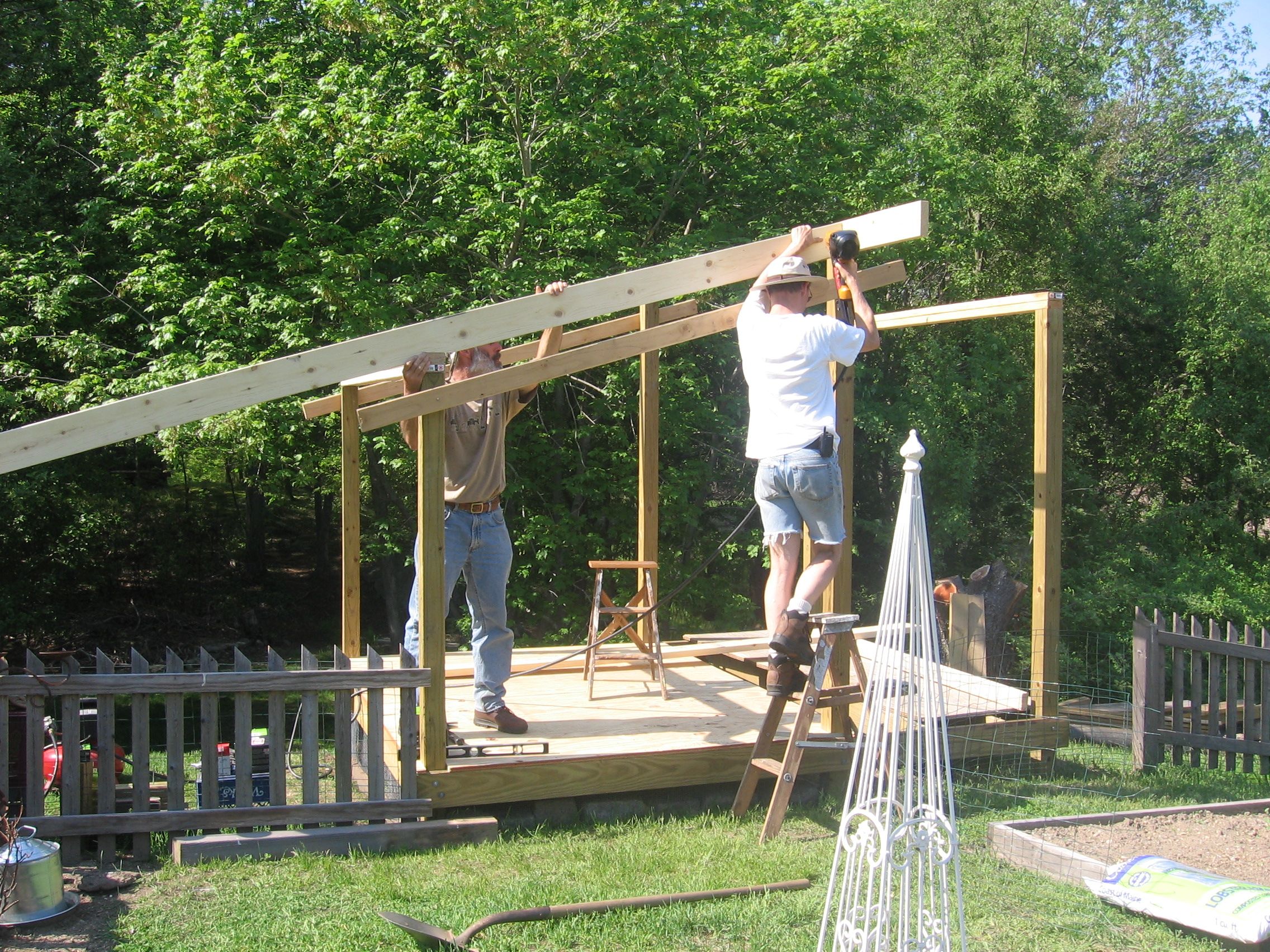
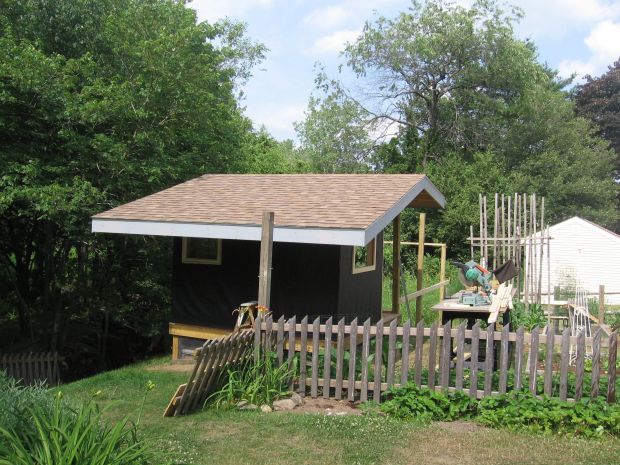
The roof going on..IMG_1511

IMG_1510

The roof pitch echoes our house’s roofline. It doesn’t match but it coordinates nicely.

IMG_1616

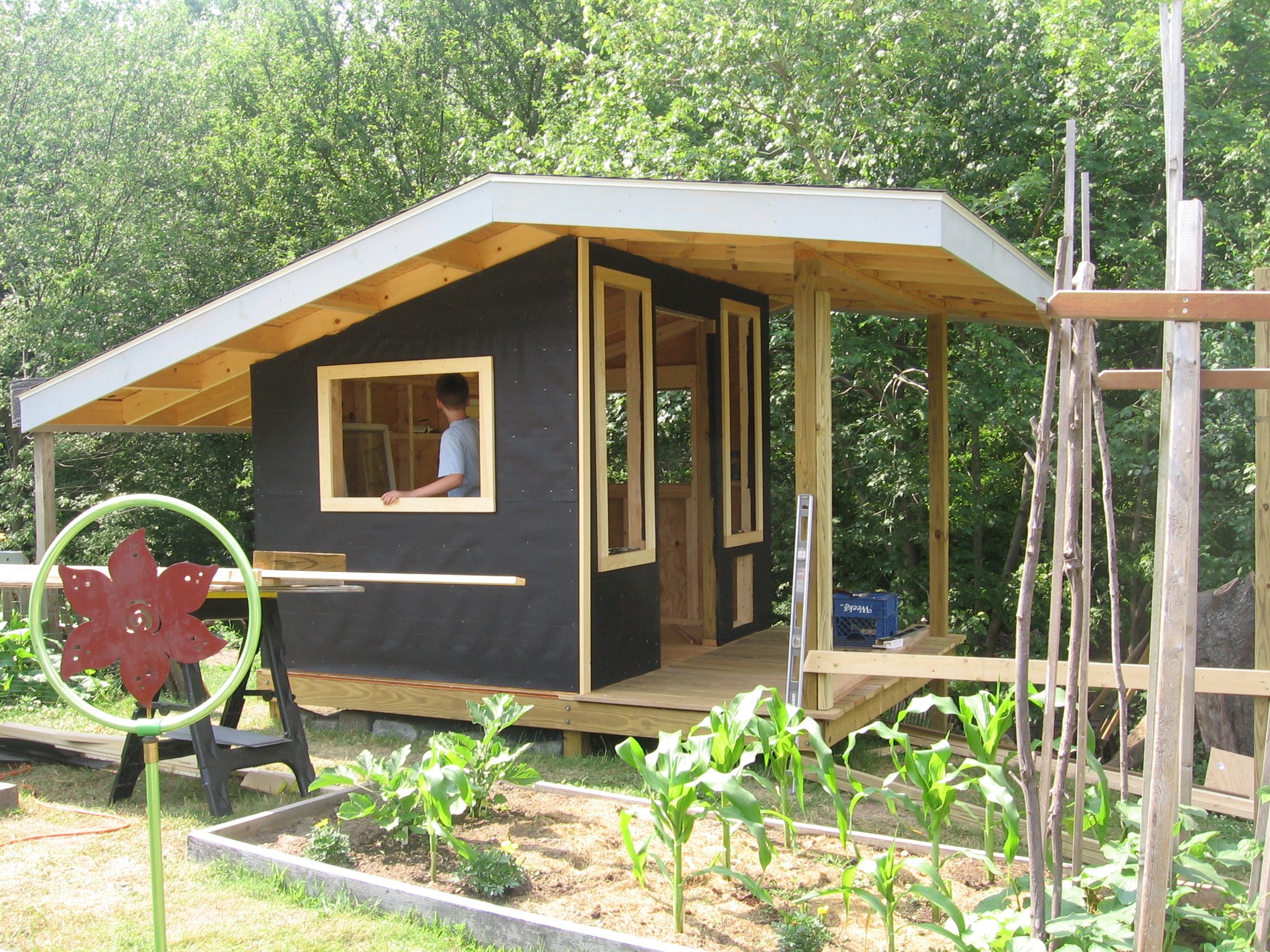
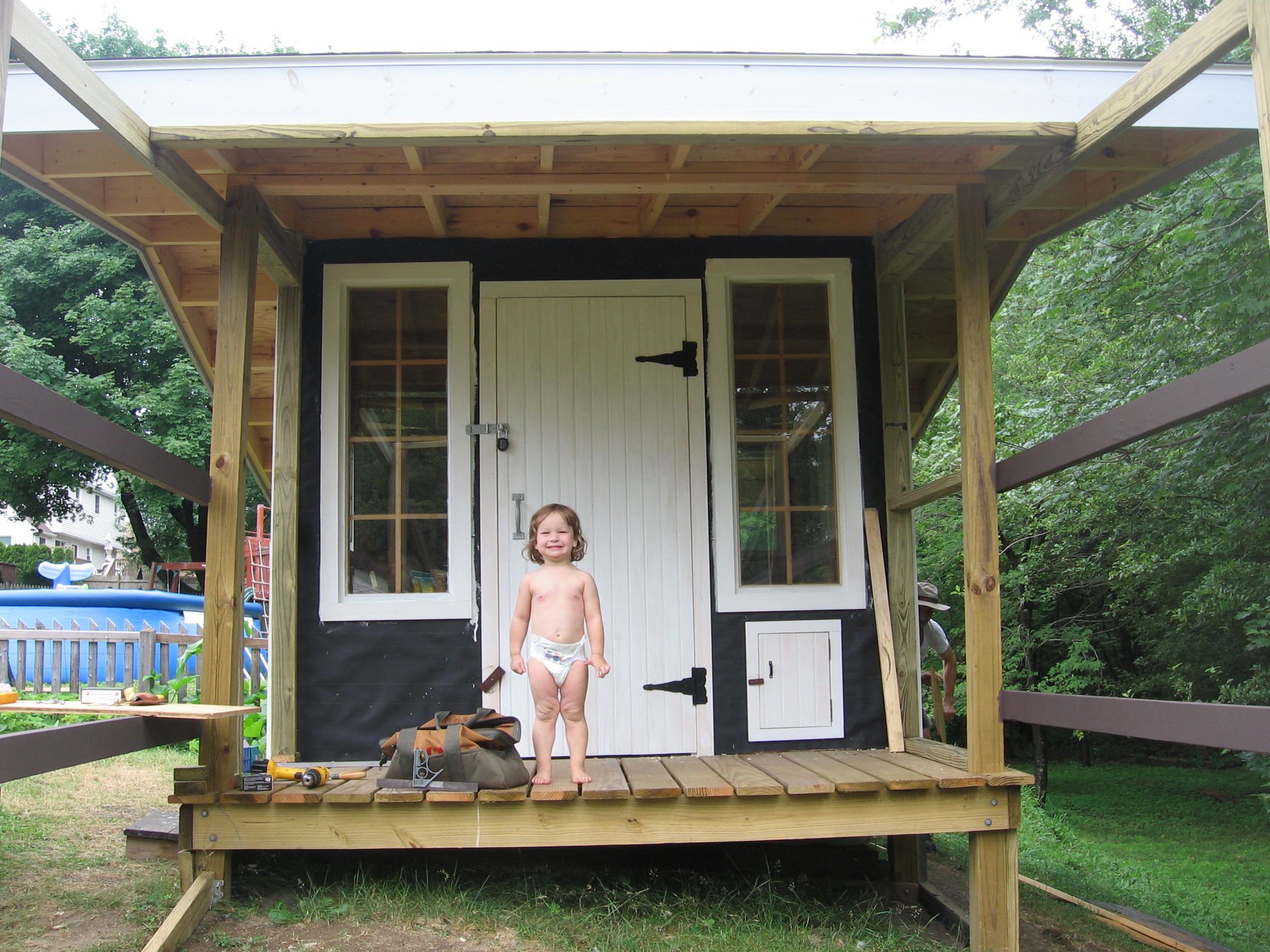
The walls are plywood attached to the frame with roofing paper applied over it to seal. The windows were mostly salvaged with the exception of the front window that my son is standing in. I think that one came from a building supply warehouse nearby (on the clearance rack I’m sure).

IMG_1618

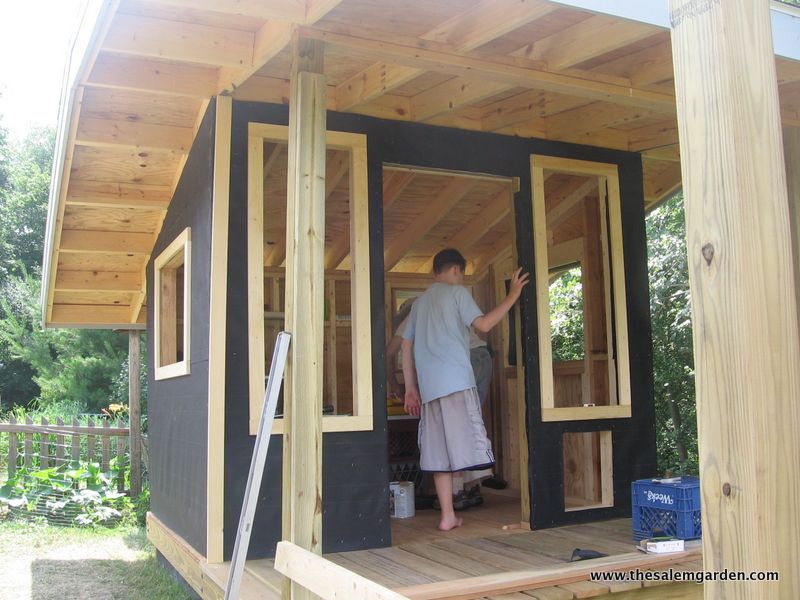
Looking at the front; long windows for lots of light, a nice wide front door for easy access and the little chicken door on the bottom right.
IMG_1619

Here’s the back side. That overhang provides handy shelter for things like garden tools and wheelbarrows.You just have to watch that you don’t hit your head on the corner.

IMG_1622My little girl (who turned nine last week!)… windows and doors in. No screening on the run yet but that was in process.

IMG_2537

Looking down at a habitable coop without siding. It took another year or two for siding to be added.
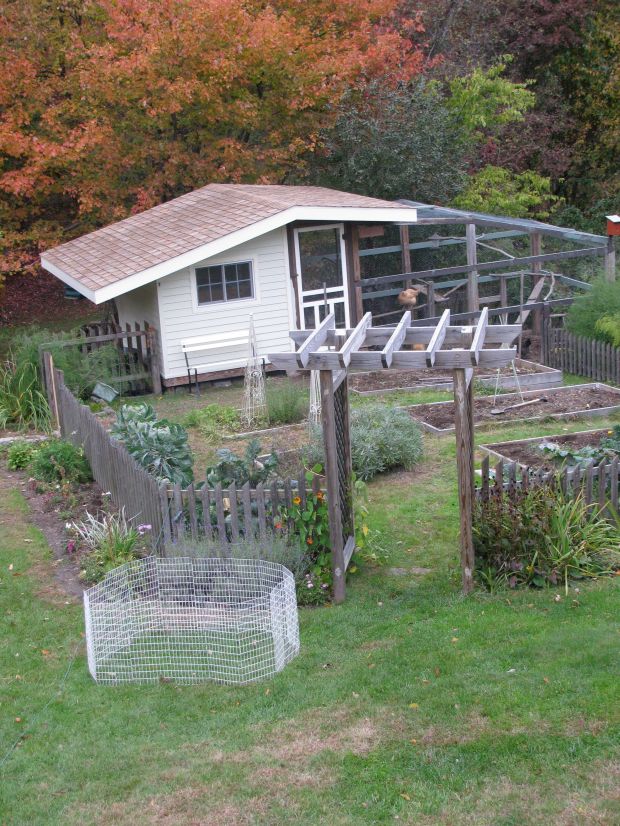
IMG_4828

But then it was, and primer was applied to preserve the clapboard.

IMG_0654

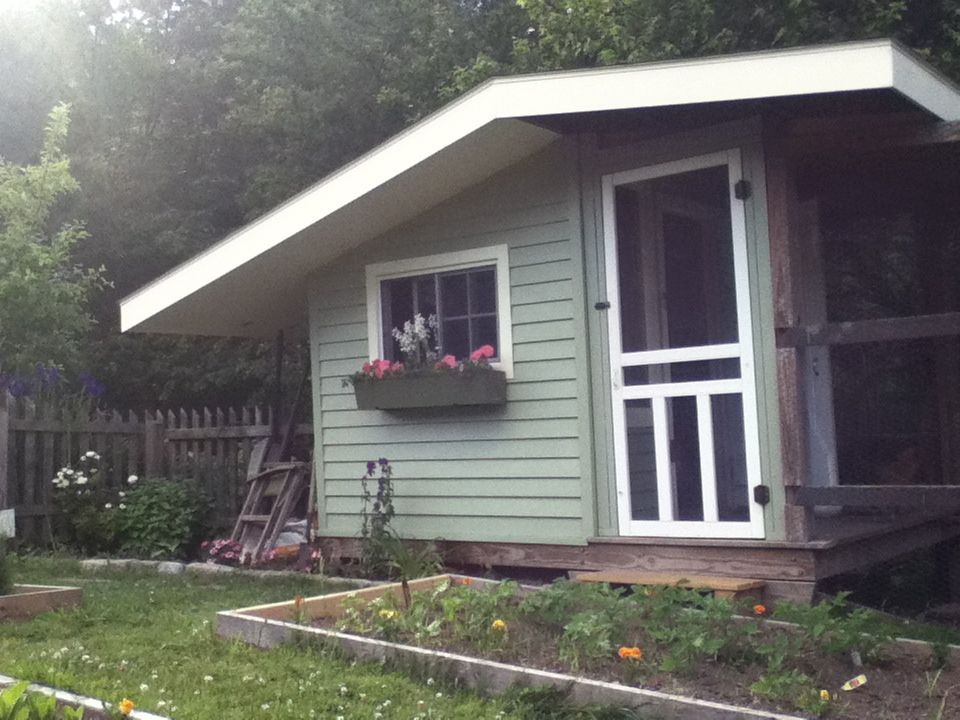
Painted and decorated, with flowers growing, of course.
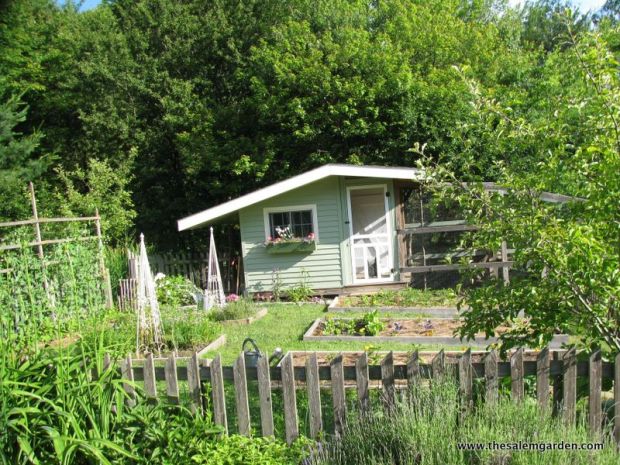
IMG_7748

It is a pretty little coop!

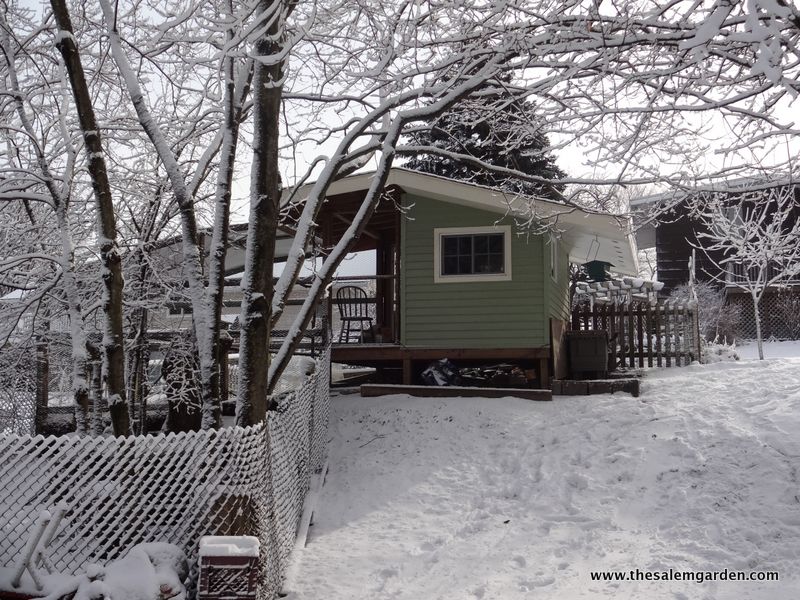
DSC01461Far back view in winter. The girls get afternoon sun through that window which helps to keep them cozy in the colder months.

DSC03864

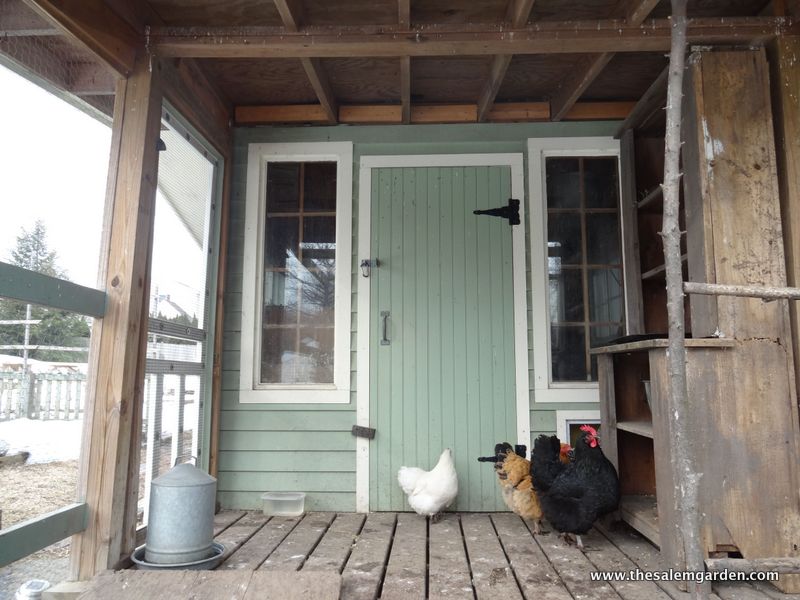
Here’s the front door and porch area. The porch is great because it gives the chickens a dry place to spend time and there’s space under it so they can hide if needed. It also saves us from having to step into mud pits…

DSC03863

… like this one. Unless your a blogger who wants to take a picture of the front door of the chicken coop during mud season.

But who do you know who would do that? 😉

I realize that this is kind of a quick overview of our process and there’s lots of details missing. I took these photos as we went along but never with the idea that they would someday be used on my blog. So, I apologize for the gaps but hope it gives you an idea of what our coop exterior looks like and what our construction journey entailed. I’m going to do an inside tour in the next week or so.  I think I’ll include the head chicken keeper’s direct input as I write it to insure accuracy and probably some entertainment.

Leave me questions! Michael and I will be happy to answer them!

Happy Coop Building!

Michele

Consider the Australorp

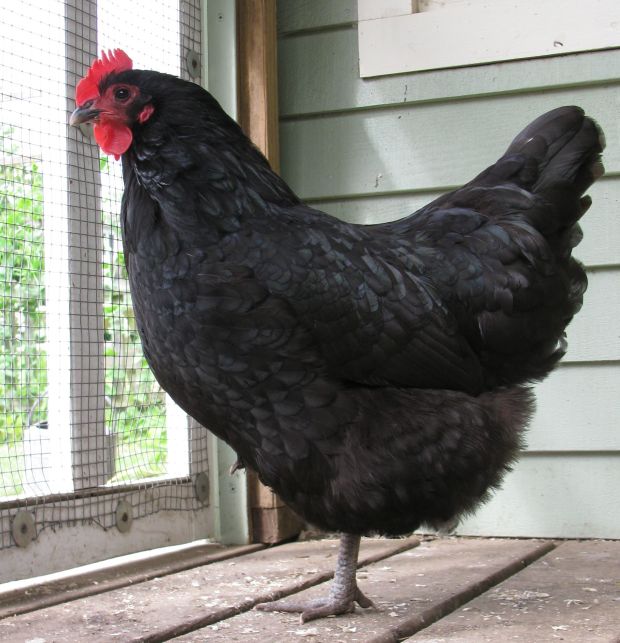
IMG_7674We love our australorps. They’re classic chickens… very beautiful, good layers, just nice to have around. One of ours tends to wander a bit more than the rest of the flock. I once opened our front door to find a neighbor whom I had never met, coming by to tell me that one of our chickens was in his yard. I went to check on it and there she was several houses and some woods away, foraging in their grass. DSCN0312

They begin life as multicolored chicks.

IMG_7676-001

Before you know it that baby will have become a stunning hen.

It’s amazing how that happens.

Consider the australorp if your choosing your breeds today!

Michele

They’re Here! Baby Chicks 2014!

IMG_4822

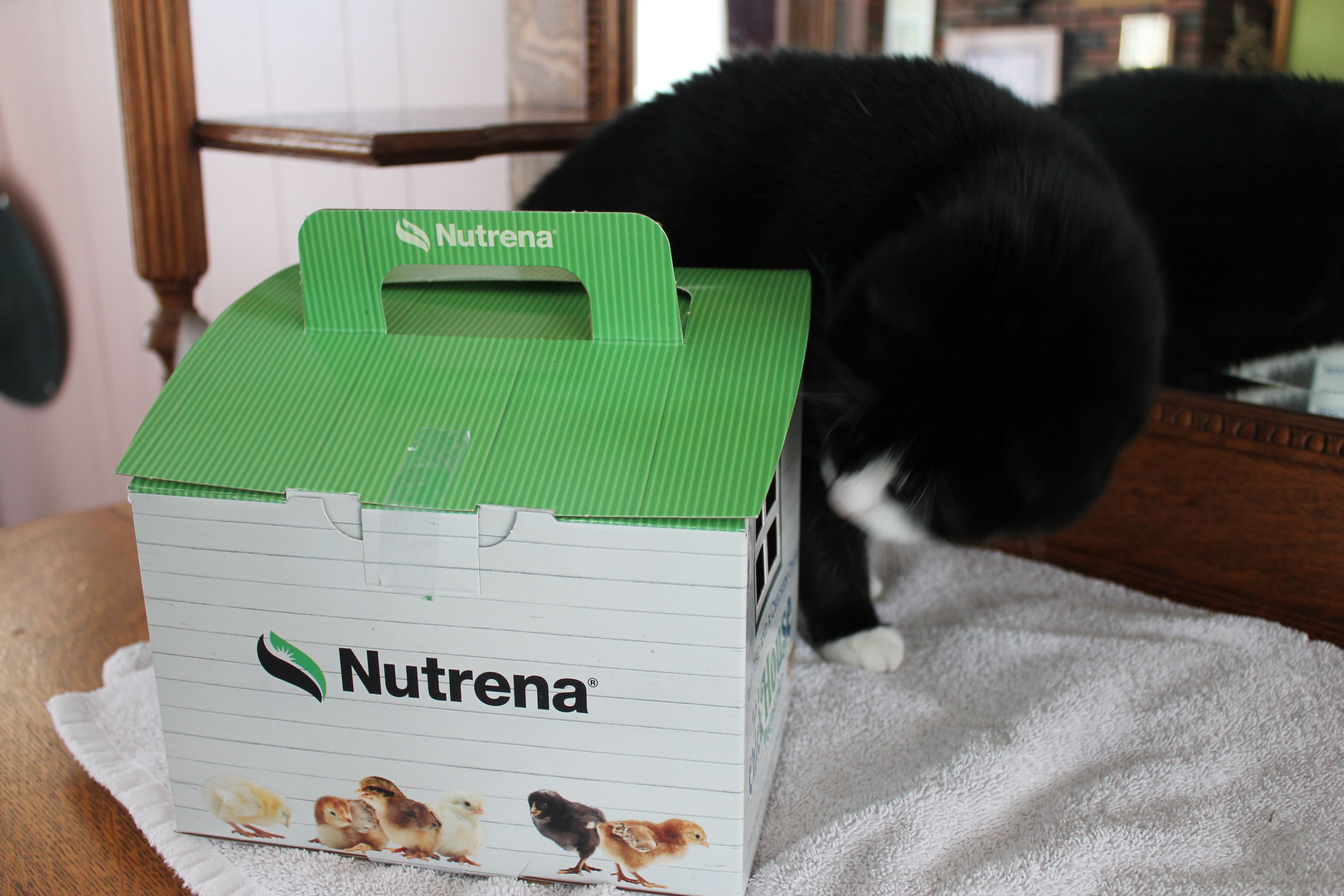
What could be in this box?

IMG_4823

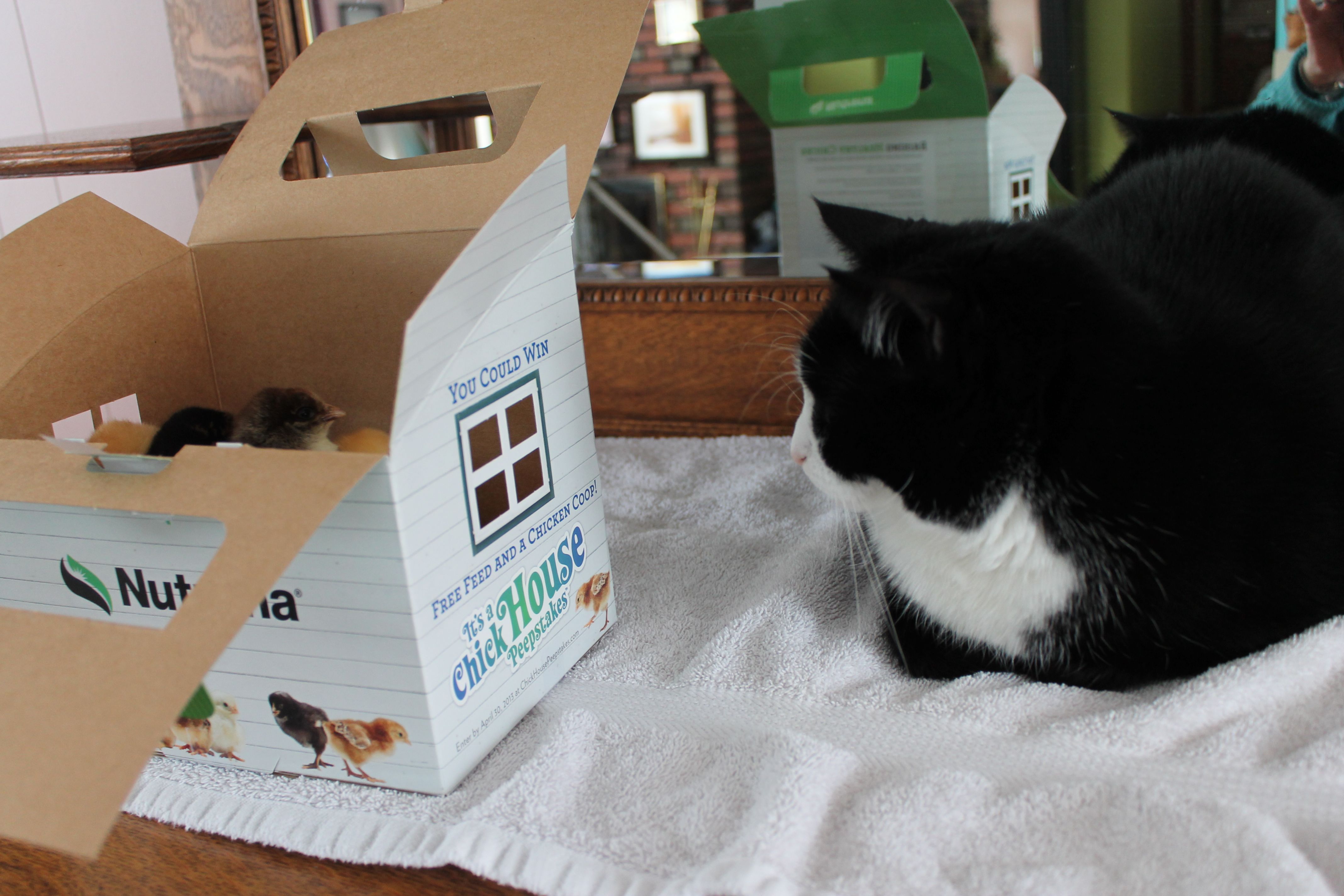
Maddie thinks it sounds familiar

IMG_4824

She’s heard this before…

IMG_4825

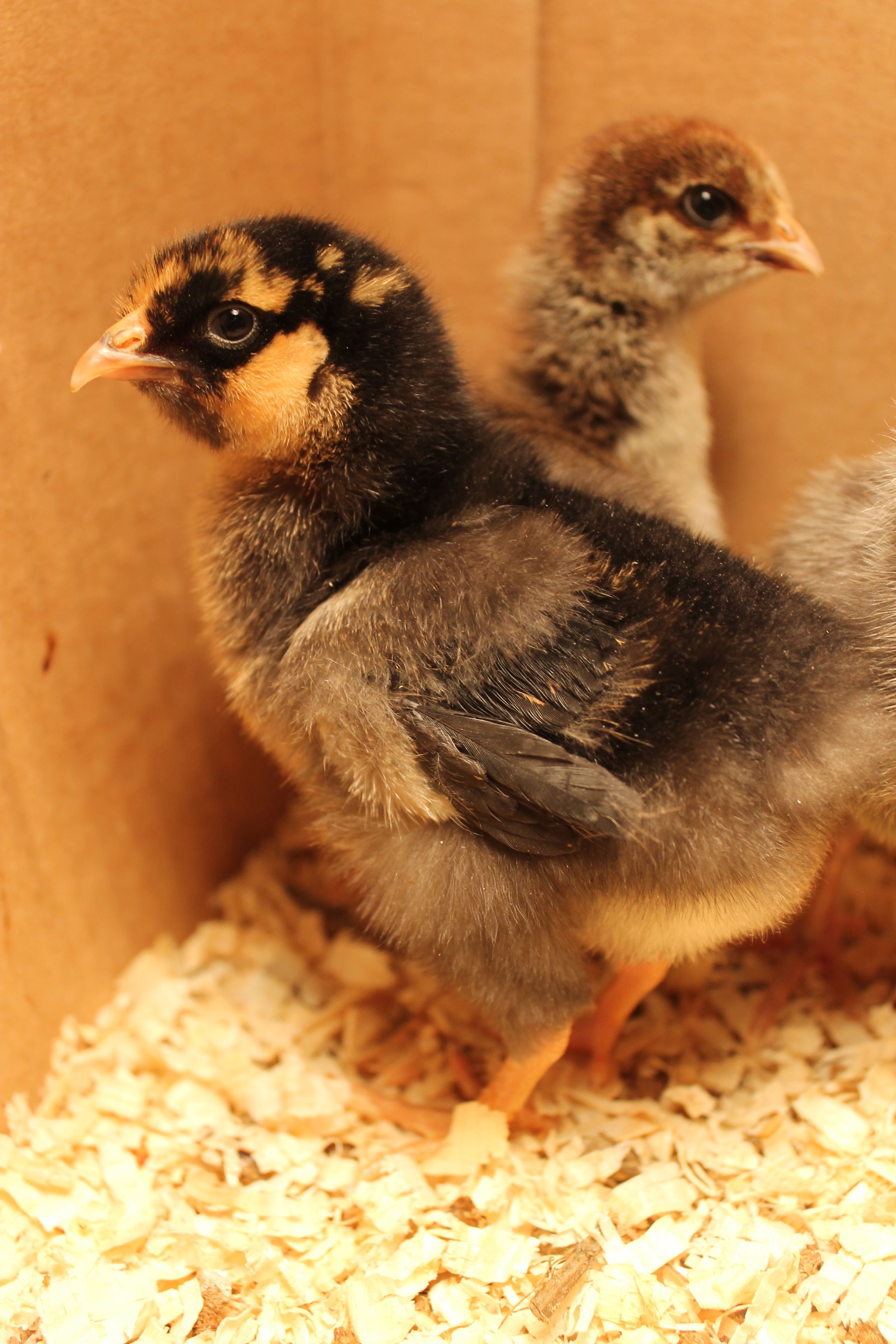
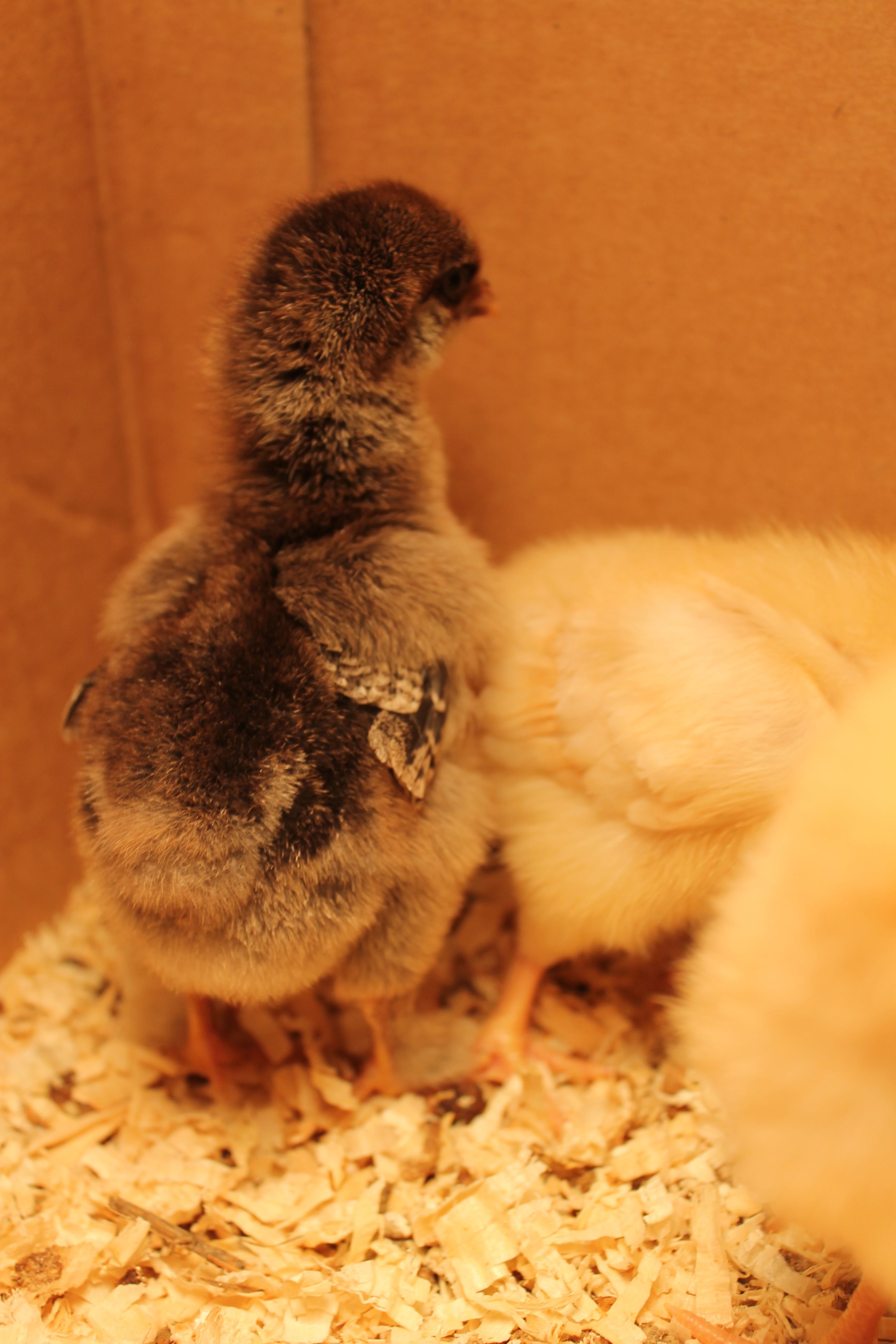
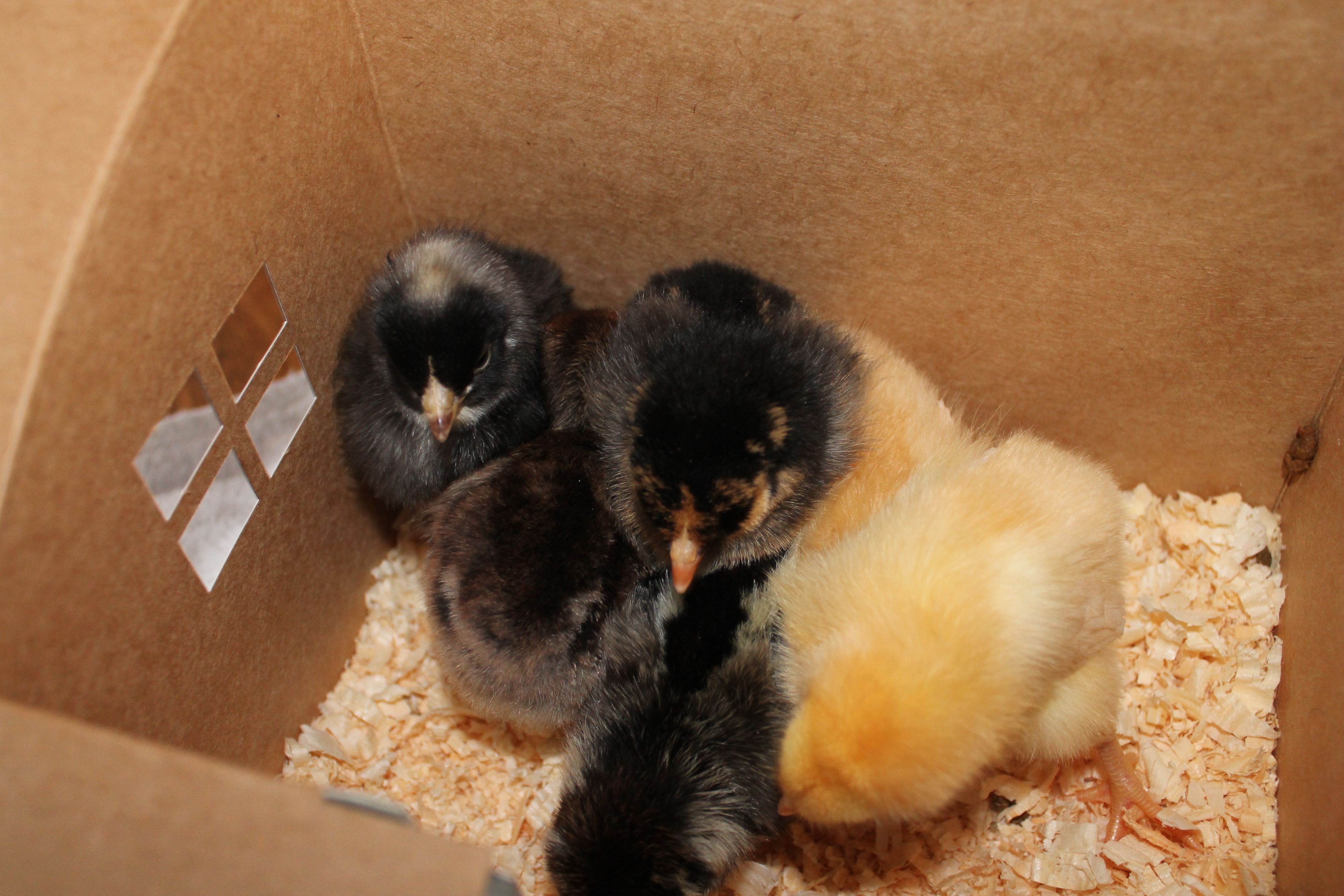
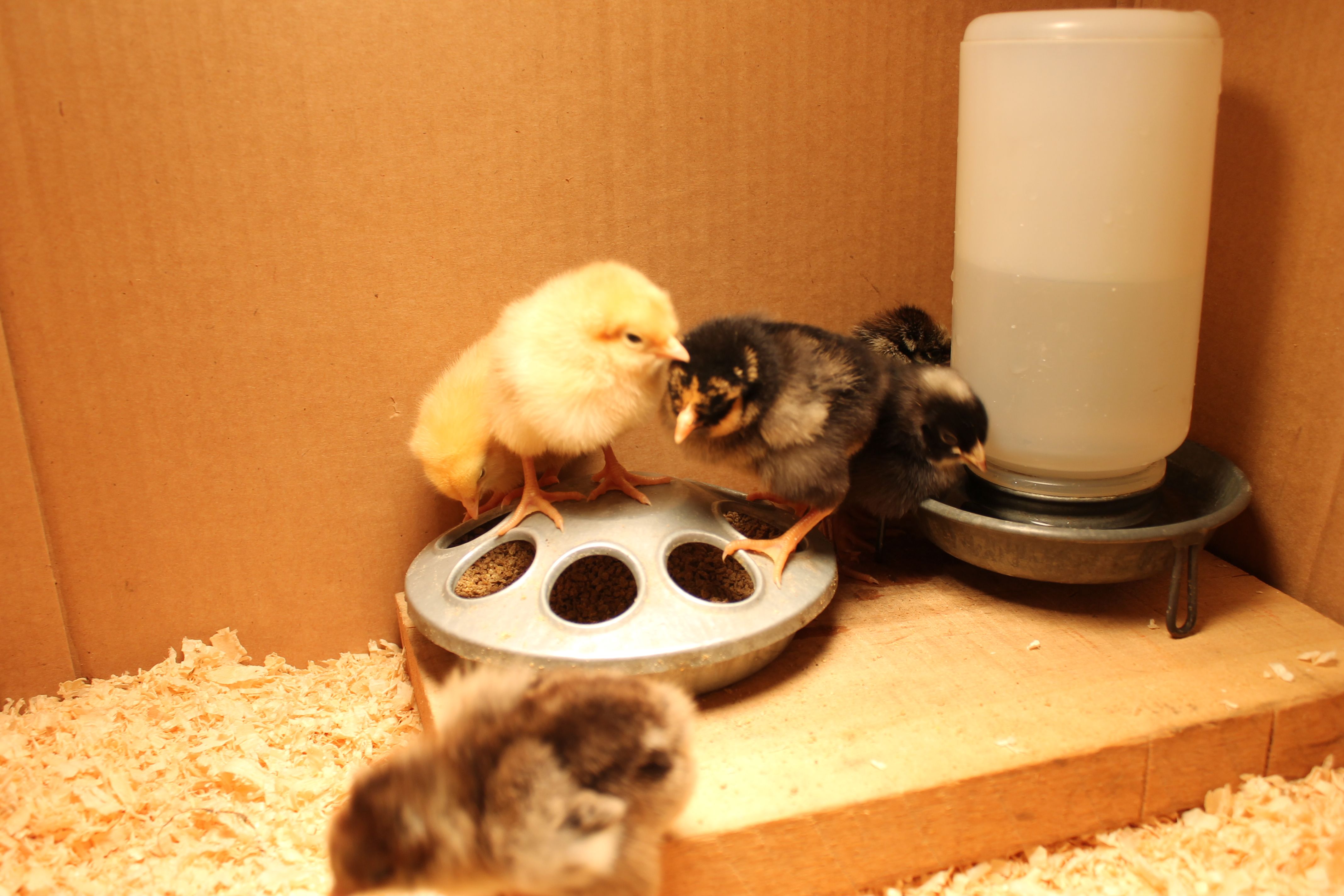
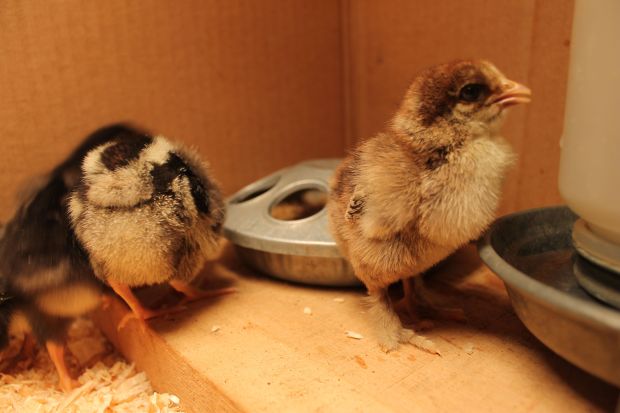
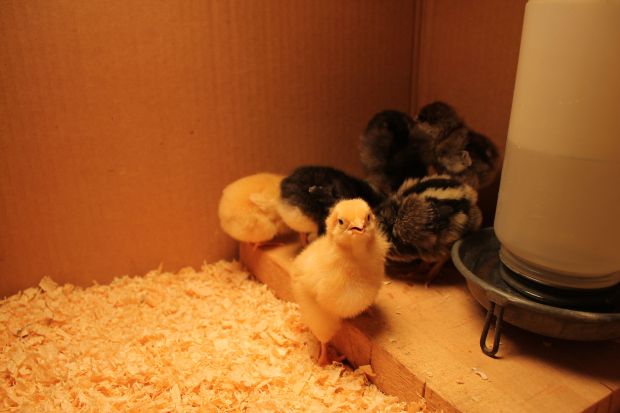
Yay!! Two buff orpington, a cuckoo maran, a dark cochin, and one gold and one silver laced wyandotte…

IMG_4831

IMG_4835

IMG_4839

IMG_4843

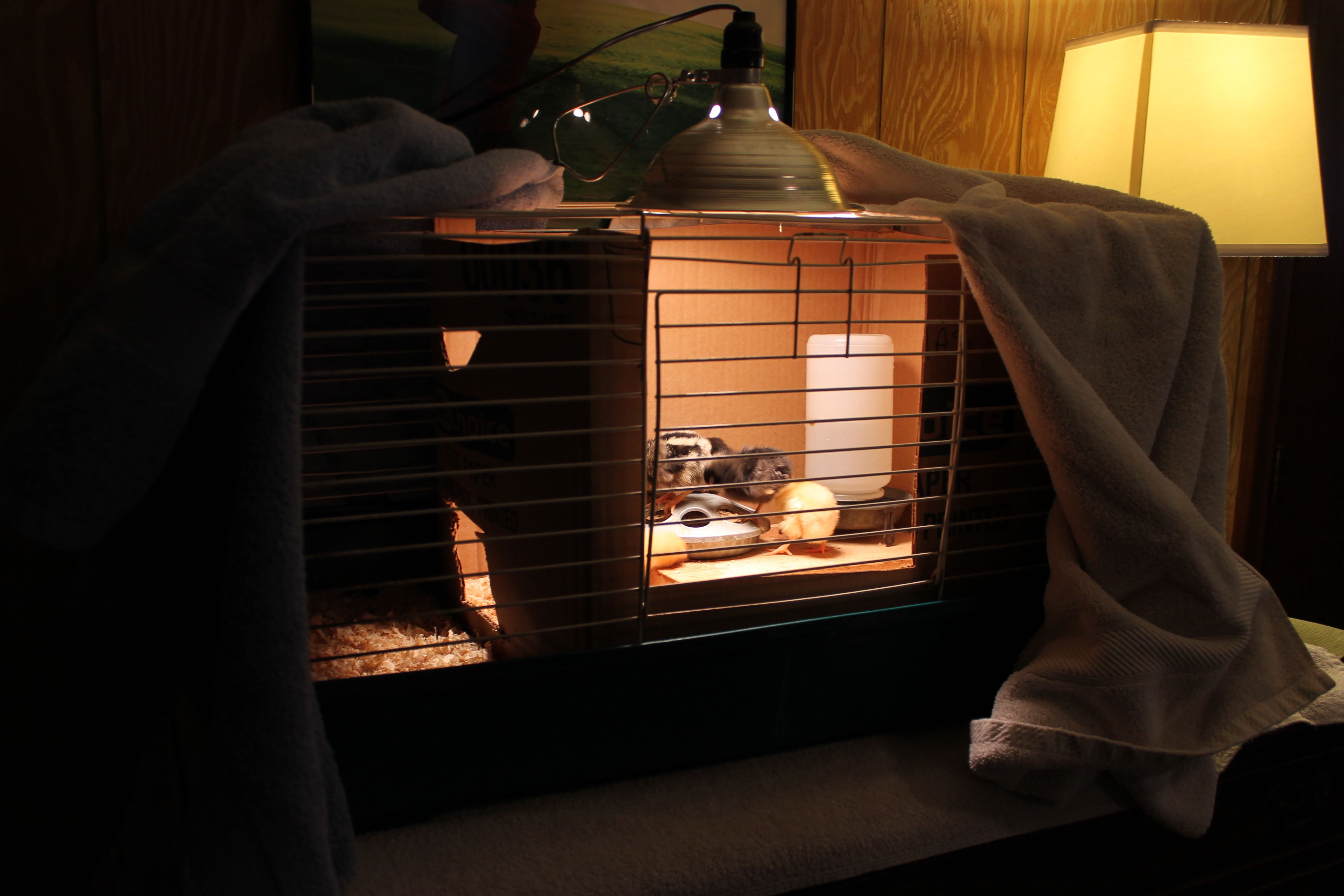
Soon they were safe and sound in our new brooder.

We made it from a bunny cage for protection with a brown box inside, light above and towels for warmth. I think it’s going to work. I’ll keep you posted..

IMG_4848

The chicks were hungry and thirsty…

IMG_4860IMG_4861IMG_4864IMG_4865IMG_4859and ready for a nap.

Actually I think we’re all ready for a nap.

More to come soon!

Michele

The Chicken Bucket

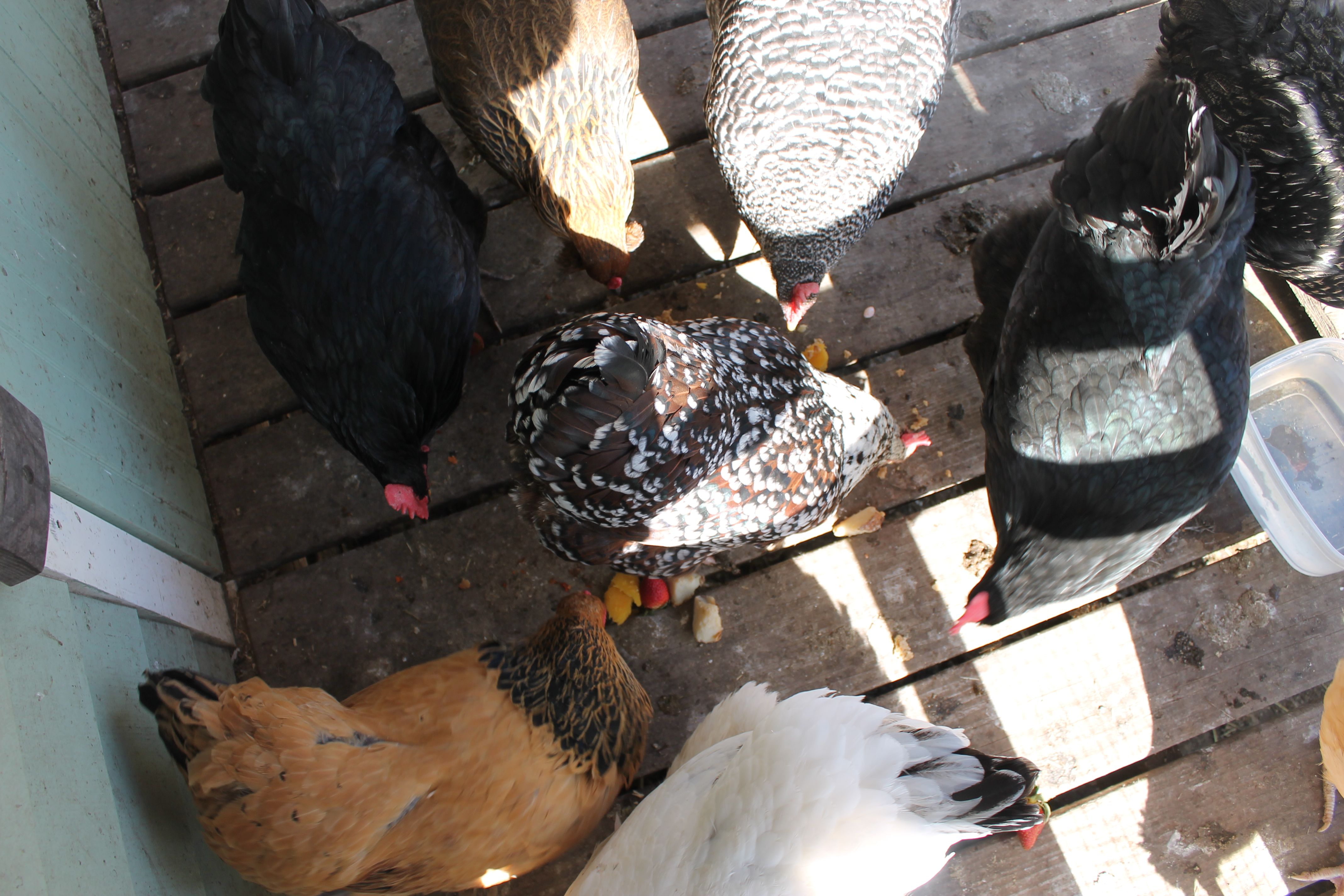
One of the most important parts of our role as chicken keepers is to provide food for our girls. We do feed them chicken feed and I’ll talk about that at some point, but we also collect everything that we don’t eat into a handy plastic container known as “the chicken bucket.”  The chicken bucket is absolutely central to our kitchen’s function. If we don’t  have one on the counter, even for a minute, all food production and clean up comes to a halt. If it’s been taken out to the coop someone immediately replaces it with a new container so that we’re good to go for the next few hours. We feed our chickens almost everything that we don’t eat with the exception of uncooked potato peelings, citrus fruit and chicken. We don’t feed the chickens chicken… that just feels wrong.

IMG_4775

Feeding them lots of scraps helps to keep our feed bill down. We eat a pretty well balanced diet so I like to think that it also gives them some balance and variety.

DSC01468

It might help with socialization skills too.

IMG_4807

Anyone holding the chicken bucket is always made to feel very welcome and loved.

There are many joys that come with having chickens and watching their reaction to this is near the top of the list!

Enjoy everything!

Michele

ps/ 12 more days till spring! 🙂

Beware of the Predators…

…because they are out there and their hungry!

I’m not kidding, you do need to think carefully about how to manage the predator population because predators are probably the biggest reason for chicken loss in backyard flocks. Lots of animals prey on chickens and once they have your address they will lurk and lurk, just waiting for their chance to get a good meal.

Our coop is heavily fortified by design.

DSC03821

We have a chicken wire enclosure over the top of the run that keeps most critters out quite effectively.   I’ve often heard that raccoons can tear right through chicken wire but we haven’t had that happen yet.

DSC03820

Several inches of the wooden boards at the bottom of the run are buried in soil.  Michael says that he’d bury the wire on the sides twelve inches deep if he were to do it again.

DSC03822

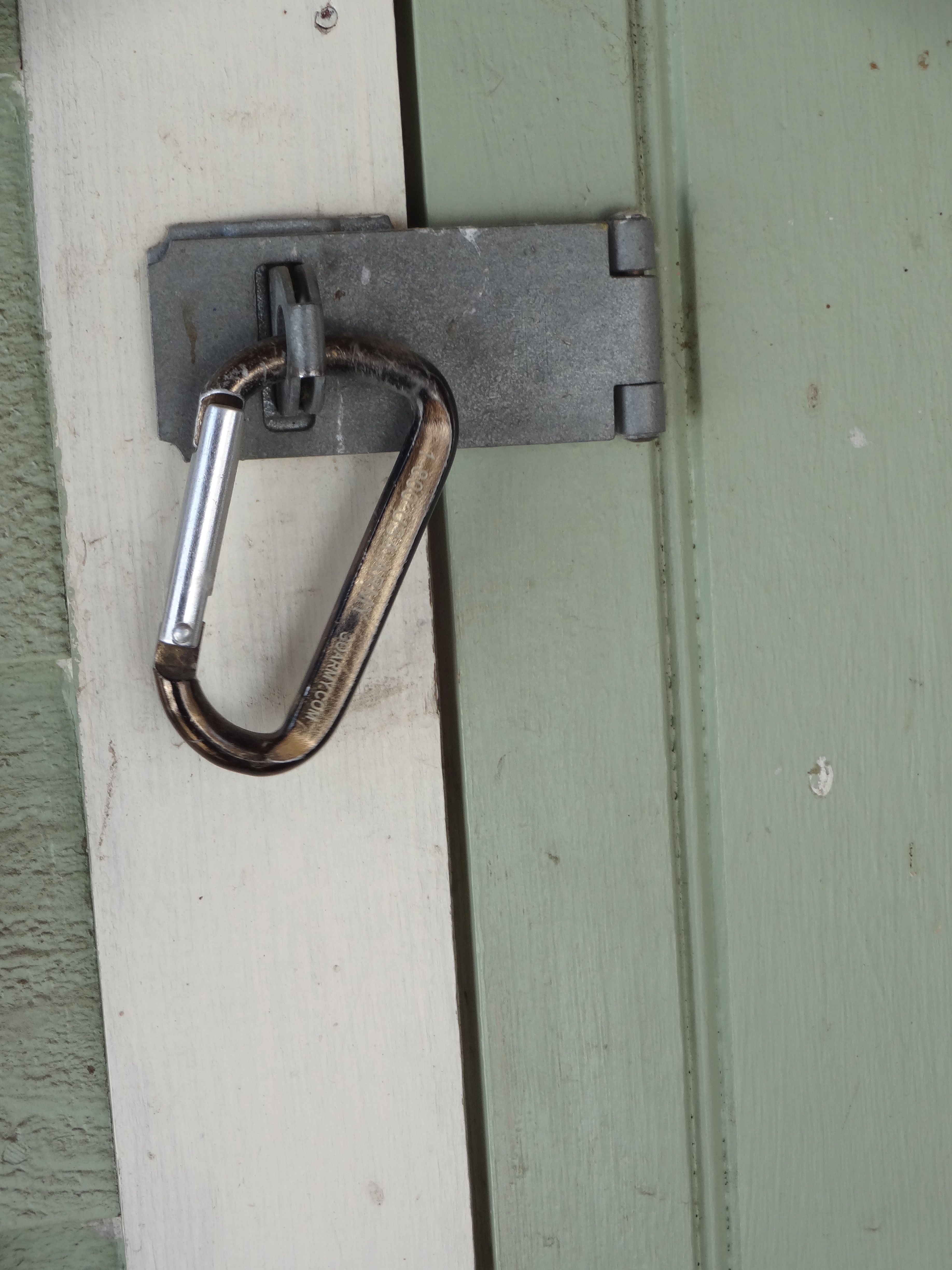
We lock the door to their house with a clasp at night and the small chicken door is locked most nights as well.

IMG_4041

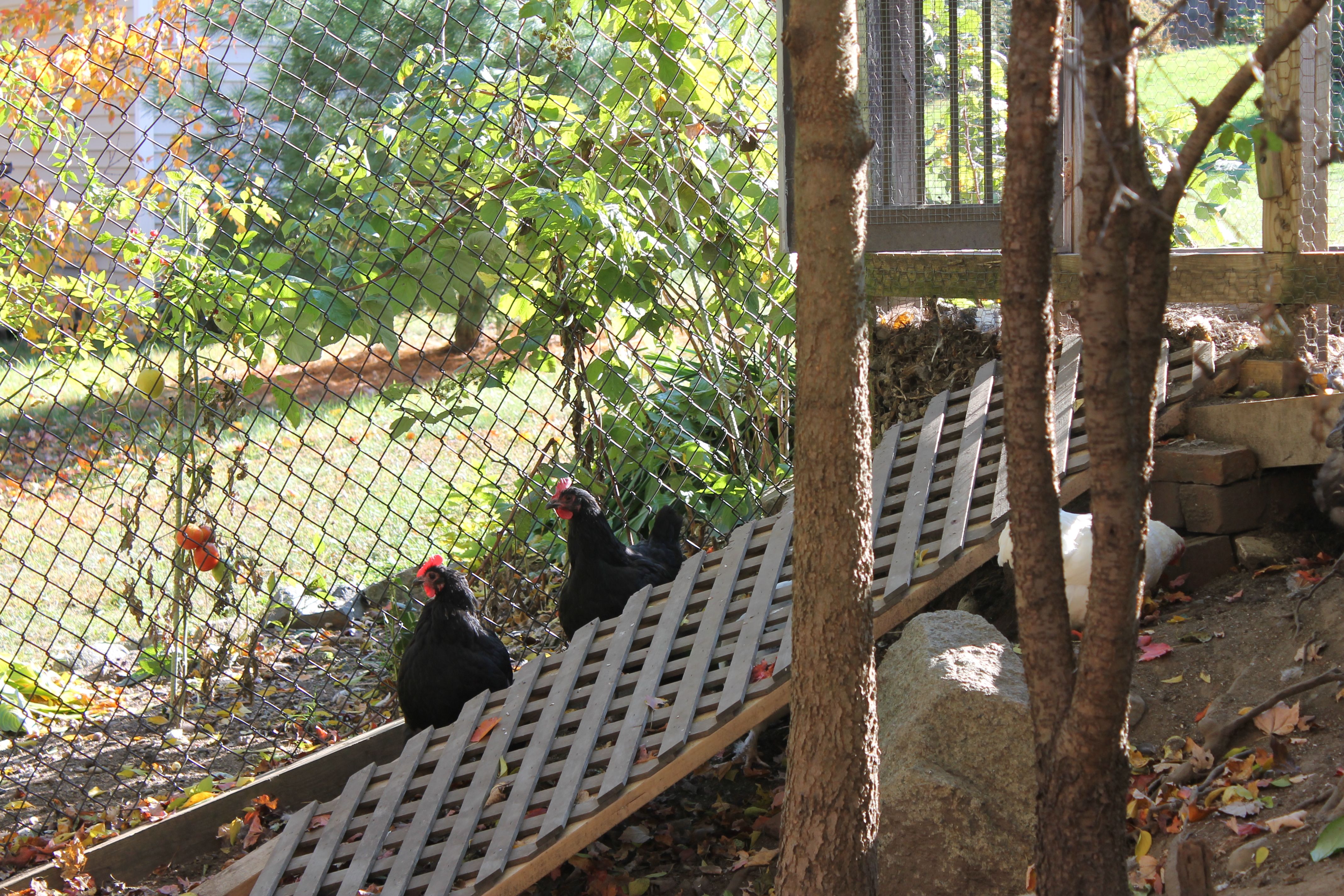
We have a fenced in open area that’s accessible to the chickens from the covered run but we reserve that, along with yard and garden ranging, for days when we’re outside keeping watch and serving as deterrents.
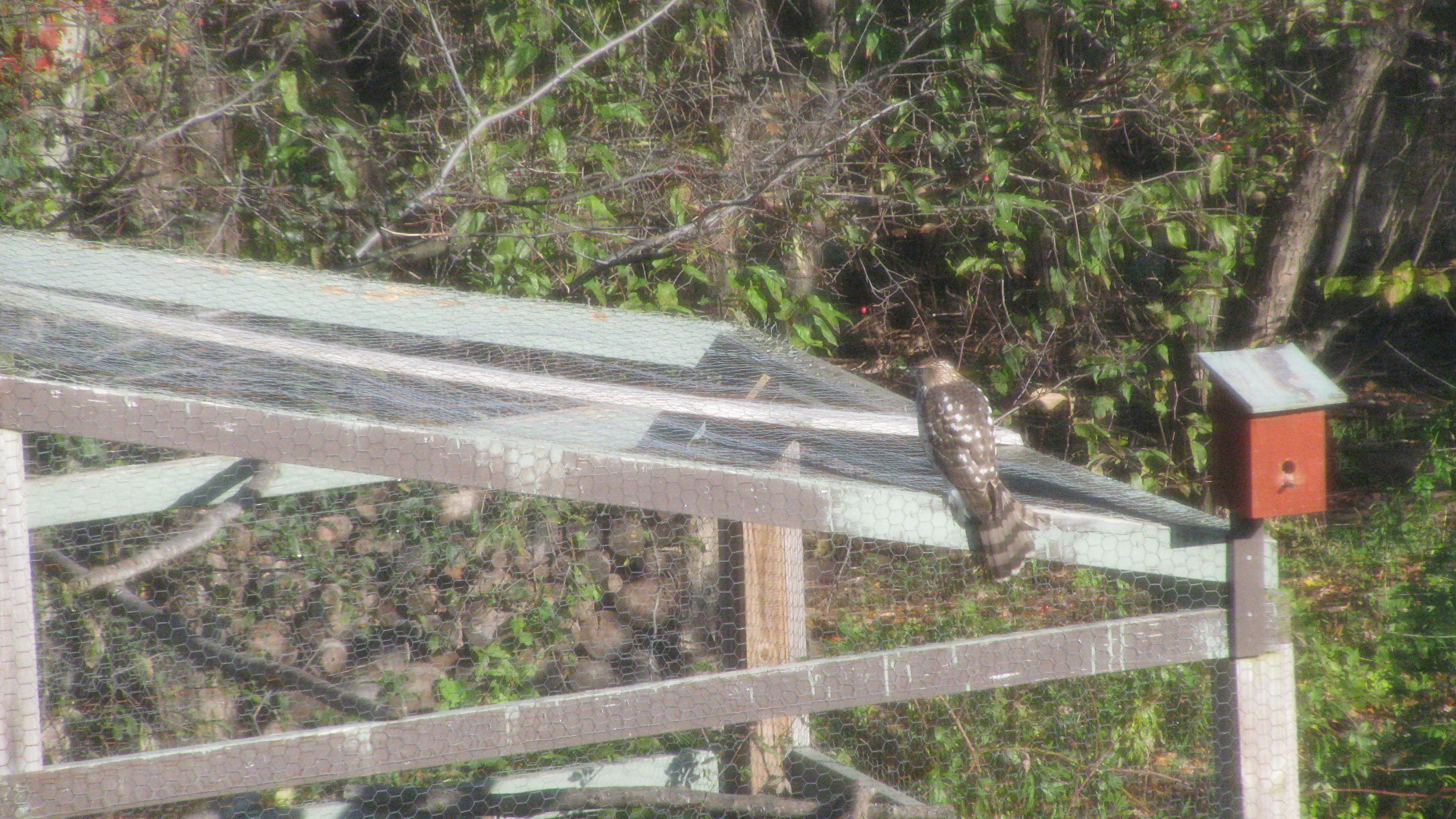
We’ve seen a bobcat, coyotes, raccoons, foxes, skunks, hawks and even fisher cats here at the edge of the woods.  All of these creatures love to eat chicken for dinner. We’ve lost a few hens to hawks and on one occasion a raccoon squeezed through a small gap in the screening of the run and killed one chicken while literally scaring another to death. To this day we’re not sure what saved the rest. I’ve spent many hours watching hawks circle overhead or sit on top of the run just waiting for their chance…

IMG_6911

If you were a chicken, wouldn’t you be scared if this hawk was watching over you?

IMG_0731

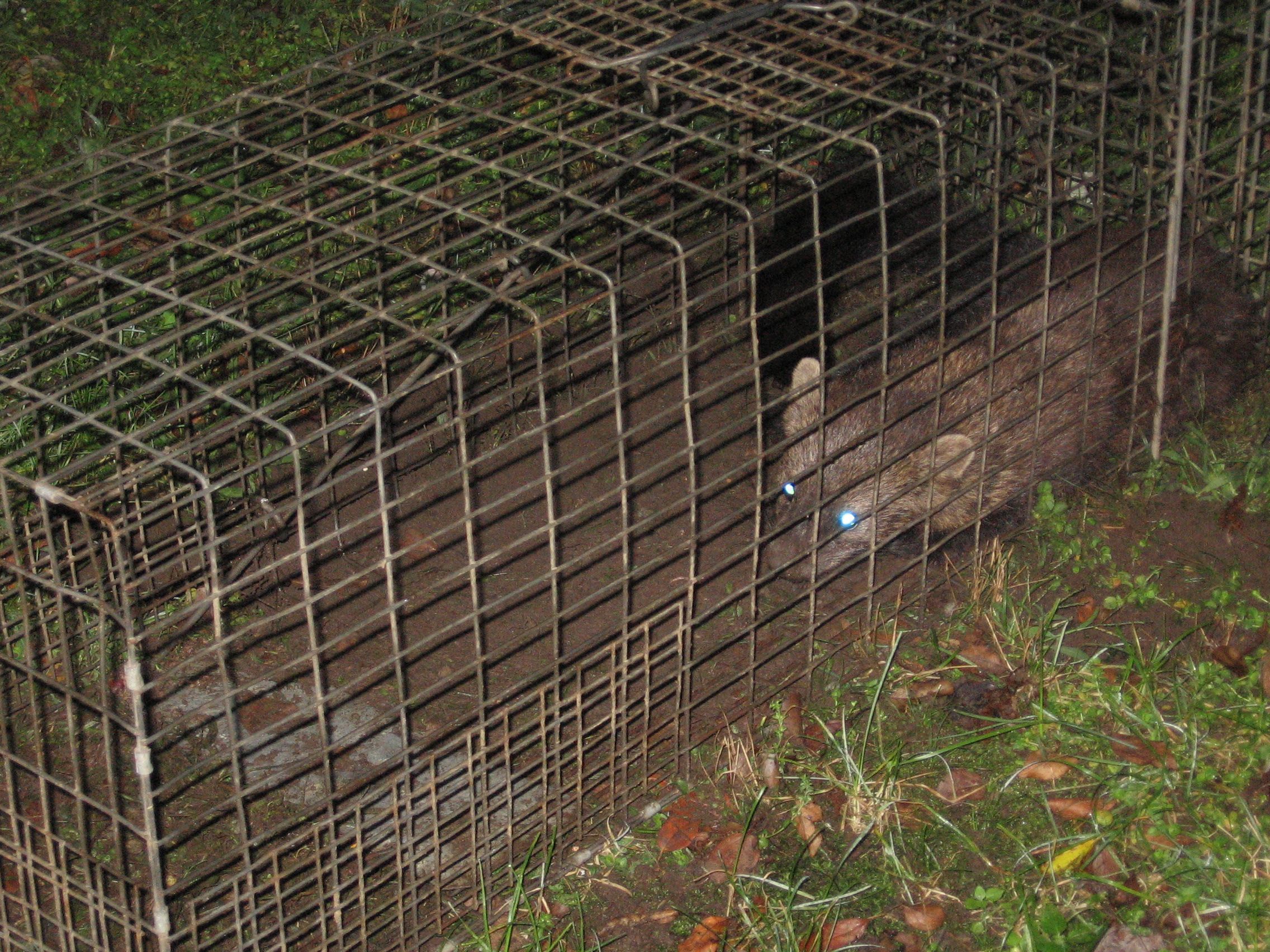
Here’s a fisher cat that we trapped before the chicken days. We had no idea of what it was when Michael and the kids found it in the trap but it’s hiss was vicious!

So, we don’t let our chickens range much without supervision. We also keep a pretty close eye on the edge of the woods, we have a lot (a LOT) of foot traffic in our yard which prevents some predator presence and we design our chickens’ space to be as safe as is reasonably possible. I think that’s why we loose more chickens to old age than to predators.

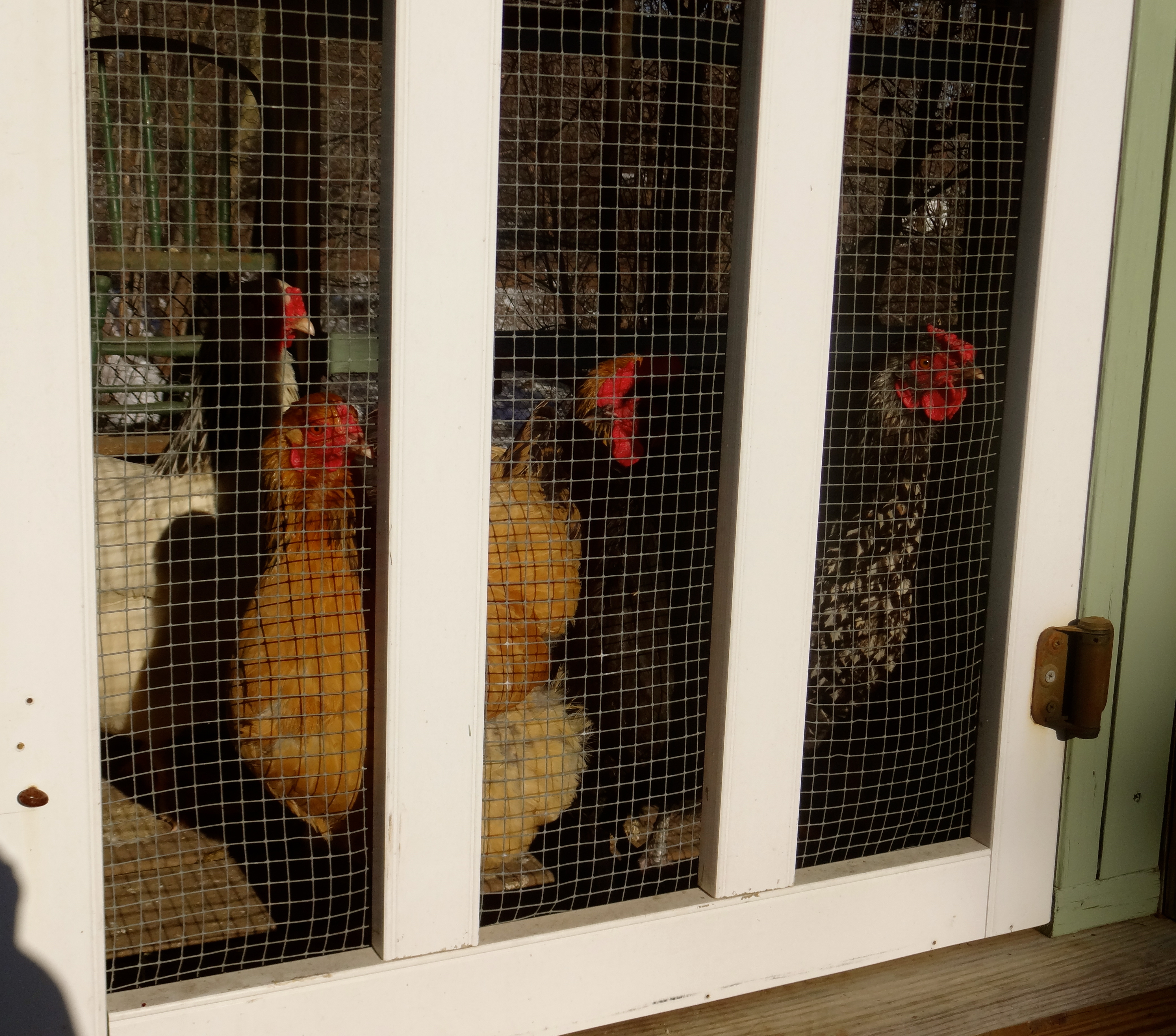
DSC03819It might be why they look pretty content most of the time too.

Or that could be because of the oatmeal… but that’s another post…

Enjoy everything!

Michele