Our Coop Construction, 2007-Present

Good almost spring morning!

I seem to be encountering lots of people who are planning to build or buy a chicken coop these days so I thought I’d share an overview of ours as it was constructed.

We didn’t exactly plan the coop before our first batch of chicks arrived in 2007 so our pullets (young chickens) lived in our basement for several months during construction. I don’t recommend that at all. You will save yourself a huge amount of anxiety by building or buying a coop before your chicks arrive. We kind of go with the flow around here but those few months were quite difficult. Fortunately we were totally in love with our brand new chickens so we all got through it together.

Okay, here goes:
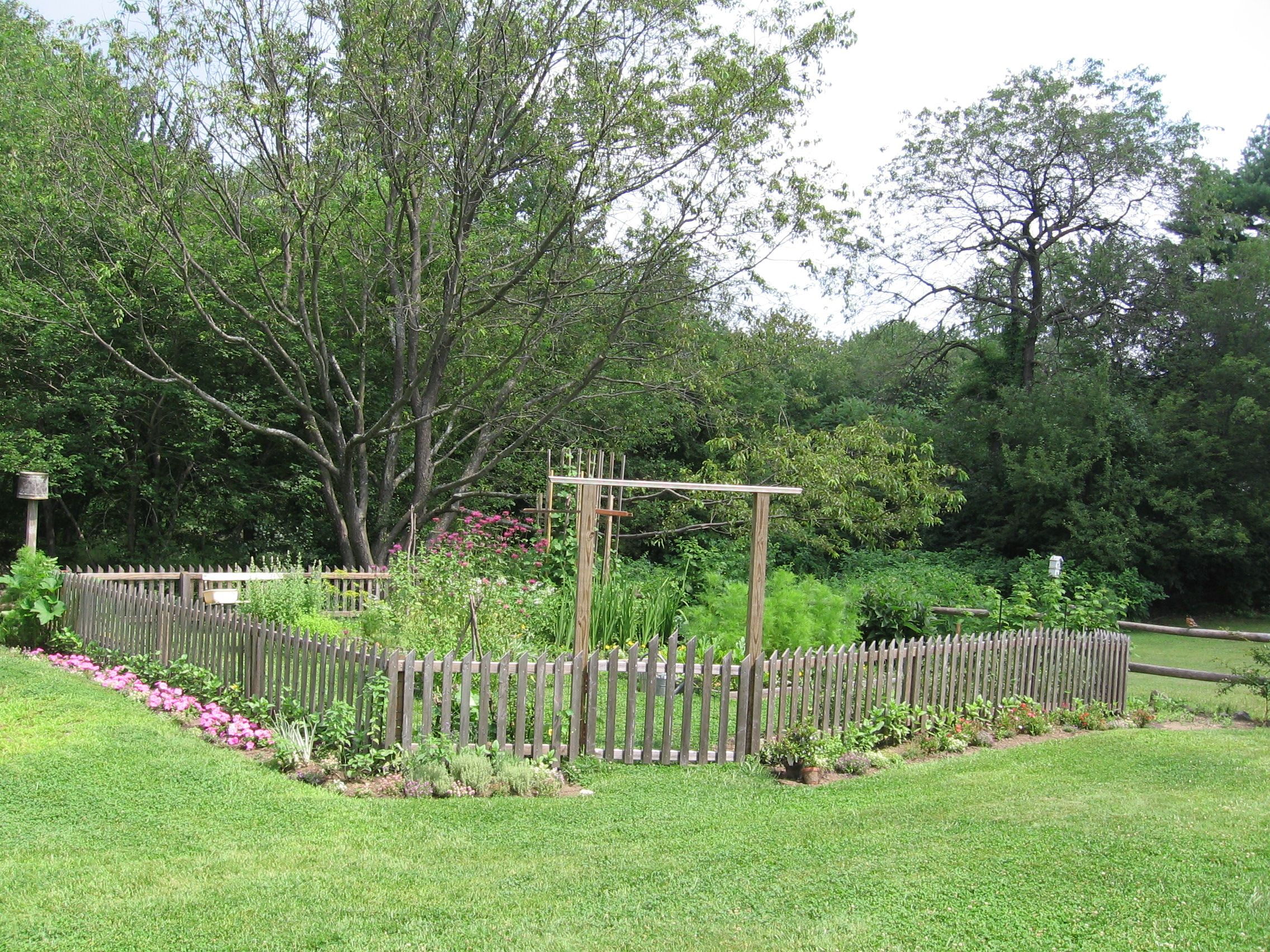
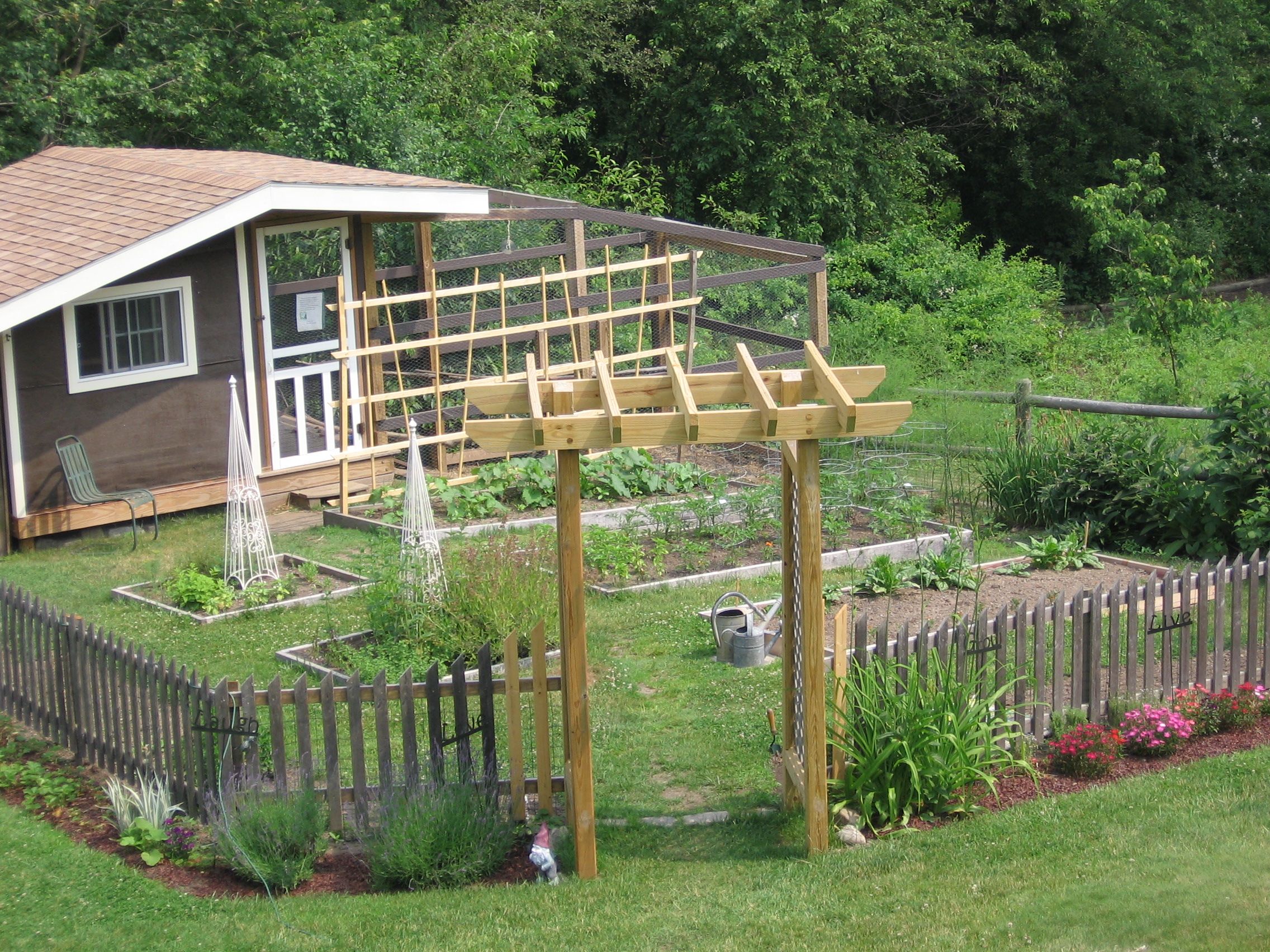
IMG_0440The garden, pre chicken, around 2006.

IMG_1507

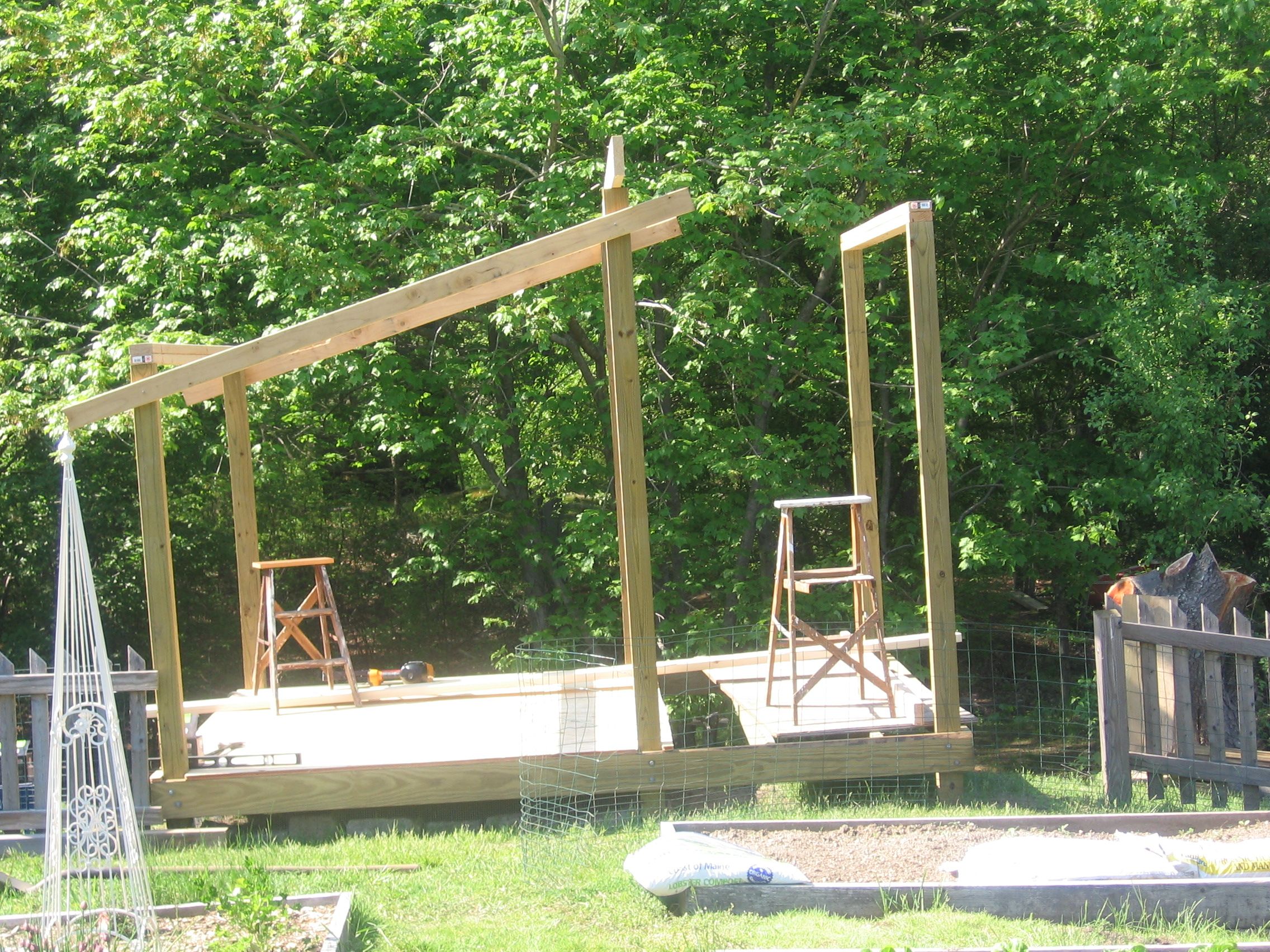
The very beginning… The corner posts were placed into holes dug approximately two feet into the ground. Michael hit a lot of rock but says he put them in as far down as he could go. The floor is plywood, the main posts are 4×4, the floor and ceiling were constructed with 2×6 boards and the walls with 2x4s.

IMG_1510

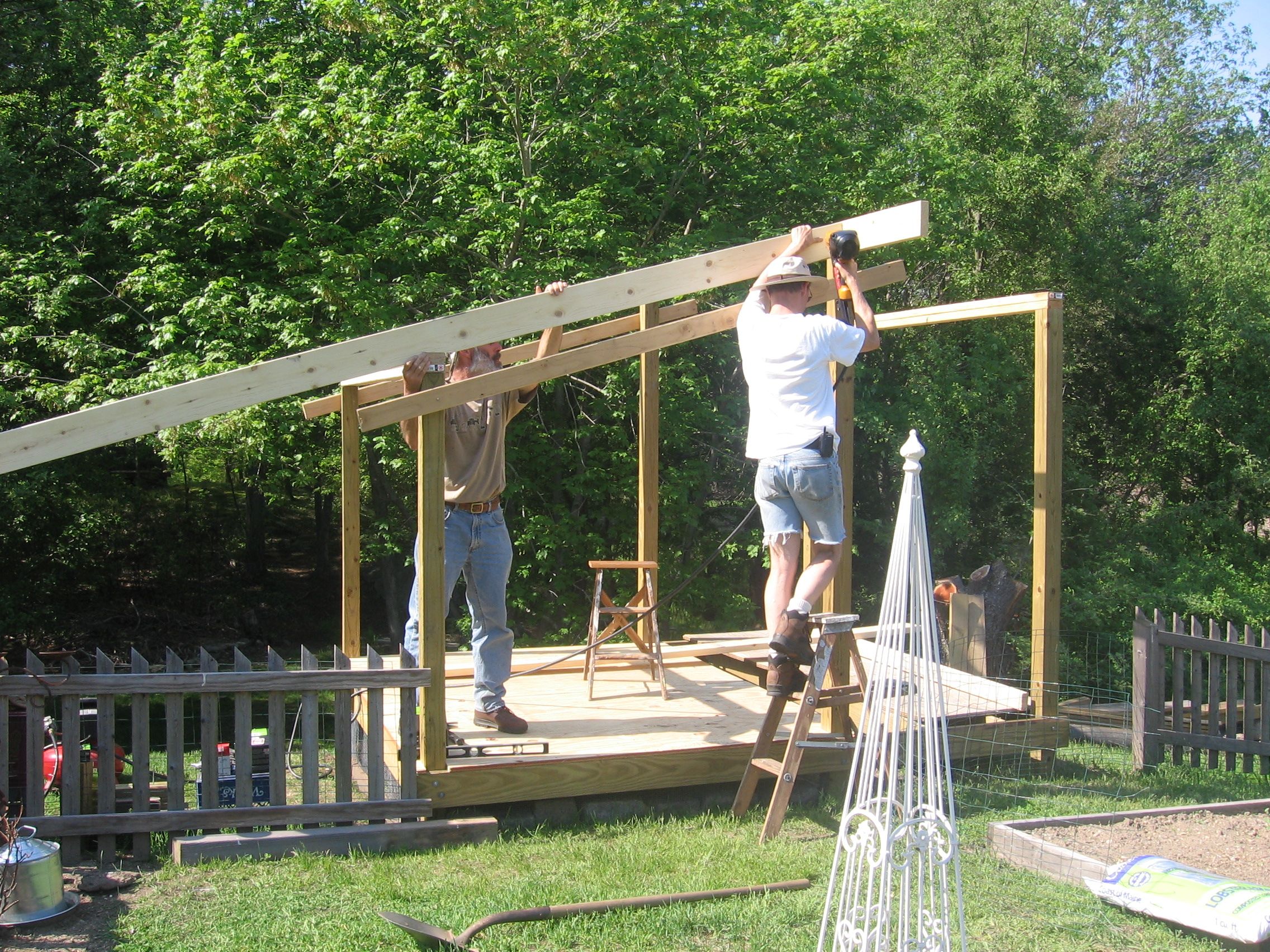
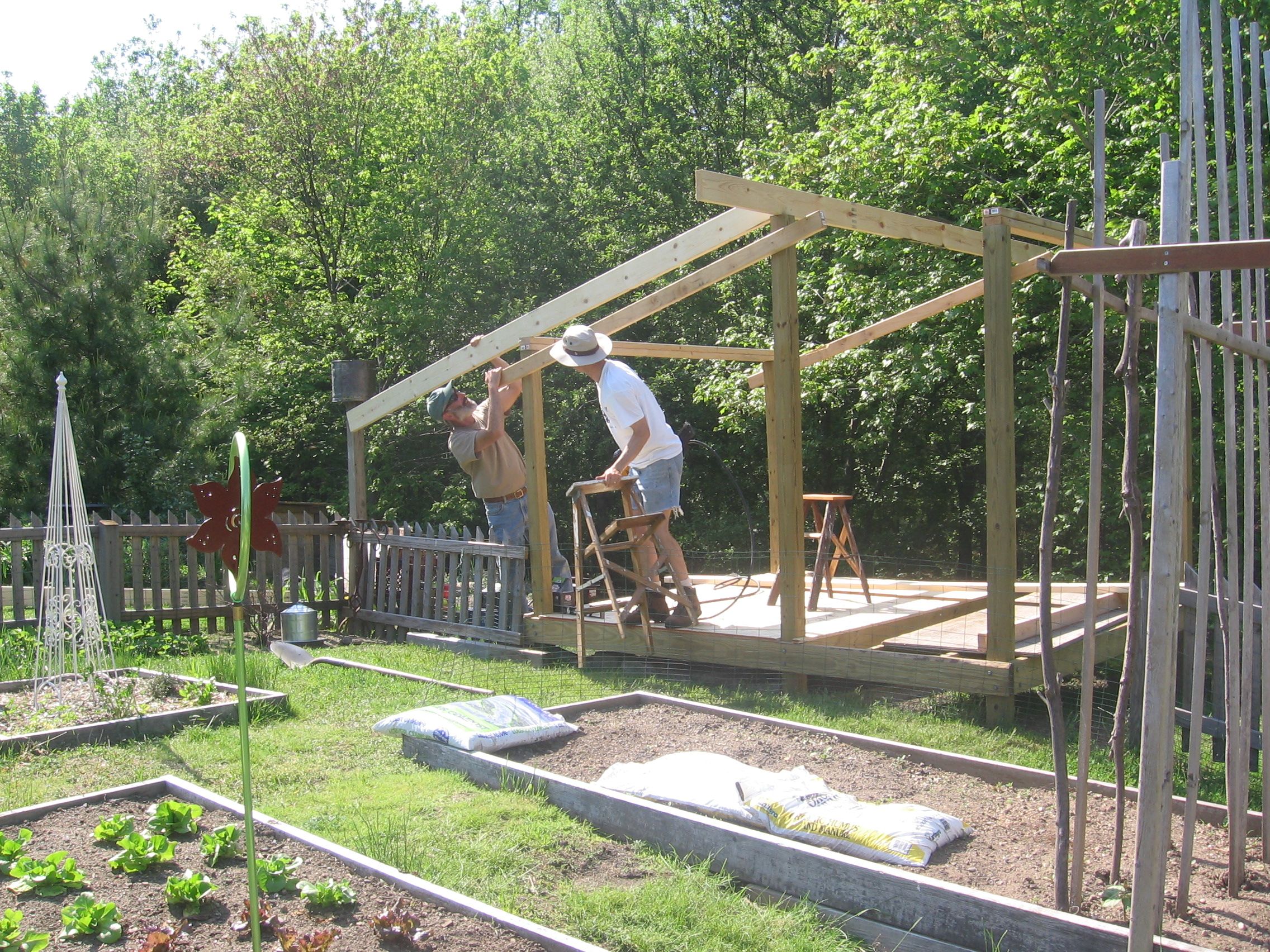
The roof going on..IMG_1511

IMG_1510

The roof pitch echoes our house’s roofline. It doesn’t match but it coordinates nicely.
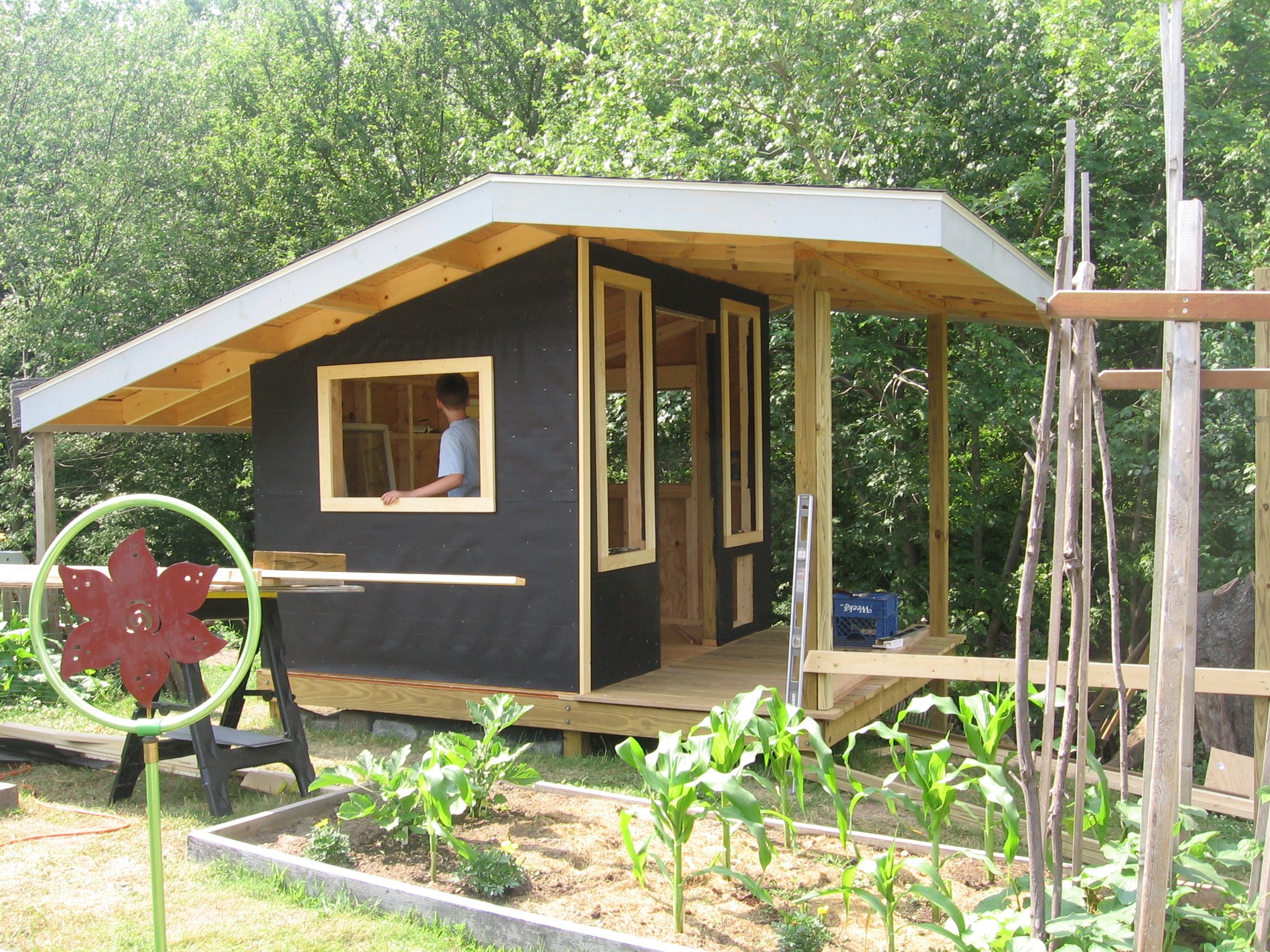
IMG_1616

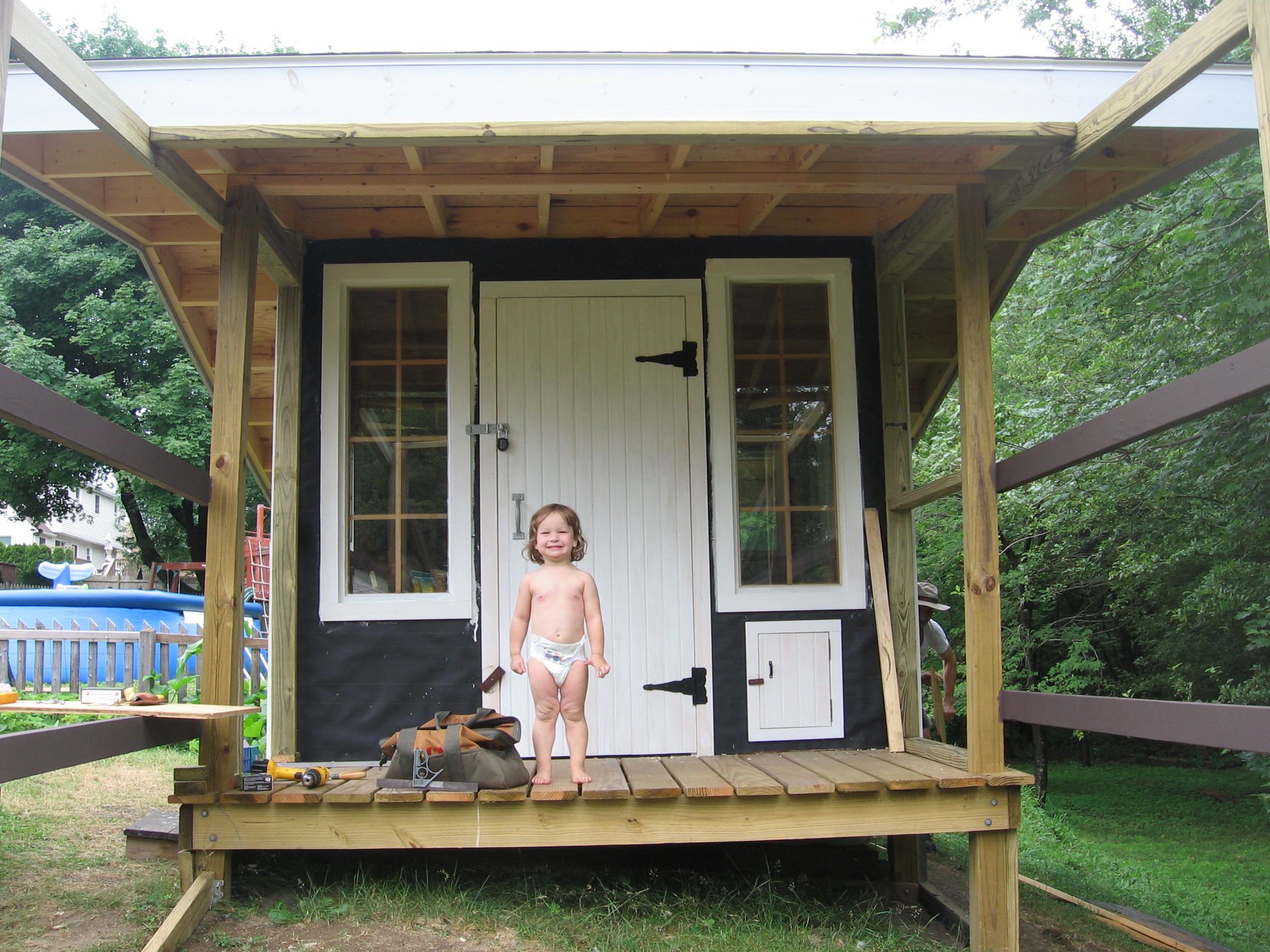
The walls are plywood attached to the frame with roofing paper applied over it to seal. The windows were mostly salvaged with the exception of the front window that my son is standing in. I think that one came from a building supply warehouse nearby (on the clearance rack I’m sure).
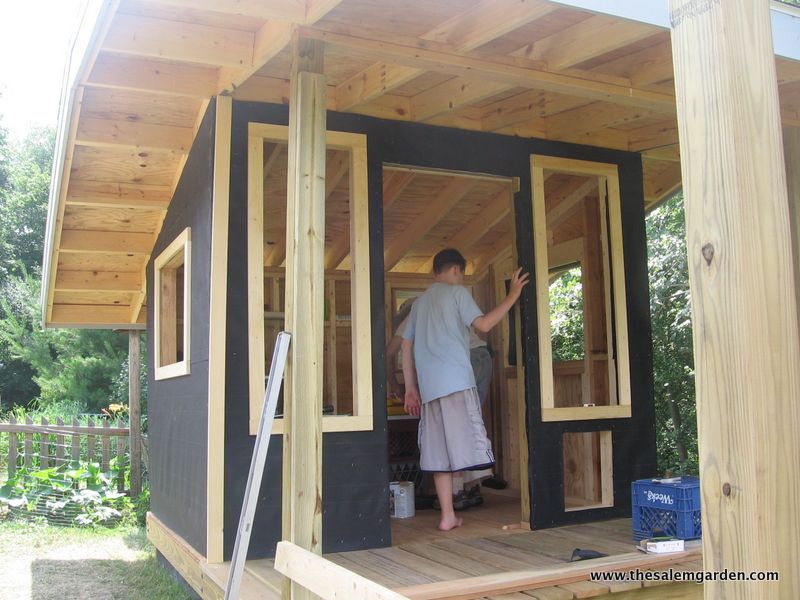
IMG_1618

Looking at the front; long windows for lots of light, a nice wide front door for easy access and the little chicken door on the bottom right.

IMG_1619

Here’s the back side. That overhang provides handy shelter for things like garden tools and wheelbarrows.You just have to watch that you don’t hit your head on the corner.

IMG_1622My little girl (who turned nine last week!)… windows and doors in. No screening on the run yet but that was in process.
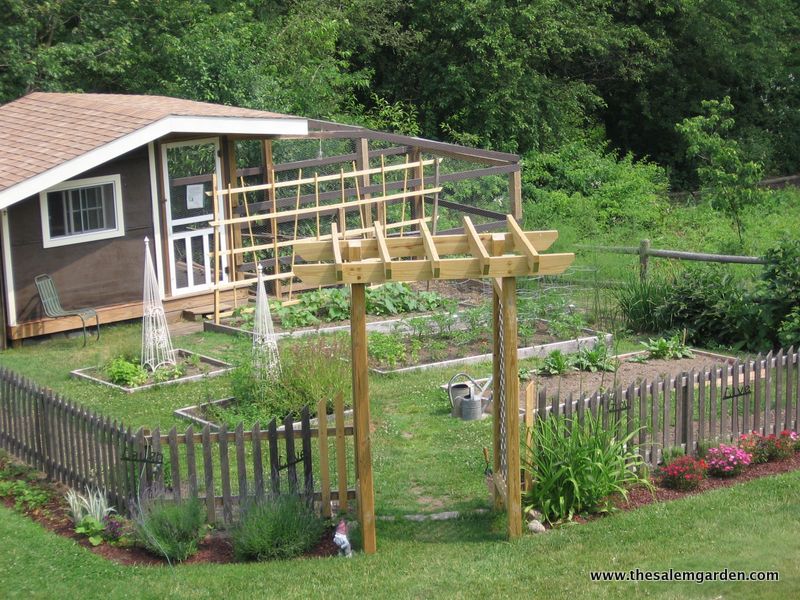
IMG_2537

Looking down at a habitable coop without siding. It took another year or two for siding to be added.

IMG_4828

But then it was, and primer was applied to preserve the clapboard.
IMG_0654

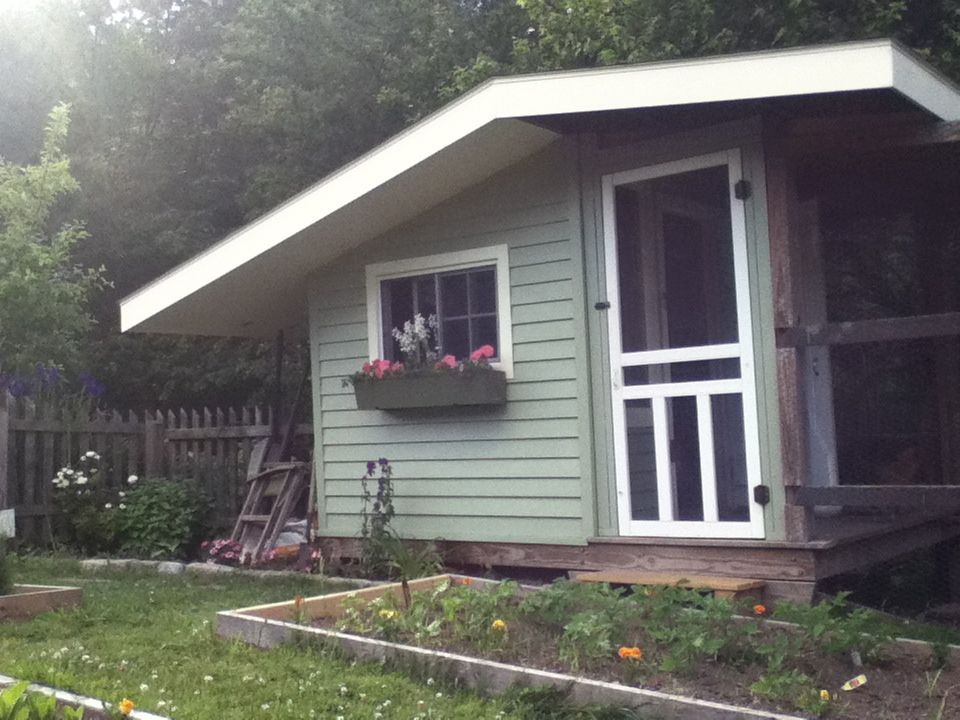
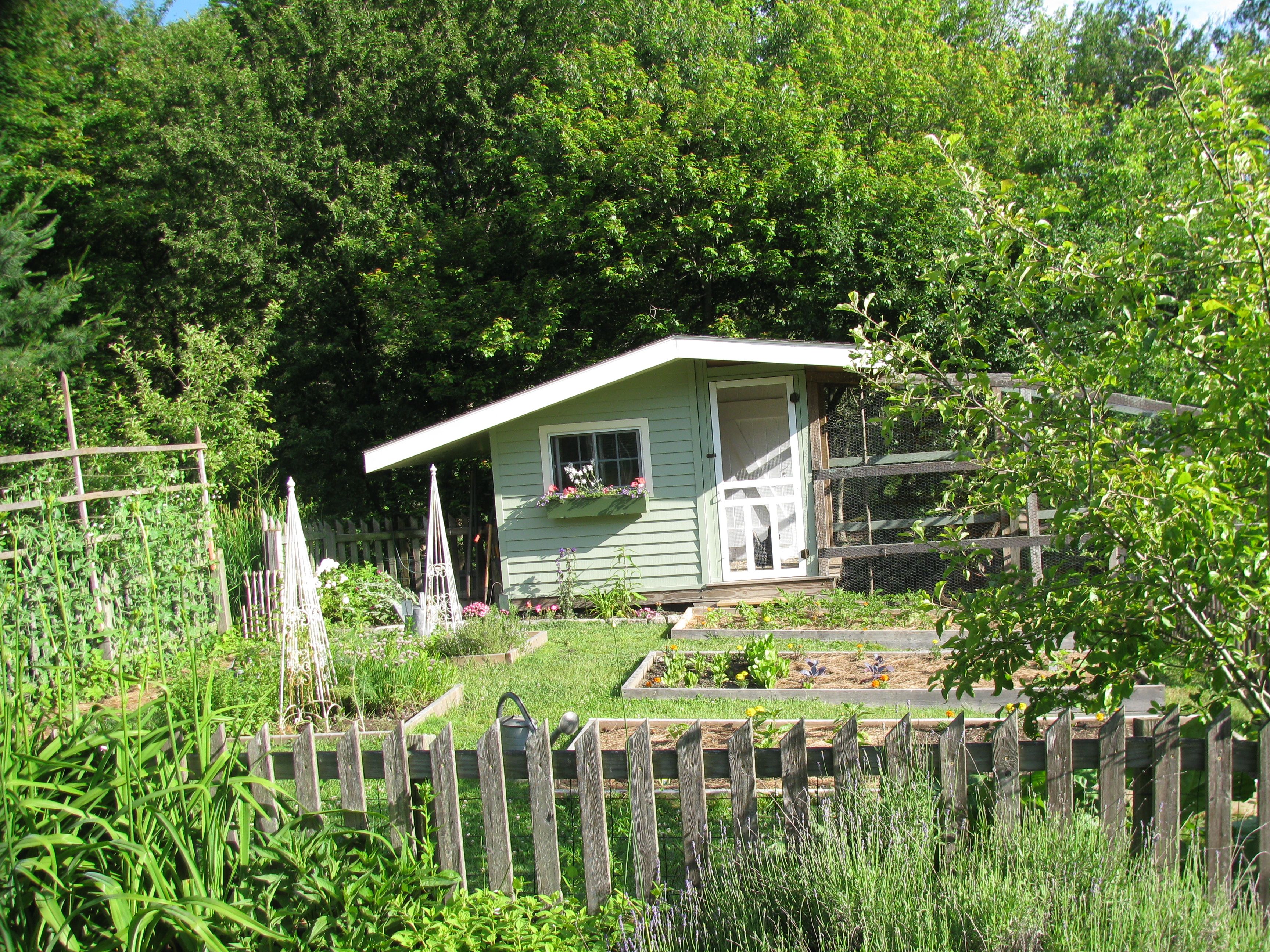
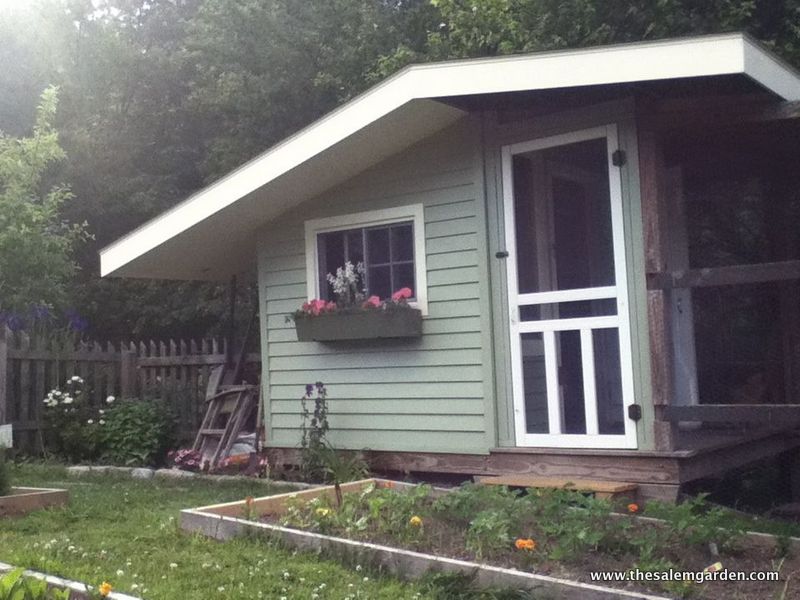
Painted and decorated, with flowers growing, of course.
IMG_7748

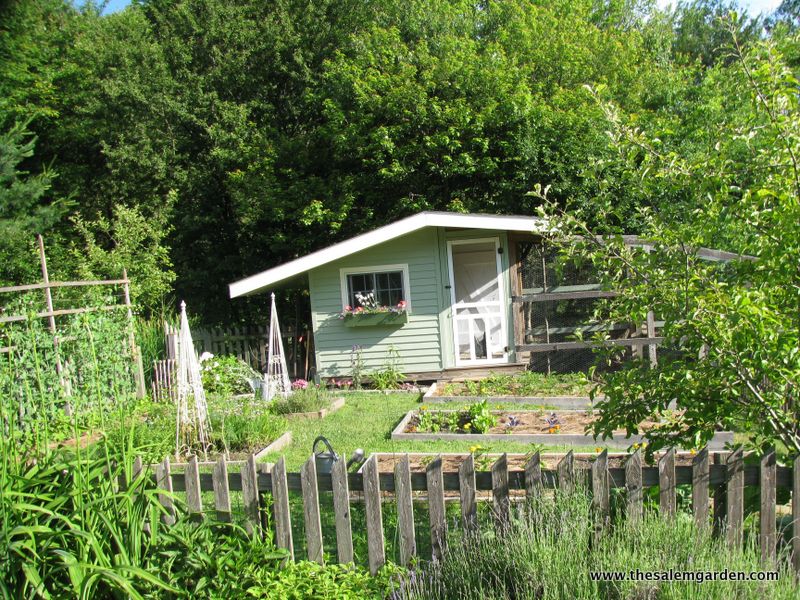
It is a pretty little coop!

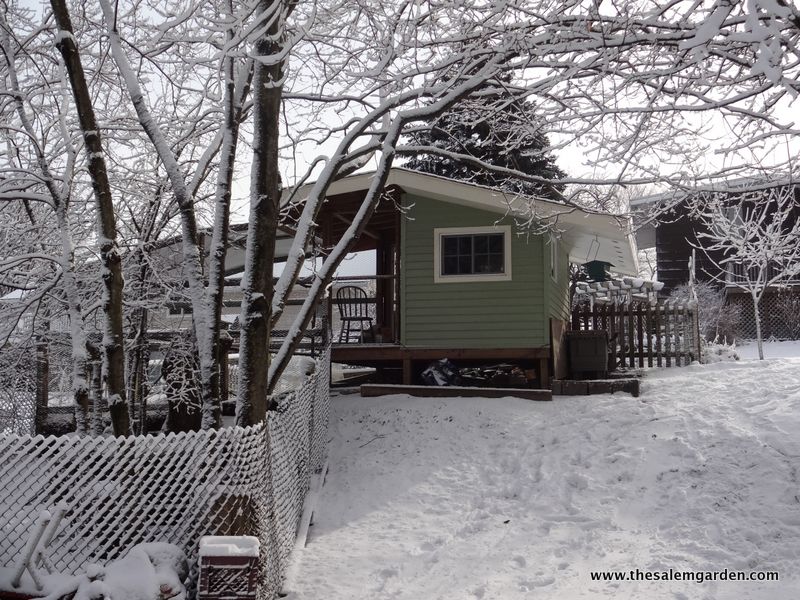
DSC01461Far back view in winter. The girls get afternoon sun through that window which helps to keep them cozy in the colder months.
DSC03864

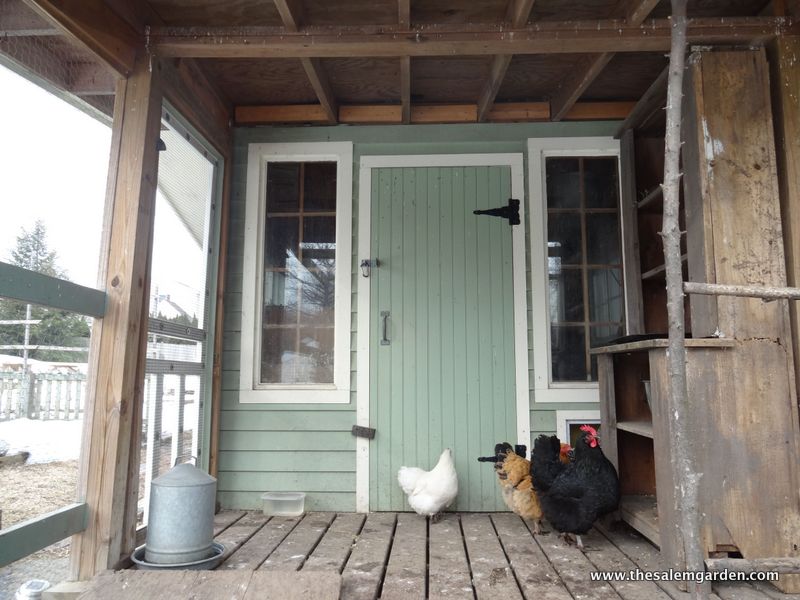
Here’s the front door and porch area. The porch is great because it gives the chickens a dry place to spend time and there’s space under it so they can hide if needed. It also saves us from having to step into mud pits…

DSC03863

… like this one. Unless your a blogger who wants to take a picture of the front door of the chicken coop during mud season.

But who do you know who would do that? 😉

I realize that this is kind of a quick overview of our process and there’s lots of details missing. I took these photos as we went along but never with the idea that they would someday be used on my blog. So, I apologize for the gaps but hope it gives you an idea of what our coop exterior looks like and what our construction journey entailed. I’m going to do an inside tour in the next week or so.  I think I’ll include the head chicken keeper’s direct input as I write it to insure accuracy and probably some entertainment.

Leave me questions! Michael and I will be happy to answer them!

Happy Coop Building!

Michele

Consider the Australorp

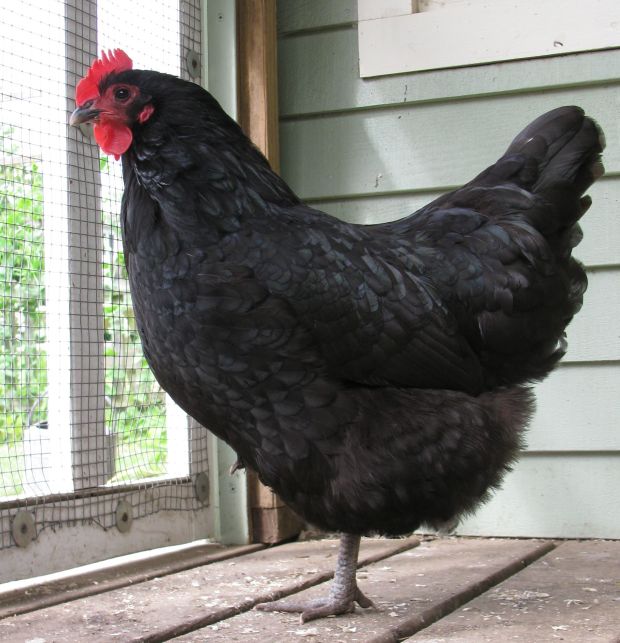
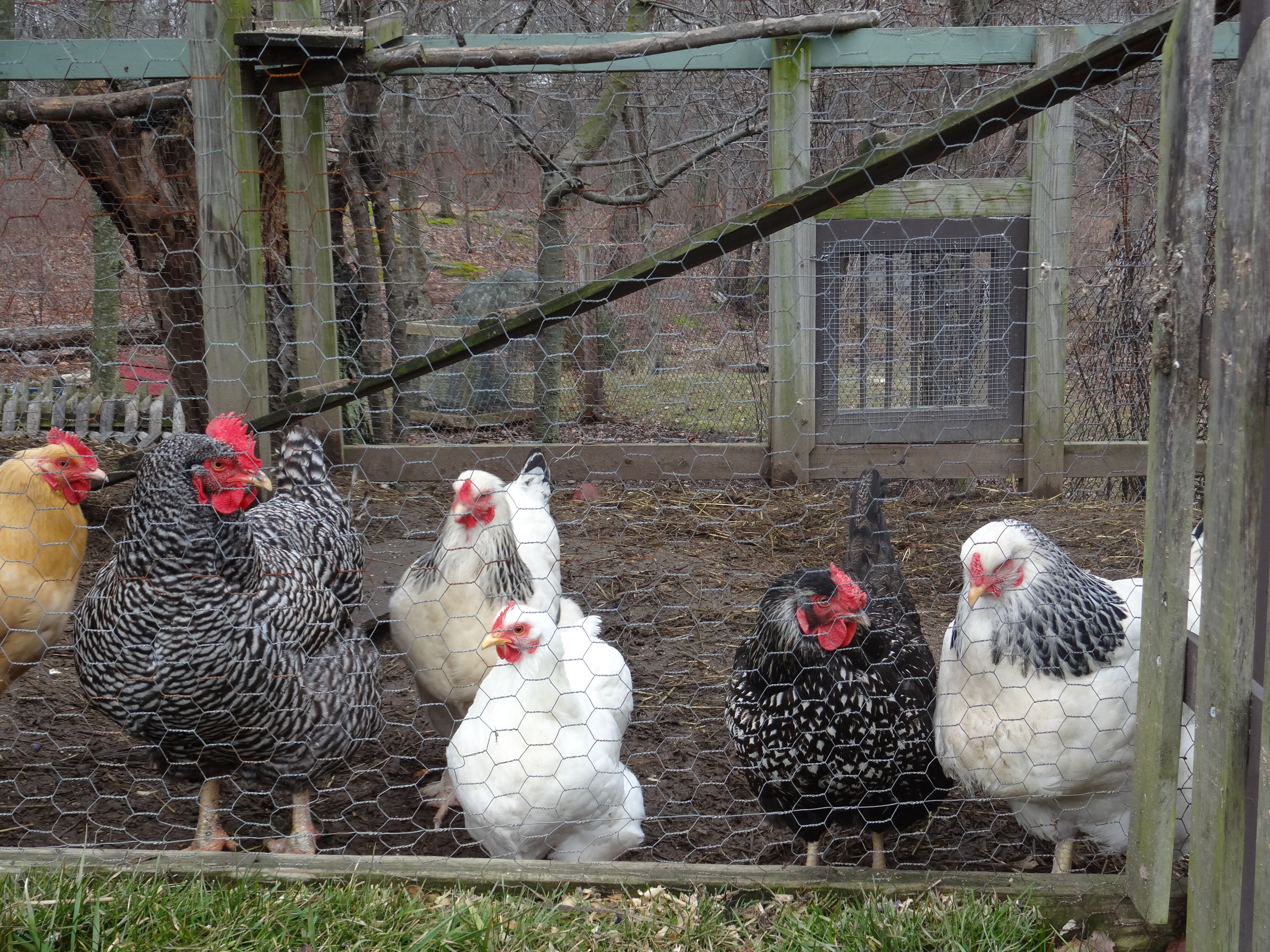
IMG_7674We love our australorps. They’re classic chickens… very beautiful, good layers, just nice to have around. One of ours tends to wander a bit more than the rest of the flock. I once opened our front door to find a neighbor whom I had never met, coming by to tell me that one of our chickens was in his yard. I went to check on it and there she was several houses and some woods away, foraging in their grass. DSCN0312

They begin life as multicolored chicks.

IMG_7676-001

Before you know it that baby will have become a stunning hen.

It’s amazing how that happens.

Consider the australorp if your choosing your breeds today!

Michele

They’re Here! Baby Chicks 2014!

IMG_4822

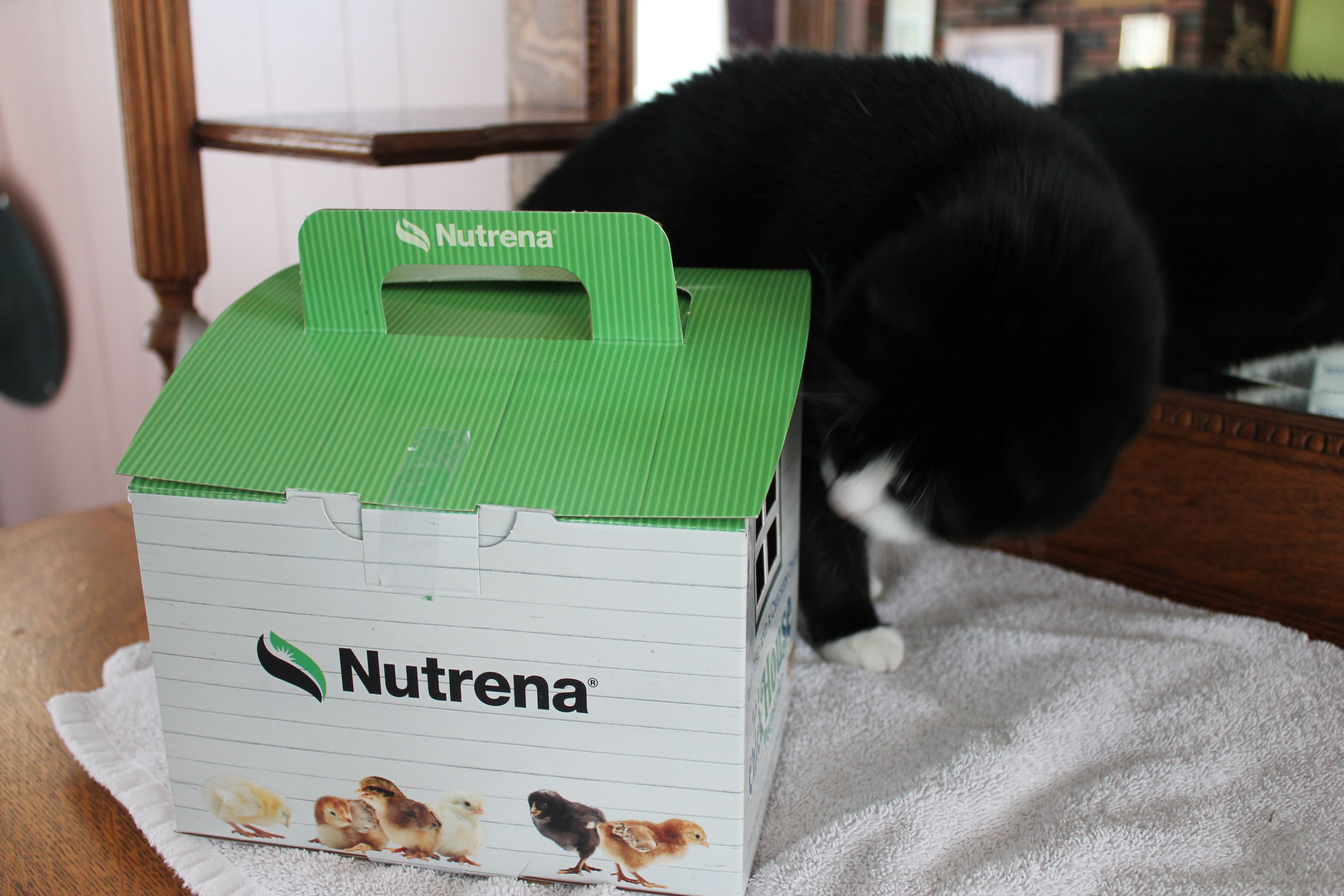
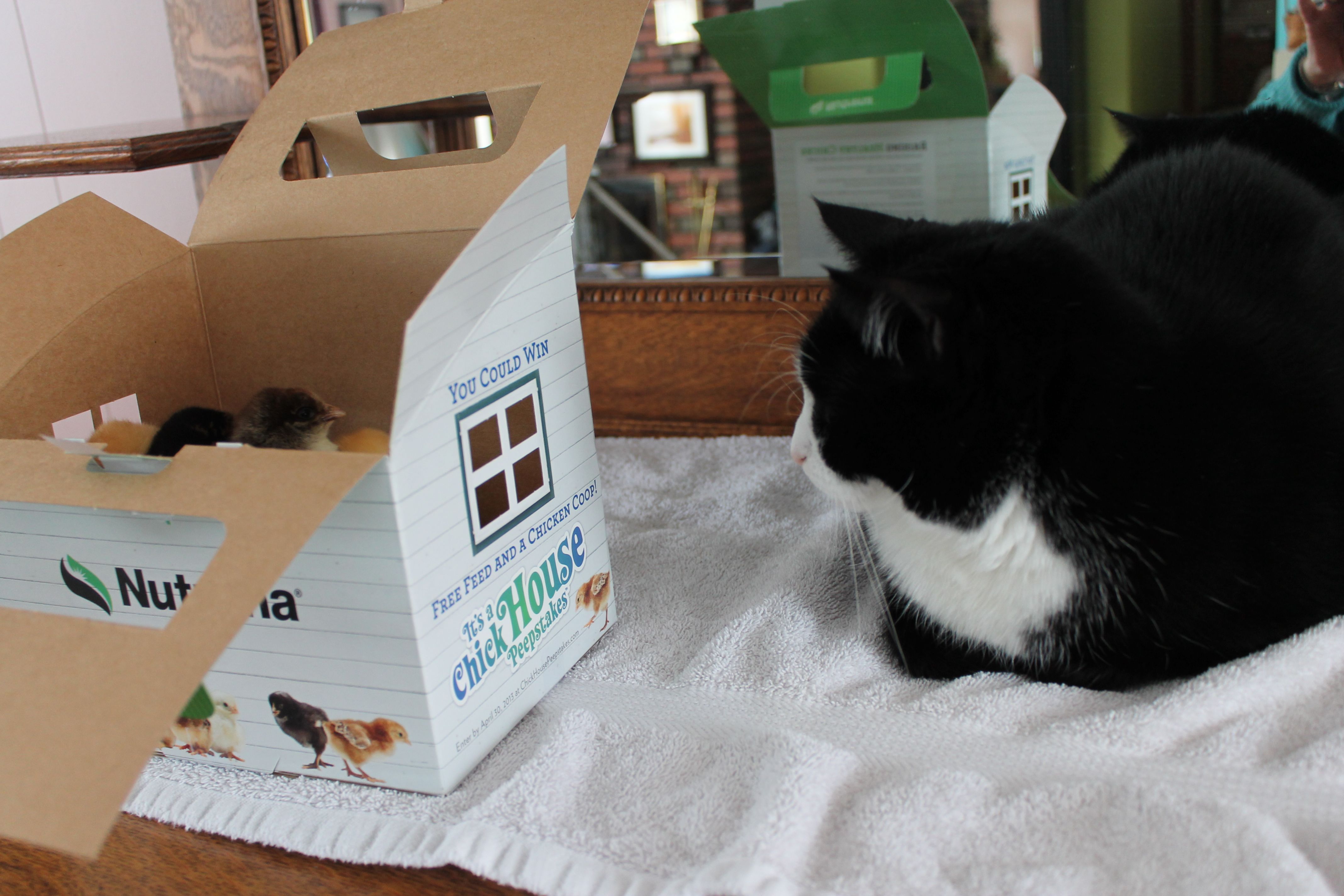
What could be in this box?

IMG_4823

Maddie thinks it sounds familiar

IMG_4824

She’s heard this before…

IMG_4825

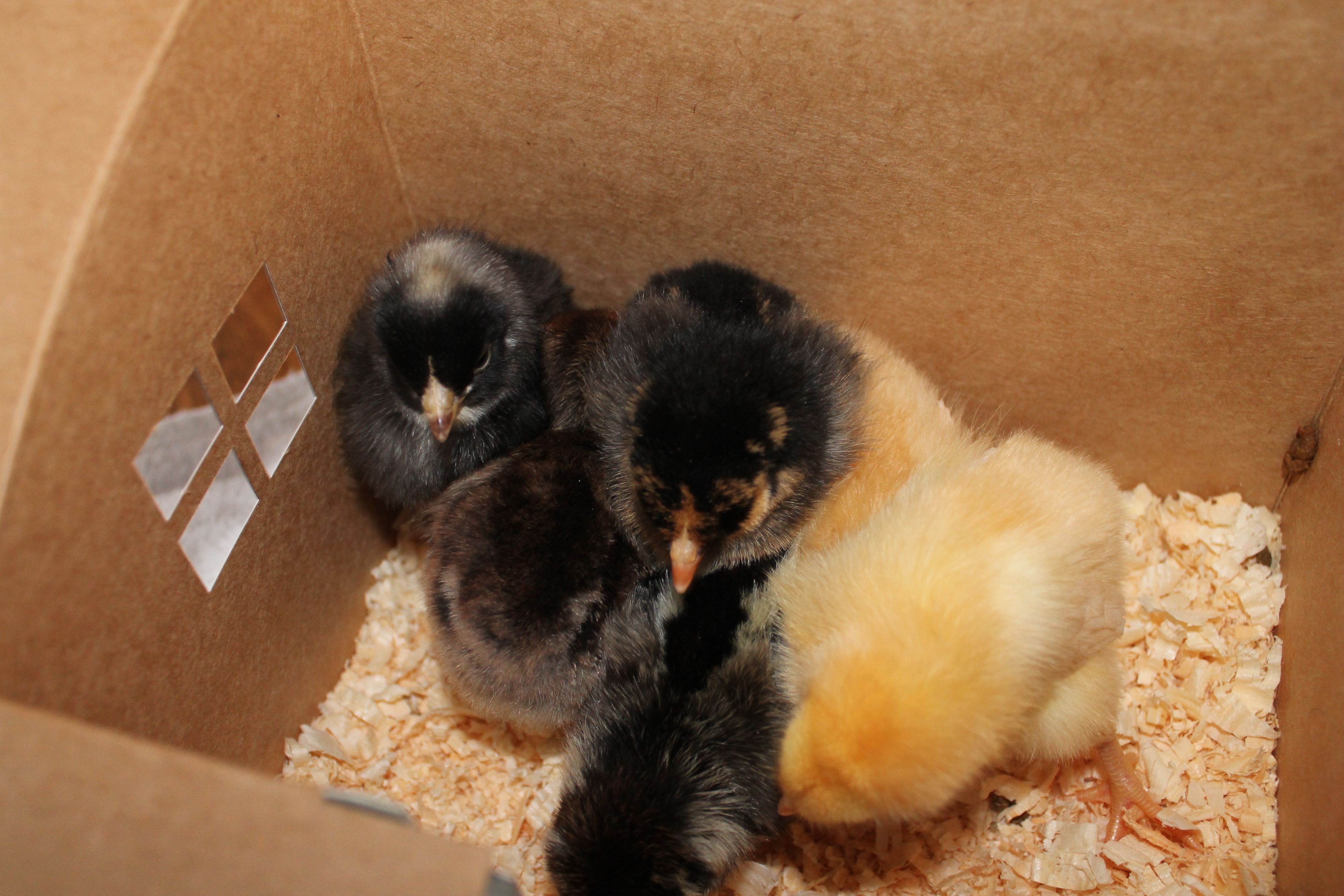
Yay!! Two buff orpington, a cuckoo maran, a dark cochin, and one gold and one silver laced wyandotte…

IMG_4831

IMG_4835

IMG_4839

IMG_4843

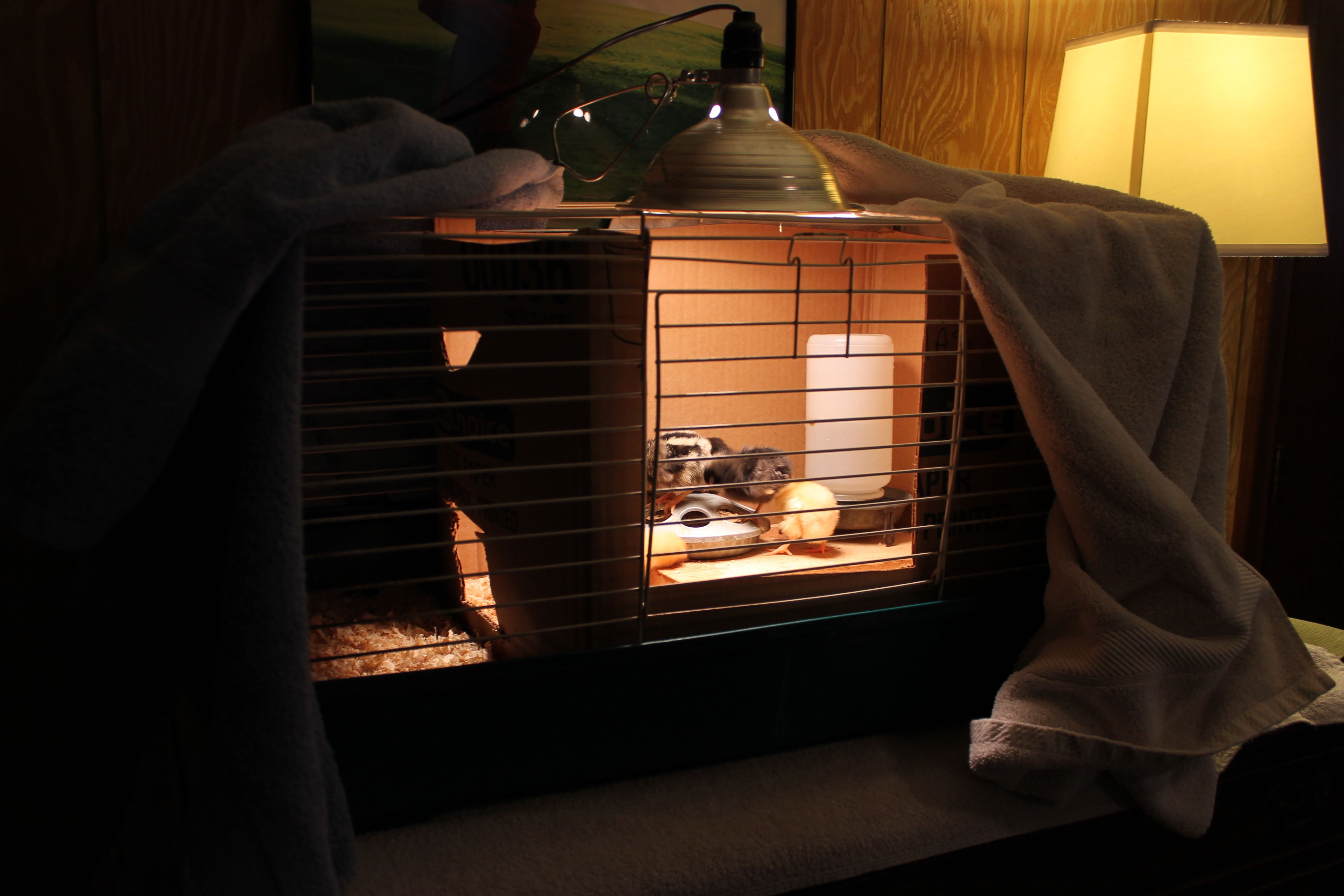
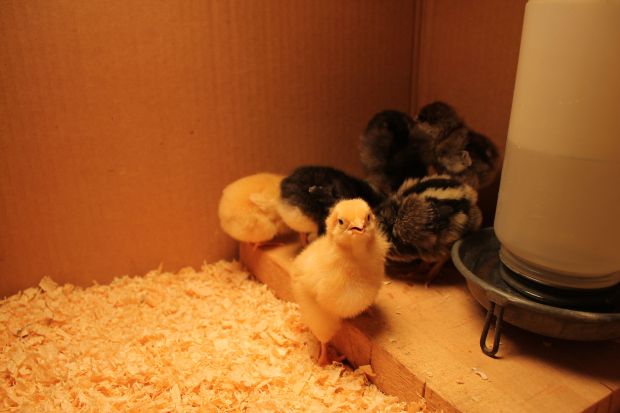
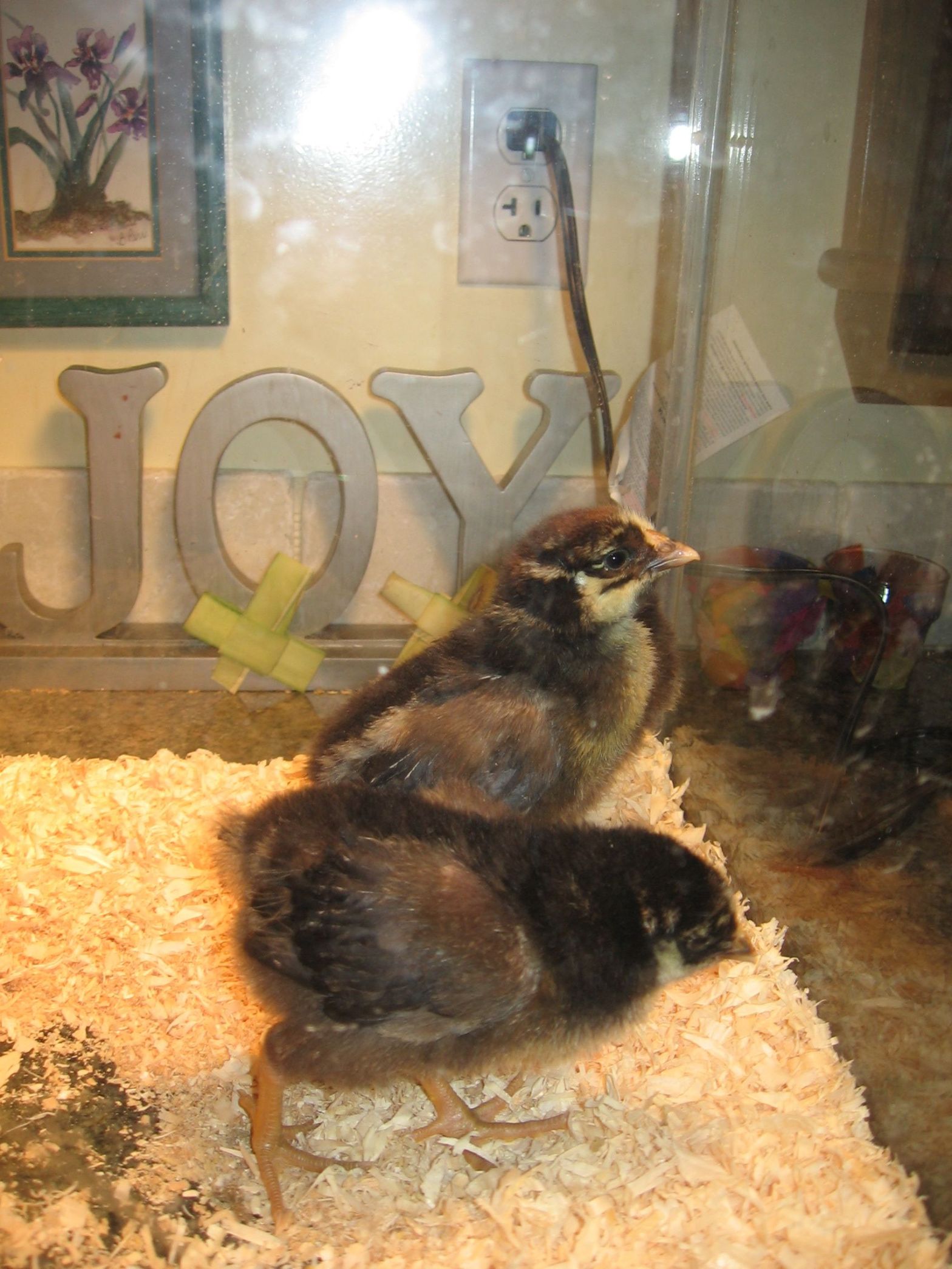
Soon they were safe and sound in our new brooder.

We made it from a bunny cage for protection with a brown box inside, light above and towels for warmth. I think it’s going to work. I’ll keep you posted..

IMG_4848

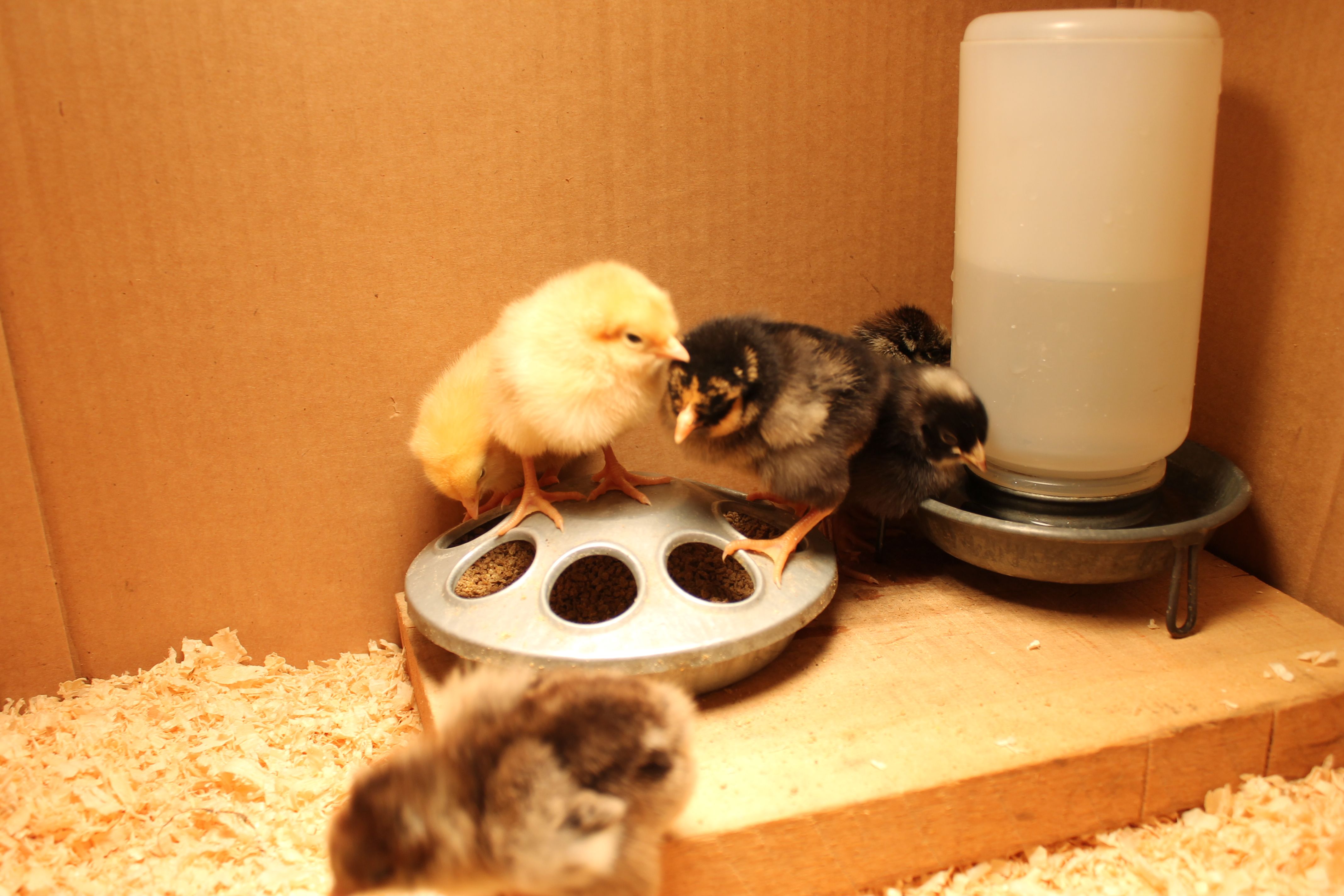
The chicks were hungry and thirsty…

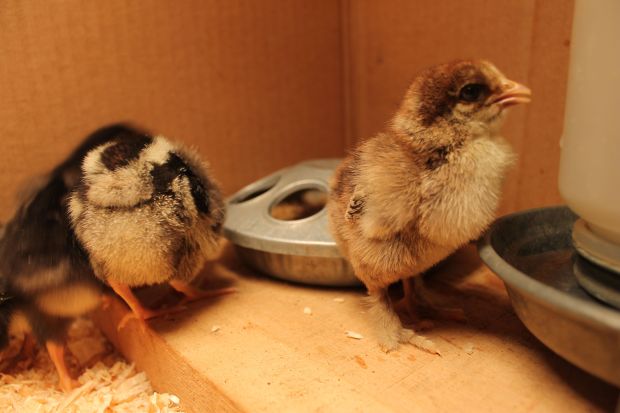
IMG_4860IMG_4861IMG_4864IMG_4865IMG_4859and ready for a nap.

Actually I think we’re all ready for a nap.

More to come soon!

Michele

The Chicken Bucket

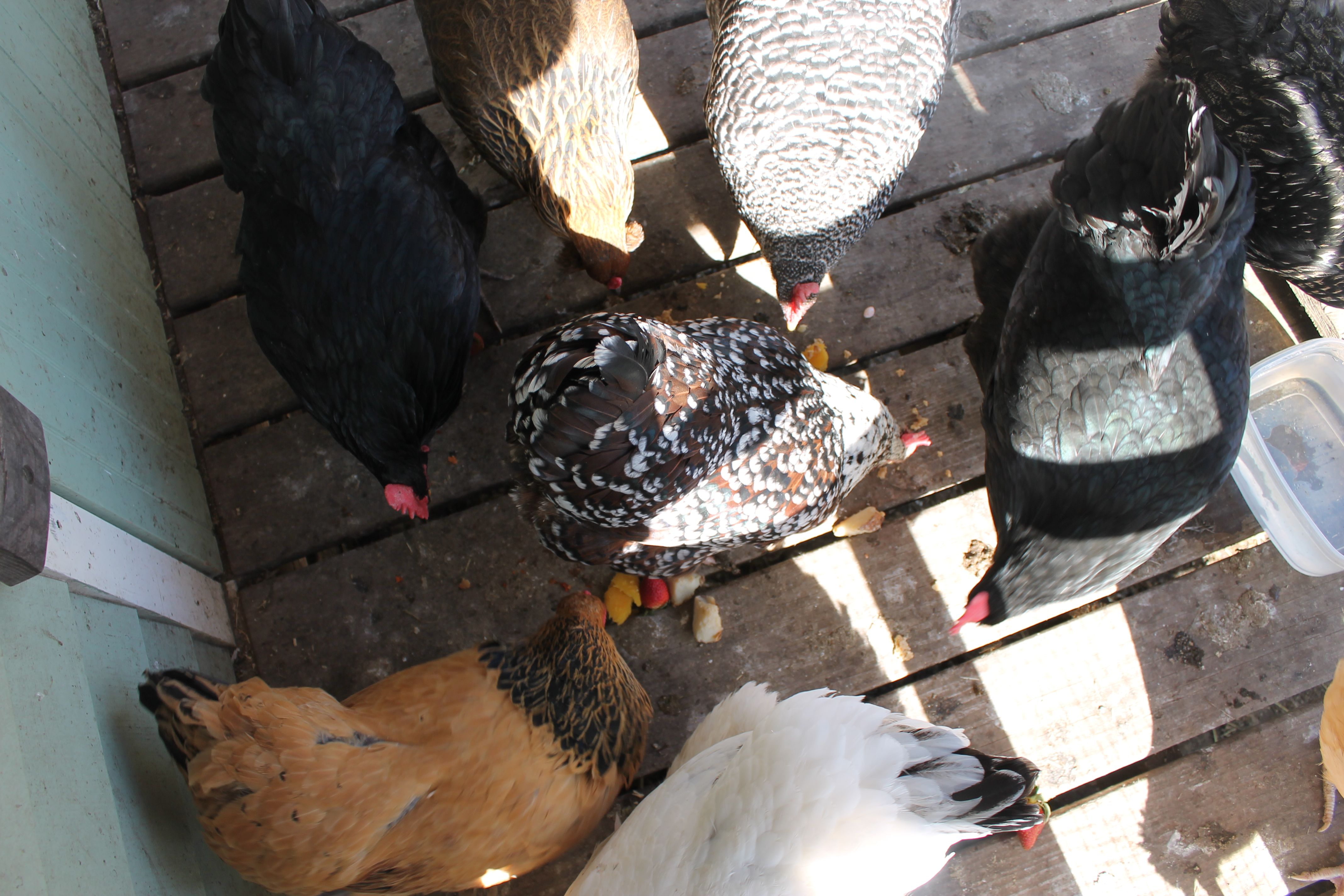
One of the most important parts of our role as chicken keepers is to provide food for our girls. We do feed them chicken feed and I’ll talk about that at some point, but we also collect everything that we don’t eat into a handy plastic container known as “the chicken bucket.”  The chicken bucket is absolutely central to our kitchen’s function. If we don’t  have one on the counter, even for a minute, all food production and clean up comes to a halt. If it’s been taken out to the coop someone immediately replaces it with a new container so that we’re good to go for the next few hours. We feed our chickens almost everything that we don’t eat with the exception of uncooked potato peelings, citrus fruit and chicken. We don’t feed the chickens chicken… that just feels wrong.

IMG_4775

Feeding them lots of scraps helps to keep our feed bill down. We eat a pretty well balanced diet so I like to think that it also gives them some balance and variety.

DSC01468

It might help with socialization skills too.

IMG_4807

Anyone holding the chicken bucket is always made to feel very welcome and loved.

There are many joys that come with having chickens and watching their reaction to this is near the top of the list!

Enjoy everything!

Michele
ps/ 12 more days till spring! 🙂

Beware of the Predators…

…because they are out there and their hungry!

I’m not kidding, you do need to think carefully about how to manage the predator population because predators are probably the biggest reason for chicken loss in backyard flocks. Lots of animals prey on chickens and once they have your address they will lurk and lurk, just waiting for their chance to get a good meal.

Our coop is heavily fortified by design.

DSC03821

We have a chicken wire enclosure over the top of the run that keeps most critters out quite effectively.   I’ve often heard that raccoons can tear right through chicken wire but we haven’t had that happen yet.

DSC03820

Several inches of the wooden boards at the bottom of the run are buried in soil.  Michael says that he’d bury the wire on the sides twelve inches deep if he were to do it again.

DSC03822

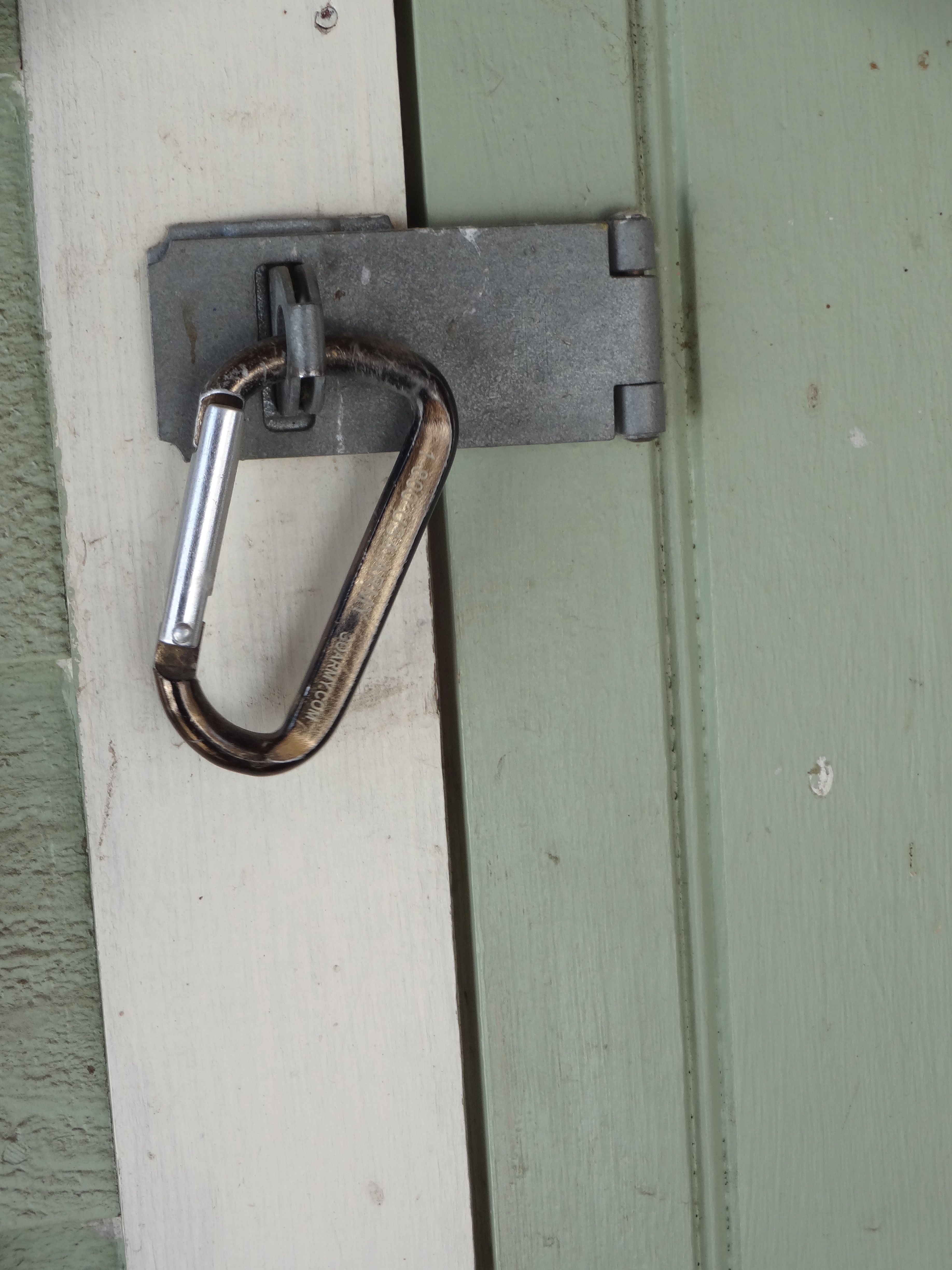
We lock the door to their house with a clasp at night and the small chicken door is locked most nights as well.

IMG_4041

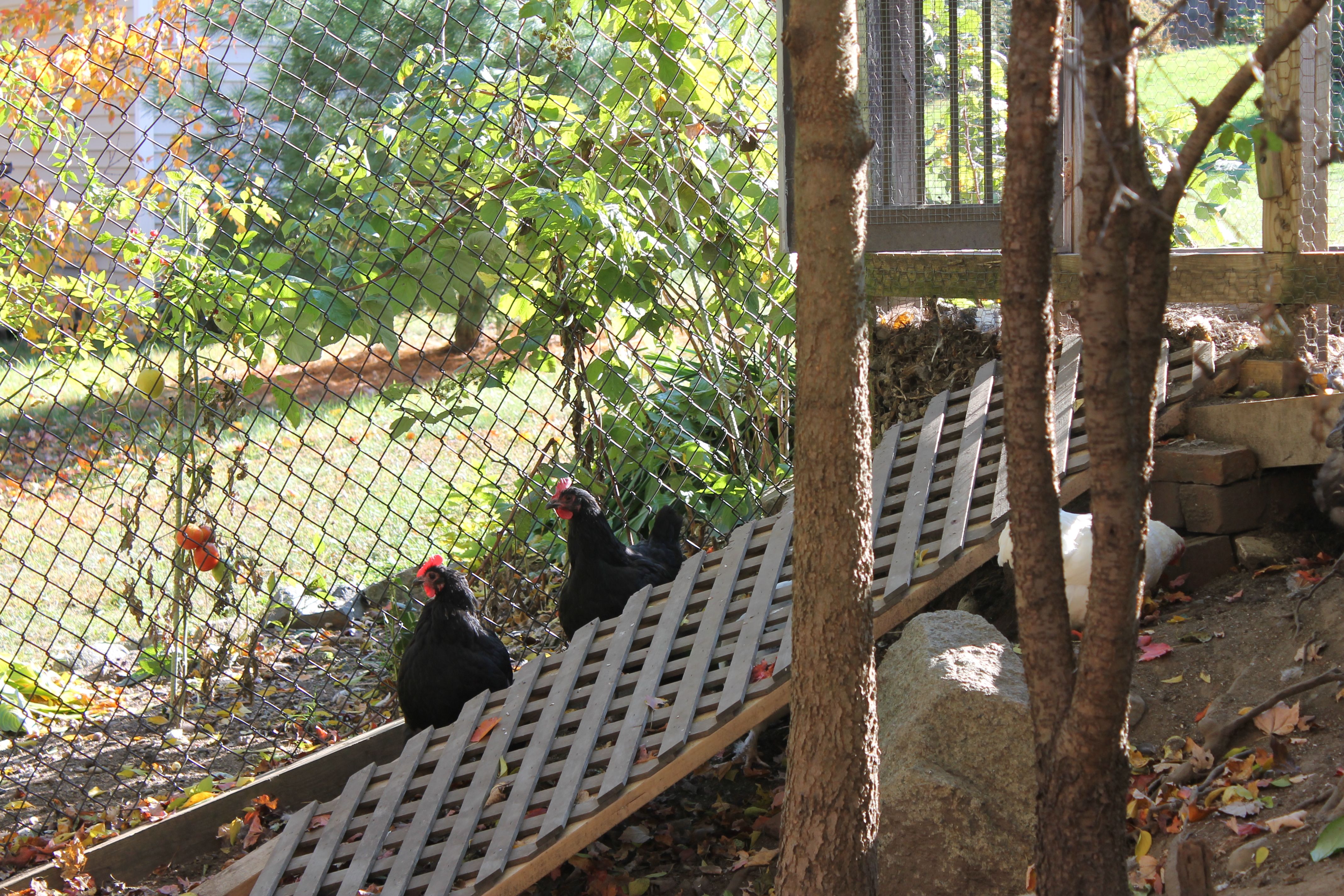
We have a fenced in open area that’s accessible to the chickens from the covered run but we reserve that, along with yard and garden ranging, for days when we’re outside keeping watch and serving as deterrents.

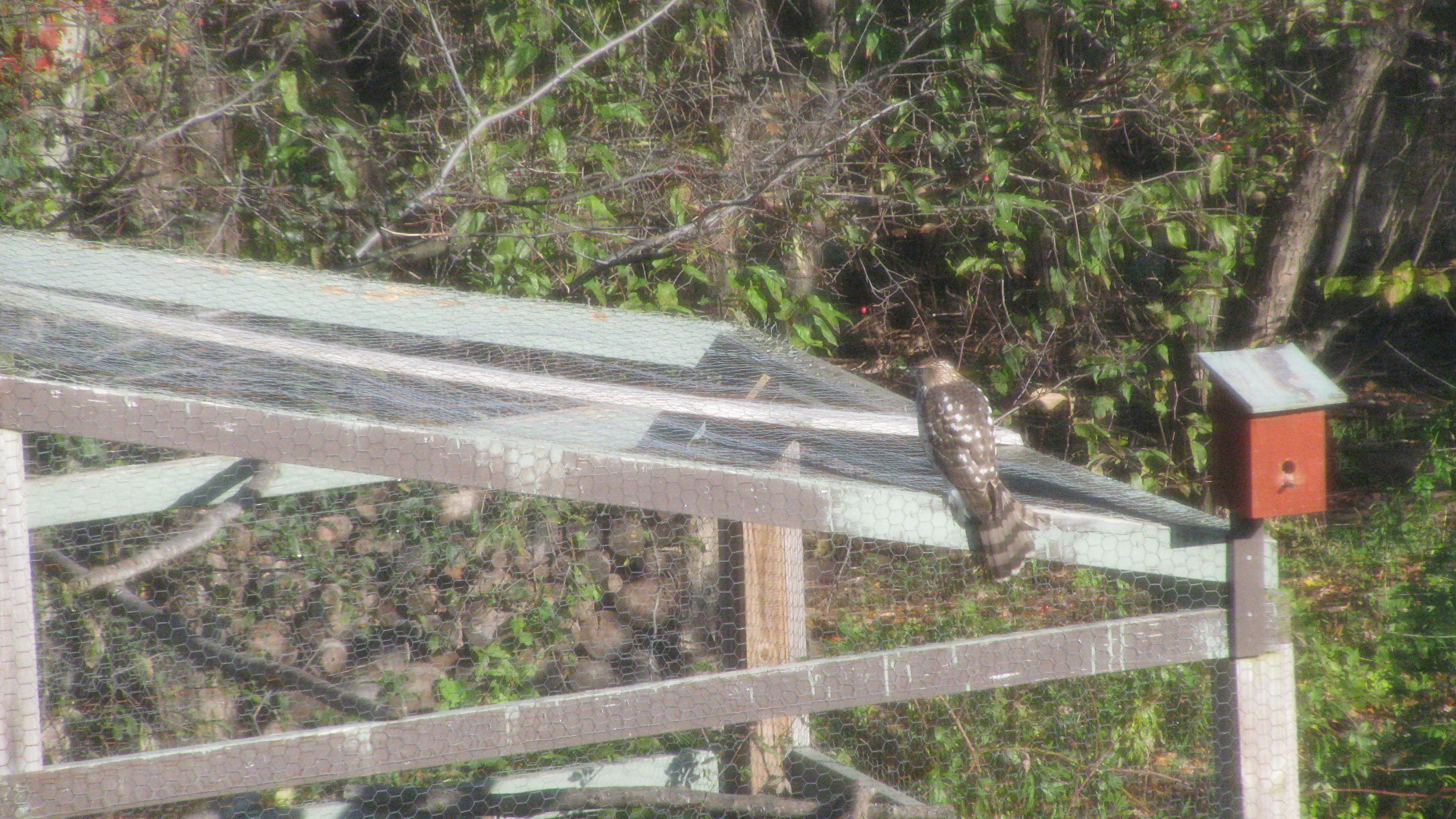
We’ve seen a bobcat, coyotes, raccoons, foxes, skunks, hawks and even fisher cats here at the edge of the woods.  All of these creatures love to eat chicken for dinner. We’ve lost a few hens to hawks and on one occasion a raccoon squeezed through a small gap in the screening of the run and killed one chicken while literally scaring another to death. To this day we’re not sure what saved the rest. I’ve spent many hours watching hawks circle overhead or sit on top of the run just waiting for their chance…

IMG_6911

If you were a chicken, wouldn’t you be scared if this hawk was watching over you?

IMG_0731

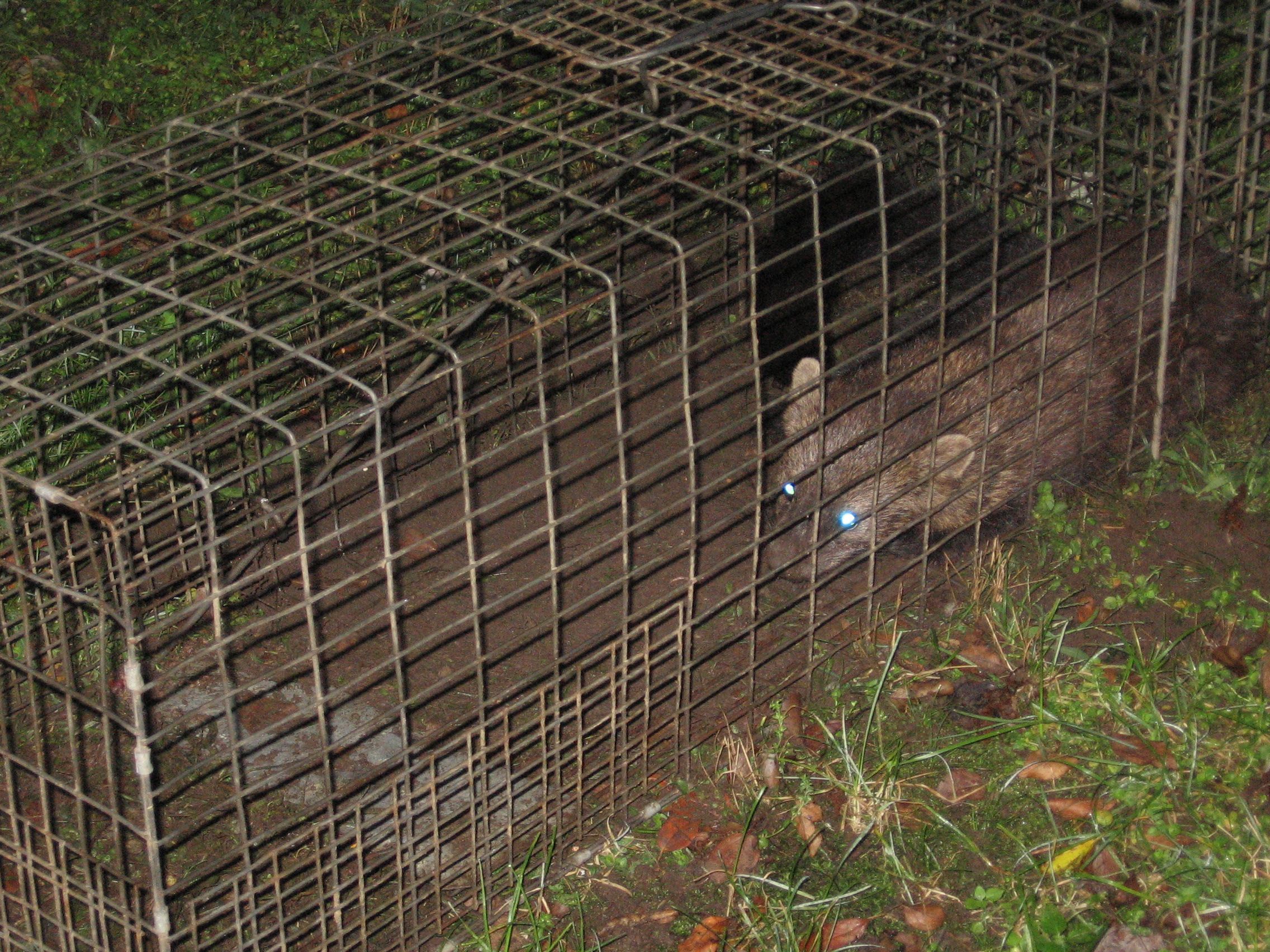
Here’s a fisher cat that we trapped before the chicken days. We had no idea of what it was when Michael and the kids found it in the trap but it’s hiss was vicious!

So, we don’t let our chickens range much without supervision. We also keep a pretty close eye on the edge of the woods, we have a lot (a LOT) of foot traffic in our yard which prevents some predator presence and we design our chickens’ space to be as safe as is reasonably possible. I think that’s why we loose more chickens to old age than to predators.

DSC03819It might be why they look pretty content most of the time too.

Or that could be because of the oatmeal… but that’s another post…

Enjoy everything!

Michele
The Beautiful Sweet Buff Orpington

IMG_9683If we could only raise one breed of chicken in our flock, I would choose the Buff Orphington. I think of this breed as the golden retriever of the chicken world. Their fluffy, yellow, friendly, obedient, loyal, and great with kids and adults. They’ll sit in your lap, come when you call and play with you. This is a family-friendly chicken!

IMG_0665

A newborn buff orphington is a cute little yellow fluff ball and it grows up to be a wise, sweet creature that you can take anywhere.

IMG_4575

I take chickens into schools sometimes and this is the breed that I choose for those events. I can put one down on a tarp with twenty first graders sitting around the perimeter and she’ll just stand there politely waiting for the presentation to start. Then she will allow all twenty kids to pet her (one at a time of course) and repeat the process for three more classes during the day. I’ve even had one lay an egg in the classroom a few feet away from the children during a presentation. This is a laid back, happy chicken.

These girls are good layers, winter hardy, docile and sweet… if your trying to decide what type of chicken to start with or add to your existing flock you just can’t go wrong with a buff orphington!

Michele

Let’s Talk About that Brooder…

Yesterday you saw the brooder that we used for our first chicks, and for many others that have come along since then.

IMG_2940

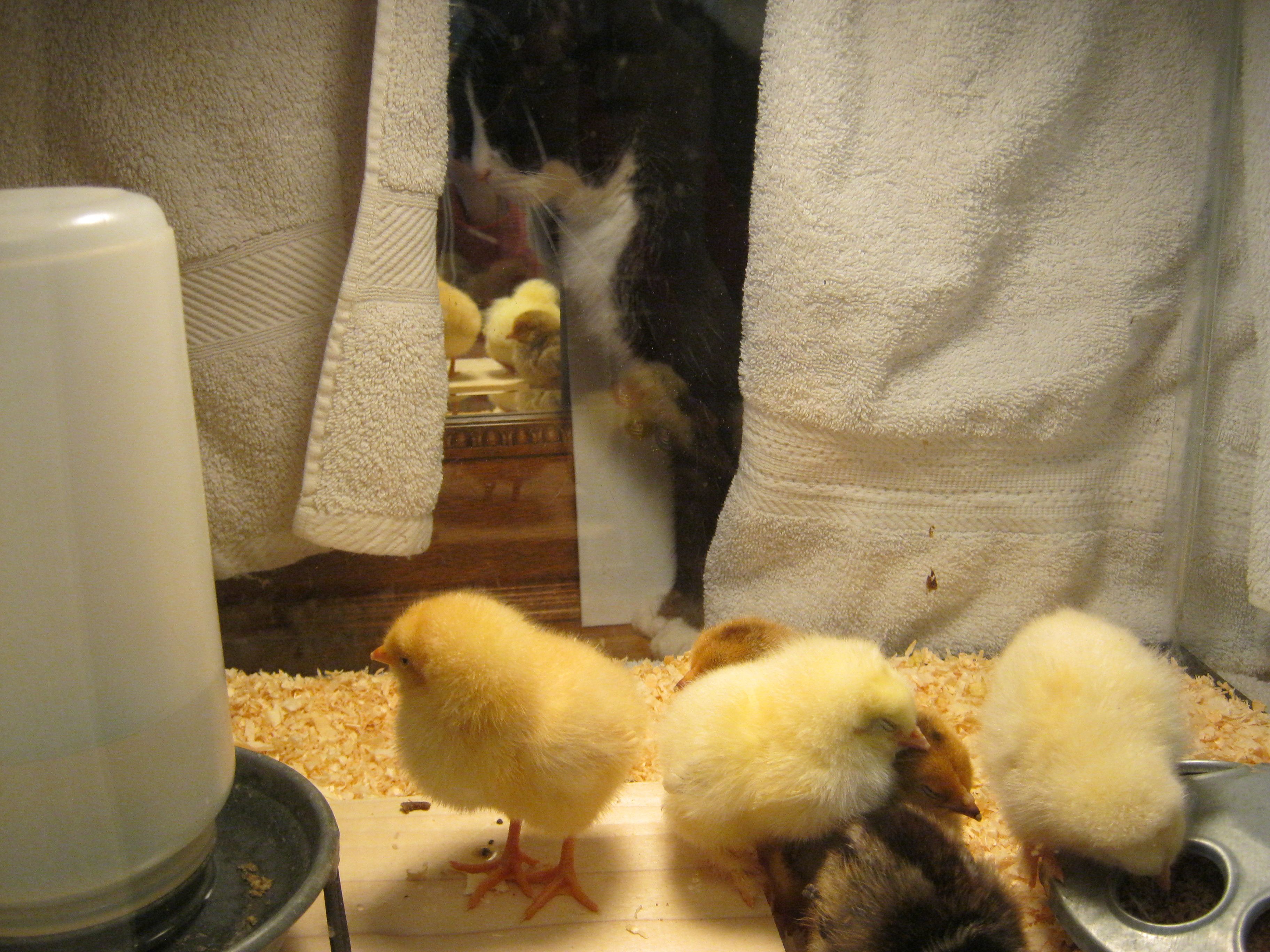
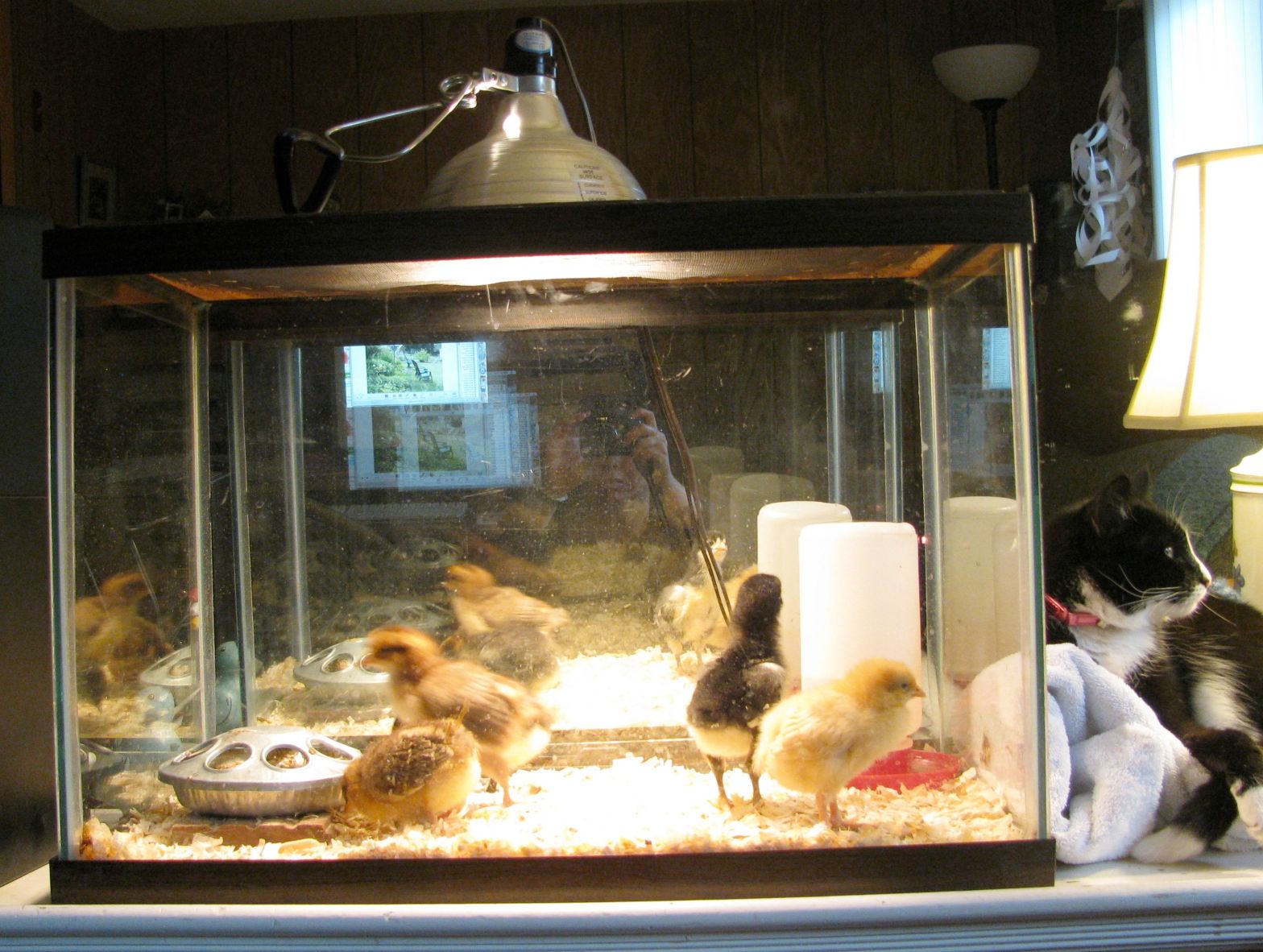
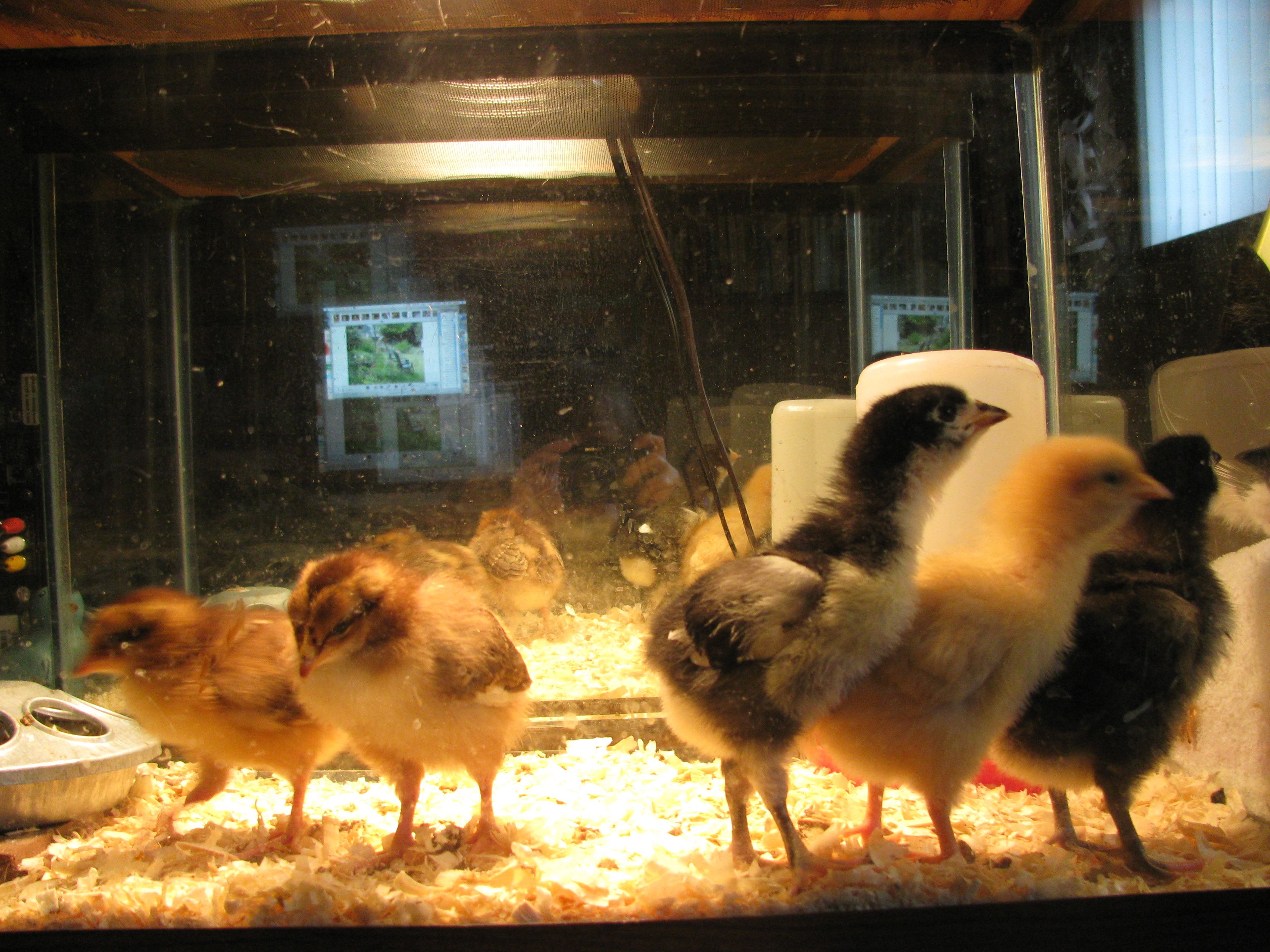
As I mentioned we made it out of a twenty gallon glass aquarium that we’ve used over the years as a temporary home for creatures that need care. Many wounded birds and stray frogs have spent a few hours in that aquarium. To set it up we simply cleaned it thoroughly, put a shop light with a  60 watt bulb on top of the wire screened lid and filled the bottom with wood chips. The wood gives the chicks something to scratch at, sleep on and absorbs poop which helps with the almost daily cleaning that needs to be done.

We like to use the tall red and white water distributors and round feeders that you see above.  You can buy these at your local feed store or on-line. We find that the specially designed feeders are worth the investment because they stand up to all of the pushing, pulling and scampering that baby chicks do.

The warm light along with towels draped over the sides at night when the heat is down maintain an inside temperature is 95 degrees for the first week, then 5 degrees lower for each week after.  I should mention that our chicks stay in the glass brooder for just a few weeks before they get too big and we move them to a larger metal cage that’s also cloaked with towels to keep heat in. We gradually remove the towels and light over the cage as they outgrow them as well. We also lower the lightbulb from 60 to 40 watts as they get  bigger in the aquarium, then back up to 60 again when we move them to the much airier cage.

The “aquarium as brooder” idea isn’t really the typical route that most people take, but it’s worked very well for us. It’s easy to move as needed and it gives us a great view of our new flock in action. You can find lots of other brooder systems by googling “brooder”, or checking Pinterest. People are really creative and I’ve seen brooders made from kiddie pools, plastic bins, even a portacrib! Really, if the chicks are safe and the temperature, food and cleanliness level are correct they’ll be fine.

We’ve been fortunate to have never lost a chick in our aquarium brooder, which leads me to sad news; our beloved aquarium “bit the bullet” as Michael would say and had to be thrown out last fall. Now we’re searching for a new one, or a good idea for our next brooder. Stay tuned… it’s coming soon!

Questions, questions… I know you have them! Leave them for me and I’ll answer them as best I can. Maybe some of my chicken raising friends who are following will step forward to give their input too… come on, I know your nearby!

Enjoy everything!

Michele

IMG_2939

In the Beginning… Our Very First Day as Chicken Keepers

I’ve been thinking a lot about how to structure this chicken series. I’m hoping that it will be useful to aspiring keepers so I’m working on organizing my posts in a way that will be most helpful.  That said, I’m just going to start at the beginning of our journey…

IMG_1348Here’s day one, March 31, 2007, twenty minutes after our first chickens arrived..

Knowing that we had been thinking about getting chickens, our friend Chip brought these three Silver Laced Wyandottes to us. A friend had ordered a shipment of fifteen or twenty and needed to re-home a few.

IMG_1347

There was some excitement around here that day!

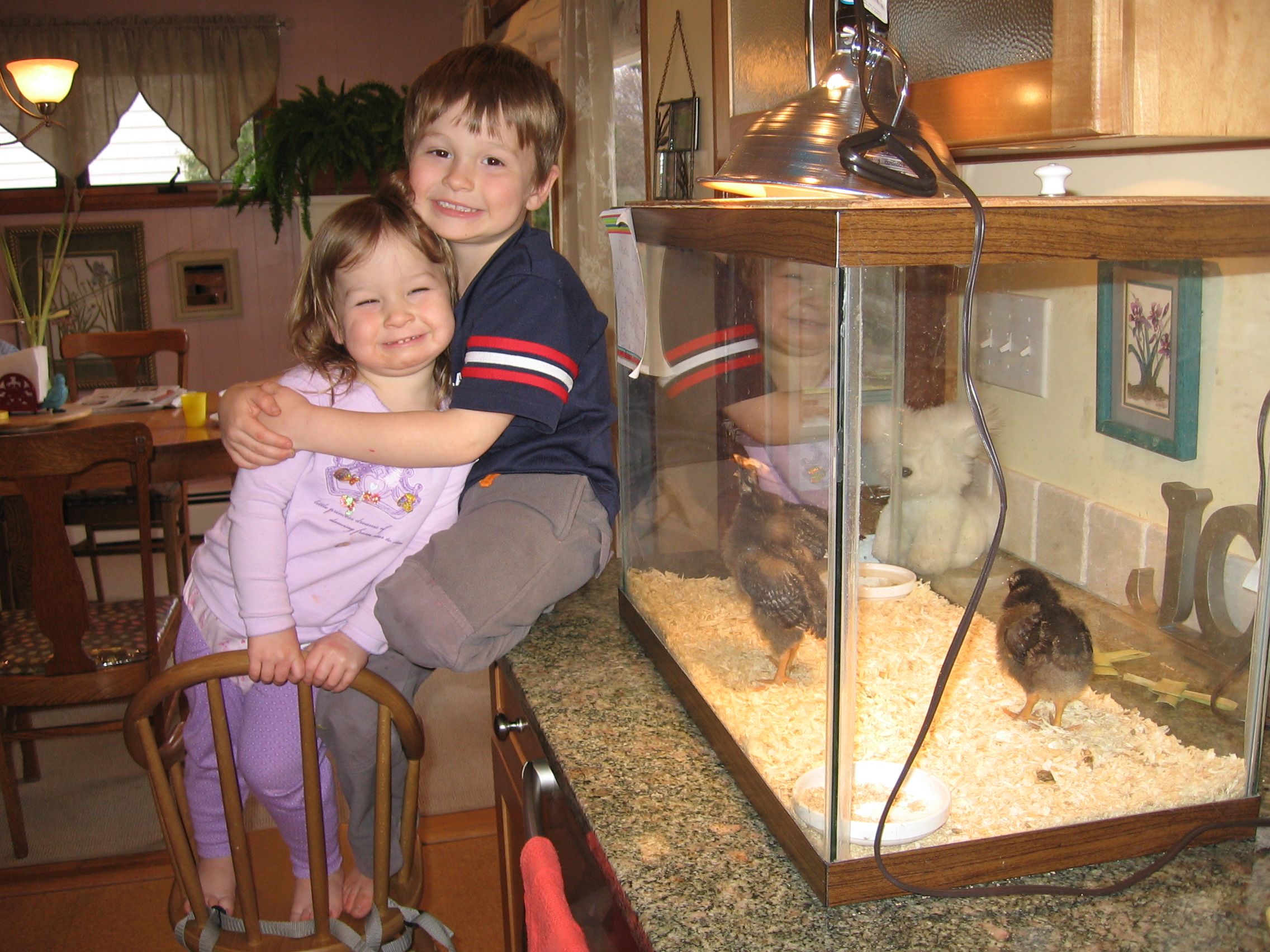
Because they were a bit of a surprise and we weren’t really prepared we had a wooden box for them to live in. But fear not, we quickly made a nice warm brooder using an aquarium.

On the kitchen counter of course…

IMG_1360We named them Sunny, Chip and Brady and they all lived for many years. We just lost Chip (the chicken, not our friend) a few months ago.

IMG_1366

We were having fun with our new passion!. I remember the kids spending a lot of time up on that chair talking to the girls.

But we had so so much to learn, and we did, one step at a time..

You can too!

Enjoy Everything!

Michele

Thinking About Raising Chickens? Well You’ve Come to the Right Place!

DSC01497

And that’s because I herby declare March 2014 to be Chicken Month at The Salem Garden! If a crocus or snowdrop decides to miraculously appear in our garden you’ll see it before the camera cools down, but I’m going to focus on chicken keeping for a few weeks. This is the time of the year when most keepers in the northern hemisphere add new chickens or start a flock.  I’m hoping to cover a range of chicken related topics– everything from breeds, to equipment, to daily care.  Starting a new flock is easier and harder than you might think. With a little bit of information and some planning yours will be wonderful! What are your questions? Leave them in the comments and I’ll try to answer them in the posts that I’m working on.

Consider The Salem Garden to be Chicken Central for a little while (actually it already is, I can hear our girls out there enjoying the morning air).

Cluck, cluck!

Michele

Winter Garden Coop Jam

IMG_4672

It’s winter, that’s it…

IMG_4674

There’s a rosemary plant hiding under the barrel, rock and large clump of dirt, lol. It will be a miracle if this plant makes it through this extremely unbelievably cold, long winter. That sprig of thyme will though…
IMG_4685

A single egg

IMG_4691

but fear not! There’s a traffic jam at the nesting box. More are on the way!
IMG_4701

I turned around and here she was, patiently waiting her turn. This chicken reminds me of my oldest daughter, she’d be doing the same thing.

IMG_4704

It does my heart good to see them waiting at the door again.

IMG_4706See you later sweetie pie.

Enjoy everything!

Michele